
The hopeful waiting family: Infertility and adoption after a breast cancer diagnosis
- 04/21/21
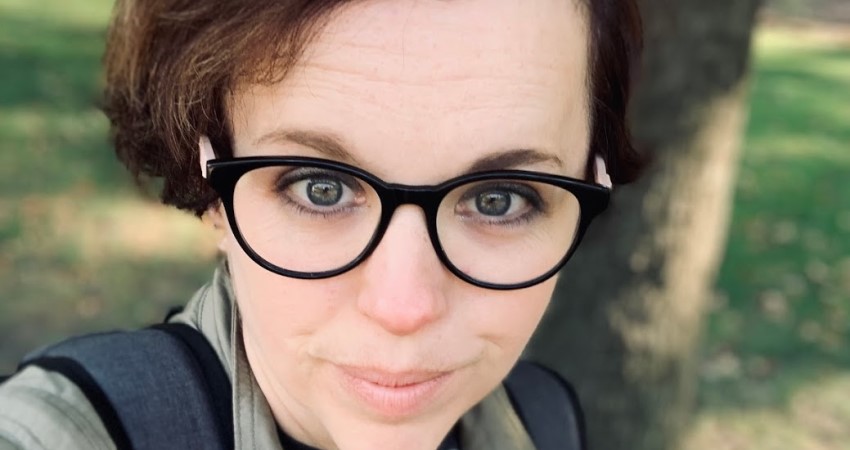
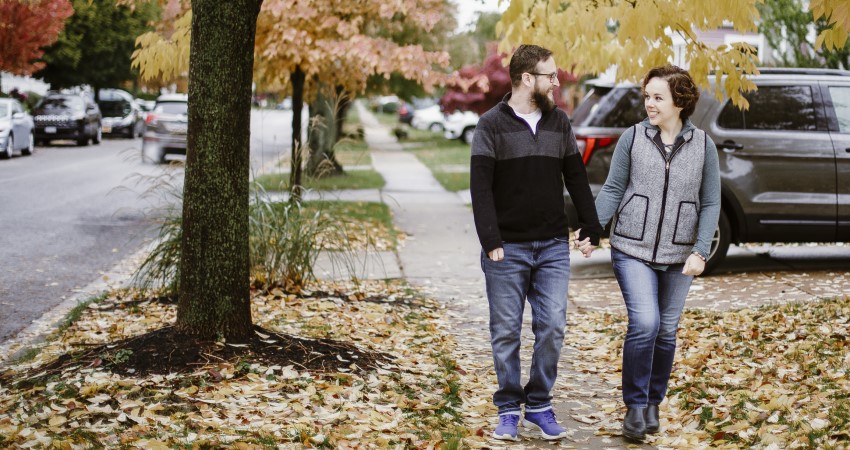
Growing up in the 90s, I never really knew how I would get married or be a parent one day, if ever, and I didn’t give it much thought for a long time. My partner and high school sweetheart, Jarrett, is a transgender man, and I am a cisgender queer woman, so life was very different when we were teenagers.
It’s too long of a story for this blog, but Jarrett and I had a complicated friendship/relationship; we broke up when I was a junior in high school, but we never lost sight of each other over the years. Stars somehow aligned, eventually, and we got back together in 2008. We got married when I was 35, and that was when I suddenly felt closer to being ready to have a baby. When we were looking for a new house in the fall of 2015, we had a plan: We were going to buy a house with a designated baby’s room and then I would start trying through intrauterine insemination or possibly in vitro fertilization.
Bad luck interfered, however, and in December 2015 I was diagnosed with stage II, hormone receptor-positive breast cancer. Although my doctors certainly informed me of my options to help preserve fertility, due to my age and the hormonal sensitivity of my disease, and because we were literally moving INTO our new house the week before I started treatment, I decided it was best to focus on my health and keep parenthood on the back burner. Long story short, my chemo and my hormonal therapy have left me menopausal.

As time passed after active treatment, we started talking about having (or “obtaining”) a baby, and it felt unreachable at times. I am not comfortable stopping my hormonal treatment (which I am supposed to be on for at least 10 years), and besides that, we would need lots of help from fertility clinics that may not end up helping at all, due to my “advanced” age. Because our route to biological children would be extremely narrow, we decided to explore adoption. Adoption is super unpredictable, but we felt it was the right path to take. We struggled at first with the idea that our child would not be related to either of us, but the prospect of providing a home to a child, and hopefully connecting with a loving expectant mom, is very motivating to us.
We didn’t know if we could adopt until we went to the orientation at a local adoption agency, which is both queer-friendly and open to folks with a cancer history. I was terribly worried that my breast cancer would be too much of a red flag in our profile, but the agency assured me that it was not. Soon after, I asked my oncologist if he would support me in my plans to adopt a baby, and without hesitation he said yes, and that he could write a letter for us immediately. That gave me a huge confidence boost, and we began the home study process. I quickly learned that there are many other couples who turn to adoption because one or both of them lost fertility due to cancer, which was reassuring. We have had a few opportunities that did not pan out, and so the waiting continues. It feels like a rollercoaster of high hopes and low disappointments, similar to the experiences of people who are trying to conceive biologically.
Although we have now been a hopeful waiting family for the last two years, we have not lost hope that our baby will find us when the time is right. I think that welcoming a child into our family through adoption is something for which we are well suited. We have a long and winding history, and we have been held together by an unwavering love that has truly endured since we were kids ourselves. I hope that when we match with an expectant mother she sees that we would provide a home that will support the baby no matter what, regardless of how different they look from us, or no matter who they become. We hope to have an open adoption wherein our child will always know where they came from, and we will honor that relationship. Most importantly, we know how precious each day is, and look forward to growing our family and living each day as fully as possible.
An update from Liz in June 2026
From “hopeful waiting family” to “family day”
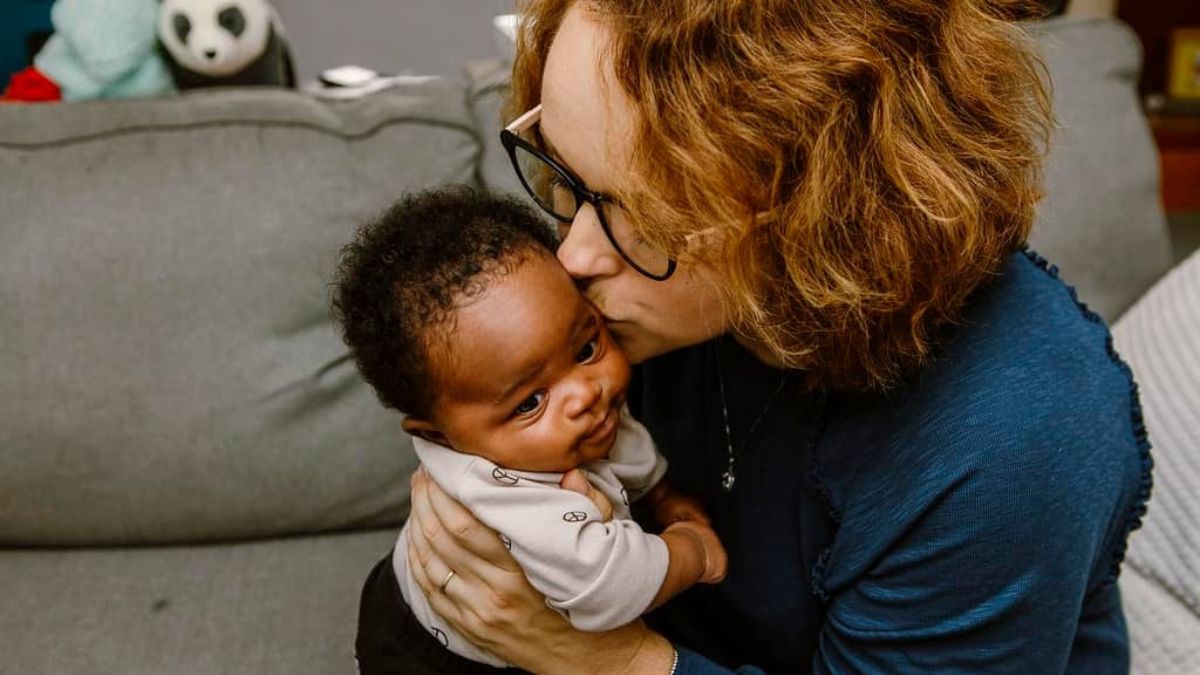
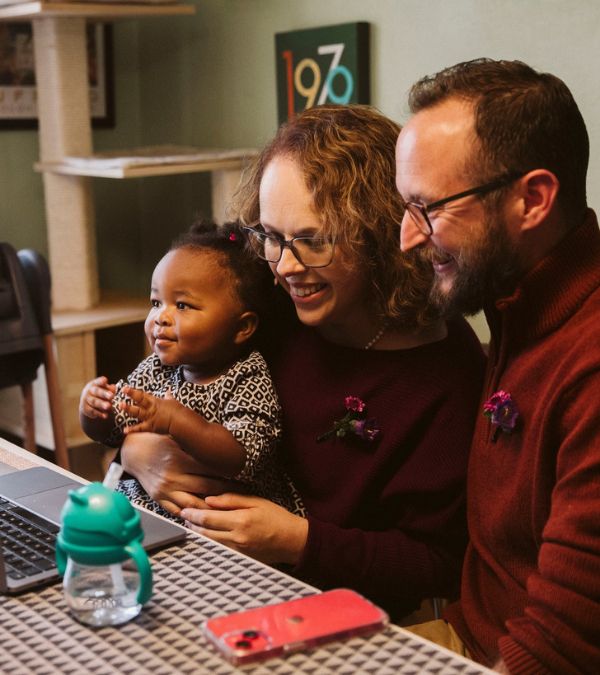
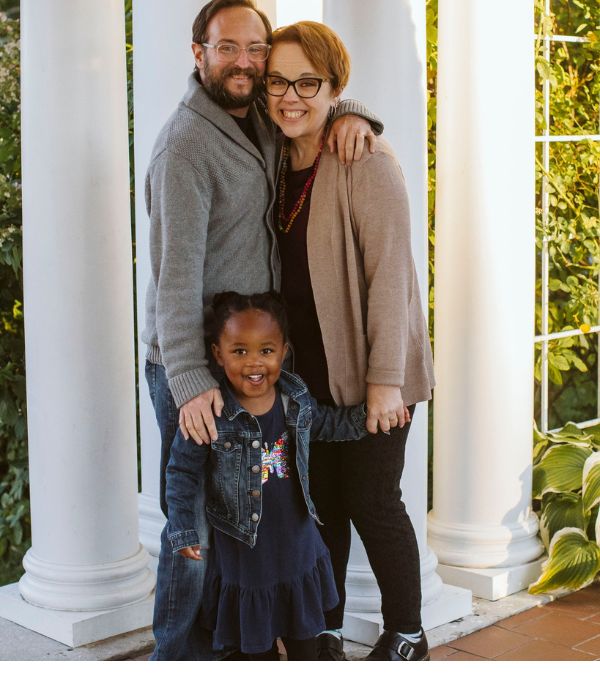
After a long waiting period, which included an adoption placement disruption that brought deep grief after we had already brought a baby home, named her, and bonded with her, Jarrett and I were matched with an expectant mother in summer 2022. We learned about the match on a Tuesday and brought our daughter home from the hospital the next day, when she was 2 days old. She is now almost 4 years old, and the time has flown. She is exuberant, energetic, and imaginative, and she loves the people in her life with her whole heart. We finalized her adoption on our ninth wedding anniversary, which means that day is now not only our anniversary, but also our “family day.”
Looking back, the waiting period truly was “a rollercoaster of high hopes and low disappointments,” as I wrote in 2021. Adoption can be a beautiful path to family-building after cancer-related infertility, but it is not without uncertainty, risk, and loss. I learned that it is important to be open-minded and to trust the process, while also being realistic. Every adoption story is unique, and our daughter may one day have questions about her family of origin that we may not have the answers for. Our job is to be honest, supportive, and loving as she navigates that part of her story.
For others considering adoption after breast cancer, I would encourage honest conversations with your oncology team and careful research into agencies or attorneys who are open to working with people with cancer histories. It has been one of the most gratifying, and surreal, parts of this experience to see how thrilled my oncology team has been to watch our daughter grow. I still go for monthly Zoladex shots, and the nurses often ask to see pictures of “the baby” — even though she is now a preschooler! They know what the journey was like to get here, and their joy means so much to me.
I am now 10 years into survivorship, and becoming a mom has made me feel even more deeply how precious each day is. It has also made me even more passionate about advocating and fundraising for research that will make breast cancer curable, not just treatable, for everyone. That passion also shaped my recent work earning my Master of Public Health degree from the University at Buffalo, with a focus on health equity. My master’s project, “Impact of Discrimination, Trust, and Provider Communication on Breast Cancer Care and Outcomes,” explored issues that continue to matter deeply to me as a survivor, parent, and advocate.
DISCLAIMER:
The views and opinions of our bloggers represent the views and opinions of the bloggers alone and not those of Living Beyond Breast Cancer. Also understand that Living Beyond Breast Cancer does not medically review any information or content contained on, or distributed through, its blog and therefore does not endorse the accuracy or reliability of any such information or content. Through our blog, we merely seek to give individuals creative freedom to tell their stories. It is not a substitute for professional counseling or medical advice.
Stay connected
Sign up to receive emotional support, medical insight, personal stories, and more, delivered to your inbox weekly.
- Contributor since 2021
- Earned her Master of Public Health (MPH) degree from University at Buffalo; her Master’s project was titled “Impact of Discrimination, Trust, and Provider Communication on Breast Cancer Care and Outcomes.”
Tagged:

Living Beyond Breast Cancer is a national nonprofit organization that seeks to create a world that understands there is more than one way to have breast cancer. To fulfill its mission of providing trusted information and a community of support to those impacted by the disease, Living Beyond Breast Cancer offers on-demand emotional, practical, and evidence-based content. For over 30 years, the organization has remained committed to creating a culture of acceptance — where sharing the diversity of the lived experience of breast cancer fosters self-advocacy and hope. For more information, learn more about our programs and services.