
Getting personal with metastatic breast cancer through ctDNA
Yvonne Williams shares her story of treatment, resilience, and how a new testing tool informs her care.
- 10/01/25
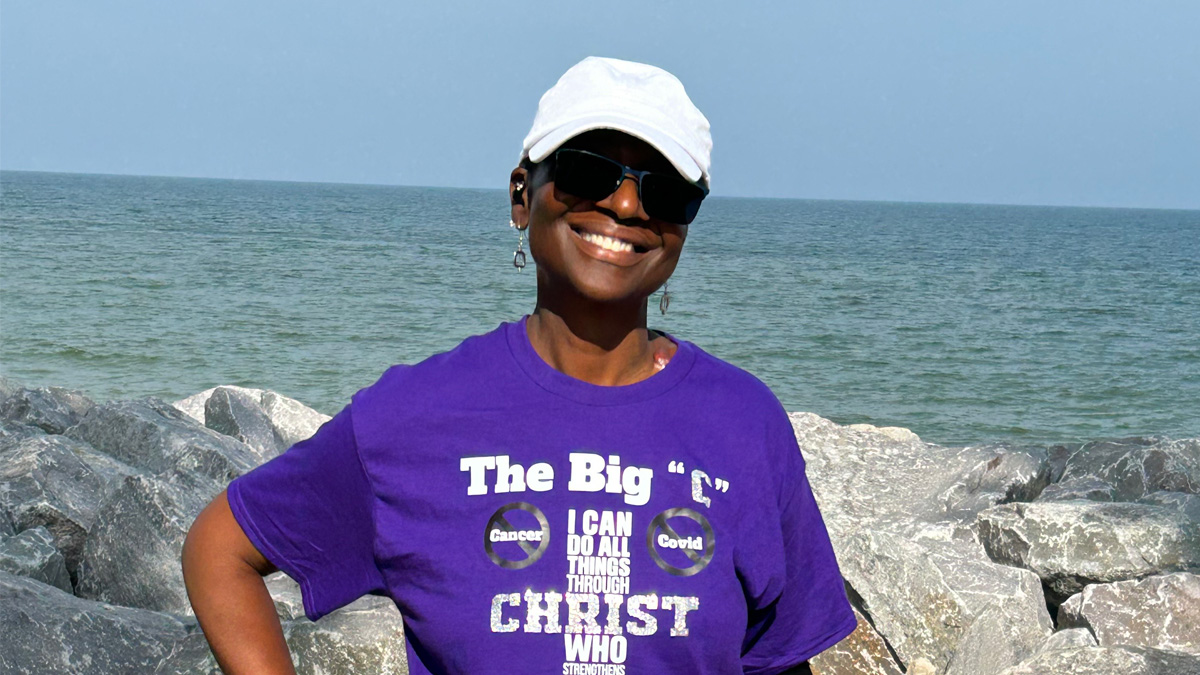
When you’re living with metastatic breast cancer, information is everything. Each scan or blood test result offers a glimpse into how the cancer is behaving and what treatments may work next.
One newer tool is circulating tumor DNA (ctDNA) testing, sometimes called a “liquid biopsy.” These tests search for tiny fragments of tumor DNA that cancer cells shed into the bloodstream. Doctors use different ctDNA tests for different reasons, including:
- To see if metastatic breast cancer is growing; this is also known as checking for minimum residual disease
- To confirm that certain treatments are working
- To check for biomarkers that might match metastatic breast cancer to a specific targeted therapy
- In some cases, to confirm recurrence of an early-stage breast cancer before a scan can
For 60-year-old Yvonne Williams of Texas, ctDNA testing has become part of her routine over the past 2 years. The test helps her oncologist monitor how her metastatic breast cancer is responding to treatment and whether the cancer is growing or spreading.
But her experience also shows the nuances: While her oncologist relies heavily on ctDNA results, Yvonne sometimes finds the numbers confusing or inconsistent. That mix of trust, doubt, and hope is familiar to many people with metastatic breast cancer. Each new test can bring both reassurance and new questions, a reminder that cancer care is rarely straightforward.
But with more information at their fingertips, people with breast cancer and their oncology teams can make more personalized, better-informed decisions about their care, together.
Q: Can you share a bit about your diagnosis and treatment journey?
I was first diagnosed with breast cancer in 2014. I went through radiation, chemotherapy, and surgery, and was in follow-up care for several years. In 2019, I learned the cancer had spread, and I’ve been living with metastatic breast cancer ever since. Over the years I’ve gone through six different lines of treatment. Each one works for about 3 to 6 months before it stops being effective. Along the way I’ve faced other health issues, including diabetes and heart failure caused by treatment side effects. Right now, I am between treatments and looking for clinical trials to participate in local to me.
Q: What were some of the biggest challenges you faced after your metastatic diagnosis?
The hardest part has been the side effects. Every treatment brings new challenges. Managing cancer and diabetes together means I’ll always be balancing multiple conditions. I’ve dealt with brain fog, allergies, hospital stays, and heart problems. Those day-to-day effects sometimes make ordinary things — like keeping track of appointments or enjoying time with friends — much harder.
Q: How did you first hear about ctDNA testing?
My oncologist introduced me to ctDNA testing about 2 years ago. Since then, I’ve been doing monthly blood draws with a test called Signatera. This type of ctDNA test is more personalized than others, because it’s looking for parts of the DNA from my personal cancer cells rather than a bank of common cancer DNA changes.
Q: What made you decide to try ctDNA testing?
It was my oncologist’s recommendation. I trusted her judgment and agreed to start. Sometimes a phlebotomist comes to my home, or I get the blood draw done at the office.
Q: What does the process look like for you?
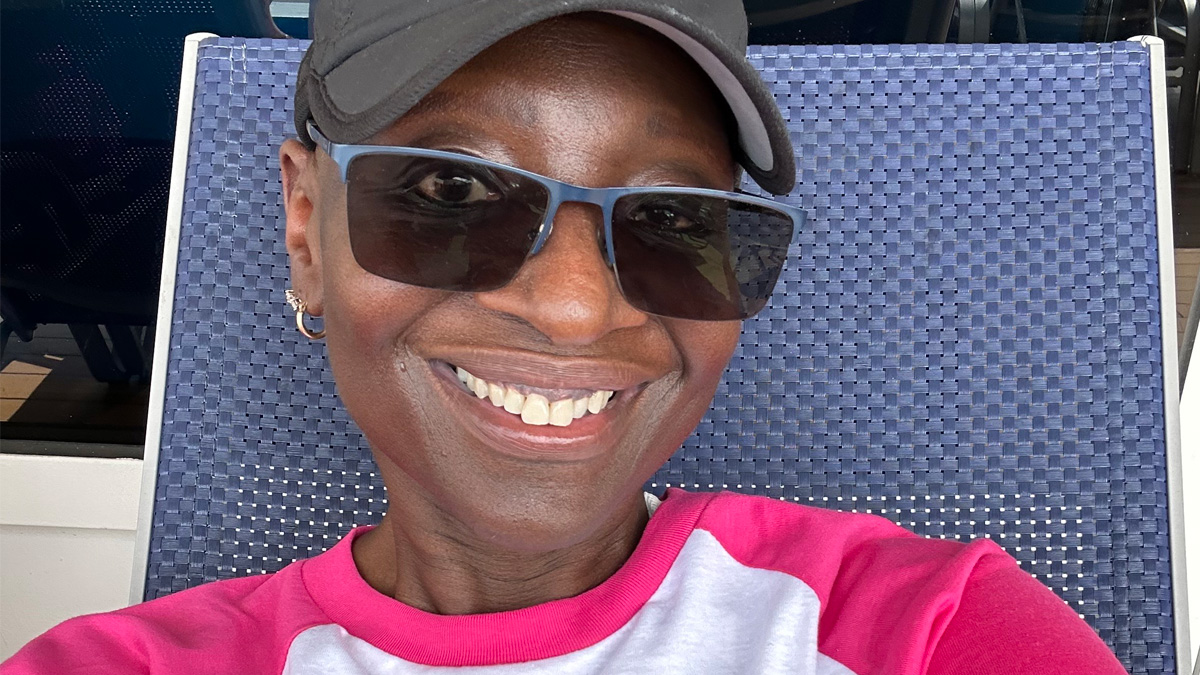
The first time, I had a blood draw and it took several weeks for that initial result. The lab was looking at my cancer tissue to find changes that are unique to my cancer so they can compare them with ctDNA in my blood. After that, every 4 weeks I have blood drawn from my arm. It’s a routine part of my schedule now. At this point, it feels almost as normal as getting my blood pressure checked, even though I know this test is tied to something far more serious.
Q: How does ctDNA testing fit in with other monitoring tools, like scans or tumor markers?
For me, it’s another piece of the puzzle. My oncologist pays close attention to the ctDNA results, but I still rely most on tumor markers and PET scans. There have been times when ctDNA results showed “0” even though I knew the cancer was growing. Even when my ctDNA result was 0, I felt in my body that something wasn’t right. I also began feeling new aching on my cancer side, and a later PET scan showed the tumor had grown and the cancer had reached nearby lymph nodes.That can be confusing. My doctor trusts the test, but I sometimes feel it isn’t as reliable.
Q: How do the results affect treatment decisions?
Basically, if the graph results go up or down, it informs us if the current chemo treatment is working or not working and if the cancer is growing or spreading. When my ctDNA levels jumped earlier this year, my oncologist decided it was time to change treatments. She uses the results to help guide when we switch therapies, though scans still play the biggest role in making final decisions.
Q: How do you feel about waiting for results? Do they help with anxiety?
Honestly, I don’t get anxious about ctDNA results. After living with this for so long, I’ve learned to take things as they come. I see ctDNA as more helpful for my doctor than for me. Tumor markers and scans are what give me more peace of mind. While I wait for results, I keep busy with daily routines, focusing on what I can control.
Q: What has surprised you most about using ctDNA testing?
The inconsistency. Sometimes the test shows “0” even when I know the cancer is active. Other times it lines up with what’s happening. That can be frustrating. But I do think it’s valuable to have another tool available.
Q: How do you see ctDNA testing shaping your care going forward?
I’ll keep doing it as long as my oncologist believes it helps. She uses it to get a better picture of what’s happening in my body, and I want to support that. I feel more informed. It’s another tool in my toolbox.
Q: What advice would you give to others considering ctDNA testing?
If you can access it, try it. It’s one more way to gather information. For me, it doesn’t replace scans or tumor markers, but it adds another layer. More information helps you and your doctor make decisions together.
Yvonne’s story highlights how ctDNA testing can be among several tools that help guide people and their care teams. For her and her oncologist, it’s an important tool to guide treatment decisions. As ctDNA testing becomes more common and science continues to evolve, doctors and researchers will continue learning how to use it in the most reliable and supportive way possible.
Cancer care isn’t one-size-fits-all. Each test, each treatment, and each conversation with a doctor helps build the path forward. For Yvonne, that path is about staying open to new tools, trusting her care team, and living fully with metastatic breast cancer.
Visit LBBC’s testing and precision medicine page to learn more about ctDNA and other tests in precision medicine.
DISCLAIMER:
The views and opinions of our bloggers represent the views and opinions of the bloggers alone and not those of Living Beyond Breast Cancer. Also understand that Living Beyond Breast Cancer does not medically review any information or content contained on, or distributed through, its blog and therefore does not endorse the accuracy or reliability of any such information or content. Through our blog, we merely seek to give individuals creative freedom to tell their stories. It is not a substitute for professional counseling or medical advice.
Stay connected
Sign up to receive emotional support, medical insight, personal stories, and more, delivered to your inbox weekly.

- Former LBBC digital media specialist, writer, and web content coordinator
- Founded LBBC’s Twitter chats in 2014
Tagged:

Living Beyond Breast Cancer is a national nonprofit organization that seeks to create a world that understands there is more than one way to have breast cancer. To fulfill its mission of providing trusted information and a community of support to those impacted by the disease, Living Beyond Breast Cancer offers on-demand emotional, practical, and evidence-based content. For over 30 years, the organization has remained committed to creating a culture of acceptance — where sharing the diversity of the lived experience of breast cancer fosters self-advocacy and hope. For more information, learn more about our programs and services.