
From no evidence of disease to living with MBC: How Frances Malinis mapped a new route after recurrence
Her experience highlights the importance of biomarker testing, access to care and options, and the need for more metastatic breast cancer research.
- 03/04/26
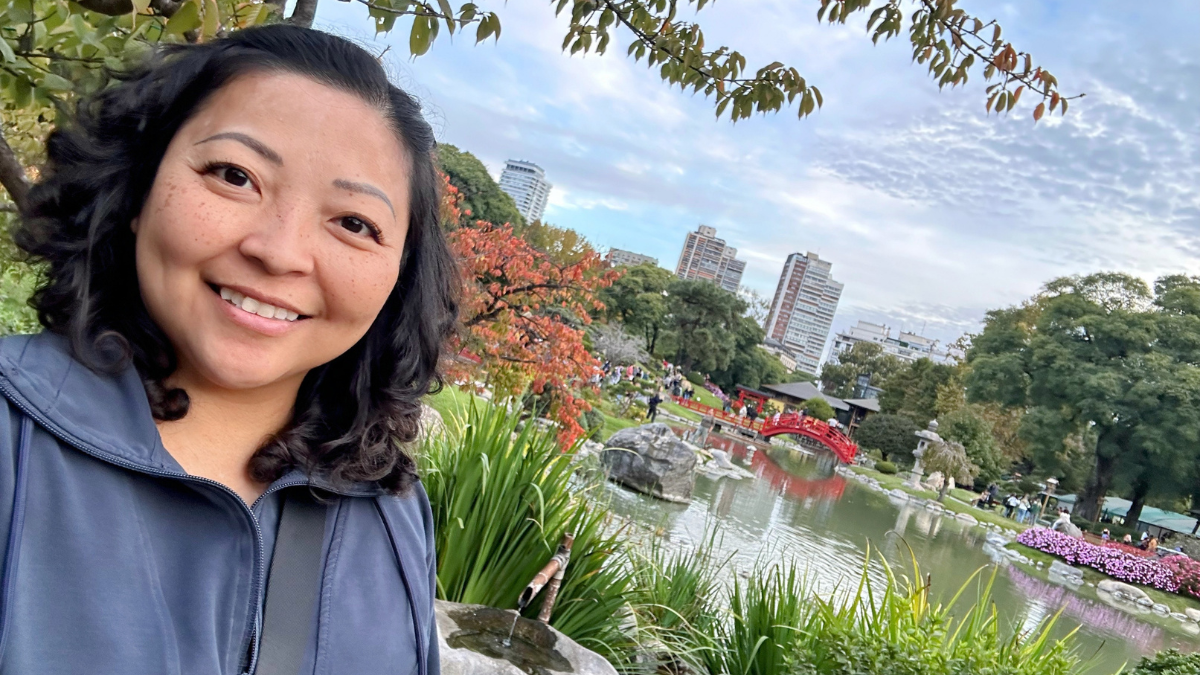
Finishing treatment felt like finally exiting a chaotic freeway — leaving constant urgency behind and entering a stretch of road where I could slow down and breathe. As far as I was concerned, cancer was behind me.
I tucked it into the rearview mirror and focused on healing: physically, emotionally, mentally, and spiritually. Healing meant sitting with emotions I had postponed during survival mode and finally giving myself permission to feel them.
Then, in June 2025, I learned that cancer hadn’t stayed in the rearview after all. It reappeared like an unexpected on-ramp, forcing its way back into a life I thought had finally slowed down.
When the road changes without warning
It felt like losing control of the wheel. Everything I had been mapping out — plans, timelines, assumptions — was suddenly obscured, as if fog had rolled in without warning. I felt disoriented, unable to see forward or backward, gripping for any sense of direction as panic set in.
I felt well. I had been early stage. Treatment and surgery had gone as planned. Routine imaging, bloodwork, and even ctDNA testing had shown no signs of recurrence. There were no signals telling me to slow down— no flashing lights, no detours, no reason to brace for impact.
The route I didn’t choose
My journey with breast cancer began in January 2023, when I was diagnosed with stage IB, grade 3 triple-negative breast cancer. From that moment on, life accelerated into the fast lane. Appointments multiplied, decisions came quickly, and life narrowed to treatment schedules and survival. I didn’t have time to think beyond the next turn — I was focused on staying on course and getting through what was immediately in front of me.
I moved through treatment in phases. The first included four cycles of pembrolizumab (Keytruda) alongside paclitaxel (Taxol) and carboplatin, followed by adriamycin and cyclophosphamide (Cytoxan) with continued immunotherapy support. A PET scan in July 2023 showed no evidence of disease, confirming that the previously seen breast mass had resolved with no new disease identified.
This treatment approach followed national guidelines for high-risk triple-negative breast cancer, combining chemotherapy with immunotherapy before surgery and continuing immunotherapy afterward to reduce the risk of recurrence.
In September 2023, I underwent a bilateral mastectomy. The pathology confirmed what we had hoped for: clear surgical margins and no lymph node involvement. It felt like another sign that the treatment had worked.
Genetic testing revealed that I carry a germline BRCA2 mutation, which led me to take additional preventative steps. In November 2023, I underwent a total hysterectomy to reduce future cancer risk. It wasn’t an easy decision, but it felt like taking the wheel again after a year of reacting instead of steering.
Even after surgery, treatment wasn’t over. I continued immunotherapy, completing my final infusion in April 2024, followed by reconstruction surgery in May 2024. By then, my life no longer revolved around chemotherapy, but cancer still required my attention.
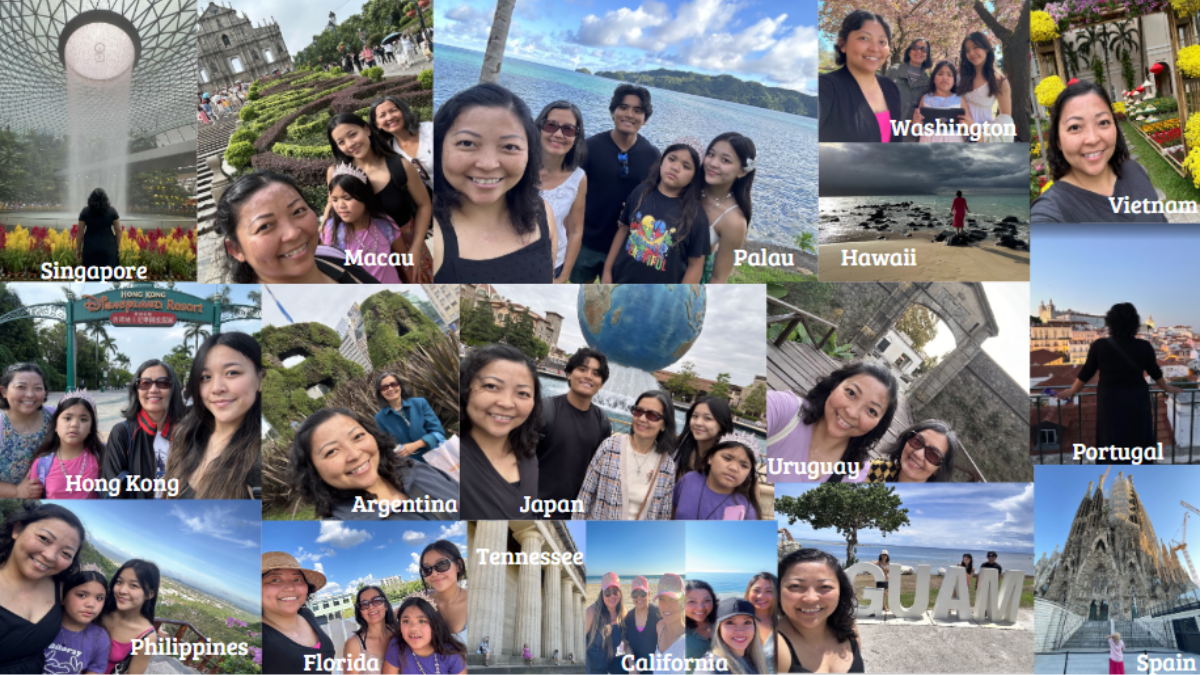
I created new memories with the people I love. We traveled, choosing experiences over postponement and presence over someday. Conversations felt deeper. Laughter felt louder. Time felt more precious, and I treated it that way.
I became more intentional with how I spent my energy and attention. I learned to say “no” more freely. I protected my peace. I focused on what mattered most: my children, my relationships, my faith, and the quiet moments that reminded me I was still here — still living.
Cancer no longer dictated every thought or decision. I felt steadier, learning how to navigate life beyond cancer.
Living with metastatic breast cancer has taught me that survivorship is not defined by the absence of disease, but by access — to care, to information, and to options.
When answers take detours
The shock of recurrence had come quietly. I walked into a routine PET scan expecting reassurance, but instead it revealed numerous nodules in my lungs, along with concerning lymph nodes in my chest. I felt physically fine. There was no warning sign from my body.
What followed was not a clear route to answers, but a stretch of detours and construction. A planned lung biopsy was canceled due to risk. A bronchoscopy led to complications, including pleuritis and a pleural effusion, requiring a thoracentesis. Each step felt like another slowdown — another lane closed — adding delay and uncertainty when all I wanted was clarity.
By that point, months had passed since my scan, and uncertainty had taken its own toll.
Eventually, the lanes narrowed to the only option left. In September 2025, I underwent a partial lobectomy of my right lower lung. The pathology confirmed what we feared: metastatic breast cancer, originating from my original diagnosis. That surgery also provided something essential — biomarker testing of the metastatic tissue.
Biomarkers as a compass
With a diagnosis finally confirmed, the question was no longer “What is this?,” but “Where do we go from here?” The answers came from those biomarkers.
The cancer was once again characterized as triple-negative, with the same BRCA2 mutation that had guided my care before. Those results mattered. They didn’t just explain what was happening — they pointed us forward. They became my compass.
Because of that information, I was eligible for a PARP inhibitor, a targeted therapy designed for cancers like mine. I began treatment with Lynparza (olaparib) not as a last resort, but as a decision grounded in evidence. Even with metastatic breast cancer, care can still be personalized. Choices can still be intentional.
Living with metastatic disease means understanding that this journey no longer follows a clear route the way I once expected. Treatment is ongoing. Monitoring is constant. Uncertainty is part of the terrain. But biomarker-driven care gives that uncertainty structure. It offers direction when the path forward feels unfamiliar.
My story is not unique. Too many people living with metastatic breast cancer face delayed diagnoses, canceled biopsies, fragmented care, and limited access to testing that could shape their treatment options. Despite being responsible for most breast cancer deaths, metastatic disease remains underfunded and often misunderstood.
Biomarker testing is essential. It guides treatment decisions and helps ensure care is tailored to the individual. Timely access to imaging, biopsy, and molecular testing should be standard for every person facing metastatic breast cancer.
Living with metastatic breast cancer has taught me that survivorship is not defined by the absence of disease, but by access — to care, to information, and to options. I am still navigating this terrain, using the tools available to me to find direction — even when the road isn’t clearly marked.
DISCLAIMER:
The views and opinions of our bloggers represent the views and opinions of the bloggers alone and not those of Living Beyond Breast Cancer. Also understand that Living Beyond Breast Cancer does not medically review any information or content contained on, or distributed through, its blog and therefore does not endorse the accuracy or reliability of any such information or content. Through our blog, we merely seek to give individuals creative freedom to tell their stories. It is not a substitute for professional counseling or medical advice.
Stay connected
Sign up to receive emotional support, medical insight, personal stories, and more, delivered to your inbox weekly.

Living Beyond Breast Cancer is a national nonprofit organization that seeks to create a world that understands there is more than one way to have breast cancer. To fulfill its mission of providing trusted information and a community of support to those impacted by the disease, Living Beyond Breast Cancer offers on-demand emotional, practical, and evidence-based content. For over 30 years, the organization has remained committed to creating a culture of acceptance — where sharing the diversity of the lived experience of breast cancer fosters self-advocacy and hope. For more information, learn more about our programs and services.