
Riding the currents of risk: Breast cancer, BRCA2, and living fully
- 04/20/26
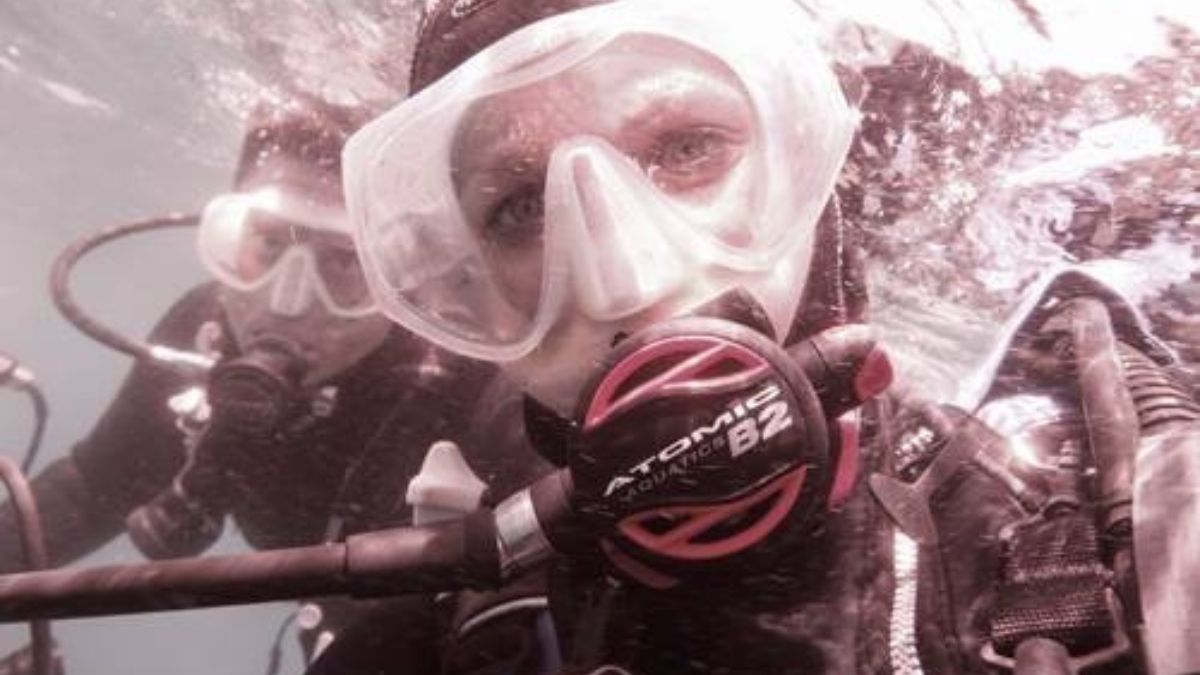
I’ve jumped off cliffs. I’ve dived into pitch-black water on film sets at two in the morning. I’ve held my breath longer than most people think is survivable. I was in Avatar: The Way of Water — I have literally breathed underwater for a living.
None of that prepared me for a breast cancer diagnosis or for learning afterward that I carried an inherited BRCA2 mutation.
Diving in deep water
The sequence of events matters here, because it changed everything about how I understood my own body and my own history. I was 39 — the same age at which my father died of lung cancer — when routine screening caught three tumors in my breast. Three distinct masses, confirmed by biopsy as invasive ductal carcinoma. It was only after that diagnosis that genetic testing explained what I had been circling my whole life without knowing: I was BRCA2-positive.
When I got my biopsy results, I wasn’t on a film set as a professional scuba diver and underwater stunt performer. I wasn’t in the ocean. I was just a woman sitting with information that would change everything.
Fear is a current. I know this from diving. When a current catches you, panic is the worst thing you can do. You have to read it. Breathe into it. Decide fast. I’ve always been good at that in the water. On land, staring at those results? I had to relearn everything.
Waves of family heartbreak
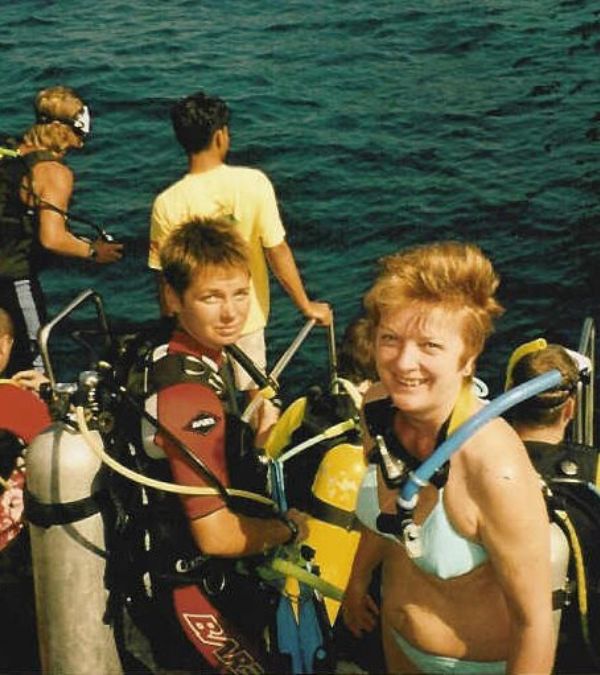
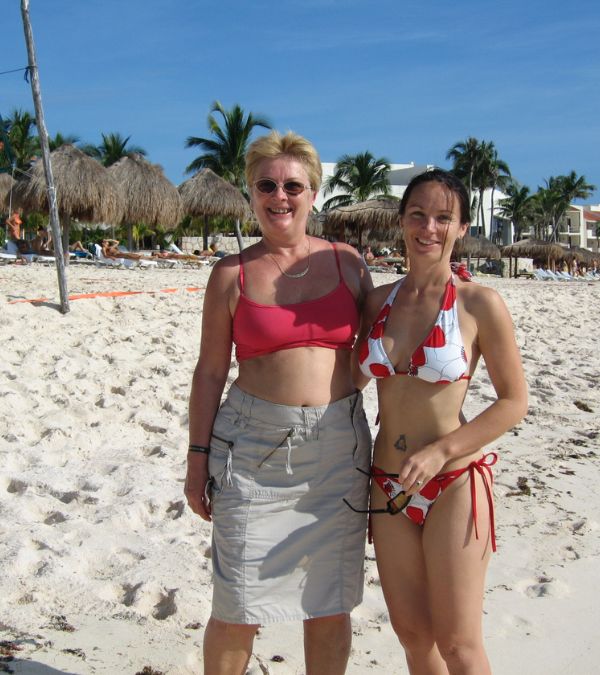
My mother was dying of breast cancer at the same time in a hospital in Budapest, 6,000 miles away, while I was sitting in an oncologist’s office in Los Angeles. But her cancer was triple-negative metastatic breast cancer, and when she had genetic testing, her results came back negative for the mutation. The BRCA2 didn’t come from her. It came from my father, who built our house with his bare hands and was gone before I turned 15, who never knew what was written in his own cells— or in mine.
Then I learned about my cousin Noémi, my father’s niece. She had been diagnosed with breast cancer, too, also at 39. She delayed treatment, hoping for gentler options, and by the time she agreed to surgery and chemotherapy, it was too late. Her breast cancer metastasized, and she died while I was in the middle of my own treatment.
Three people from the same bloodline diagnosed with cancer at 39 years old. Three breast cancer diagnoses.
That number stopped feeling like a coincidence a long time ago.
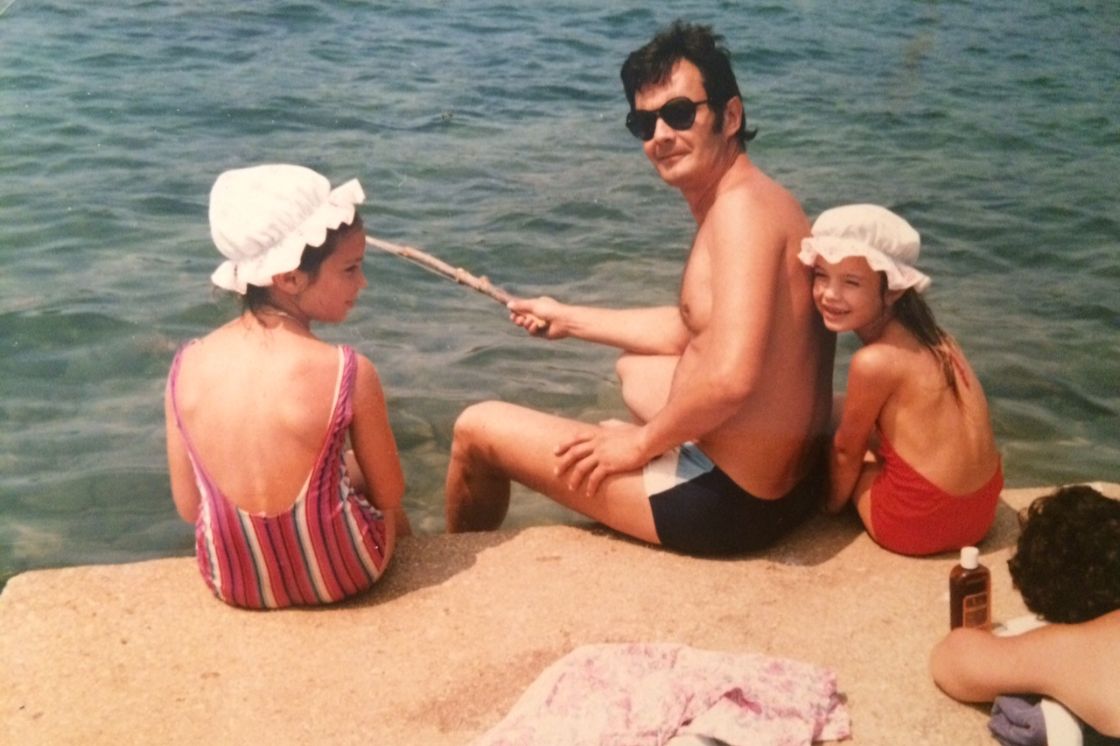
"The BRCA2 didn’t come from her. It came from my father, who built our house with his bare hands and was gone before I turned 15, who never knew what was written in his own cells — or in mine."
Stranded on dry land
What followed my diagnosis was the hardest thing I’ve ever done — and I do hard things for a living.
The treatment was not gentle. A double mastectomy, then four rounds of chemotherapy, then a total hysterectomy to reduce future risk of cancer. At one point, genomic testing showed my cancer had a high Ki67 score, which measures how rapidly a cancer is growing. My 51 out of 100 was one of the highest my oncologist had ever seen.
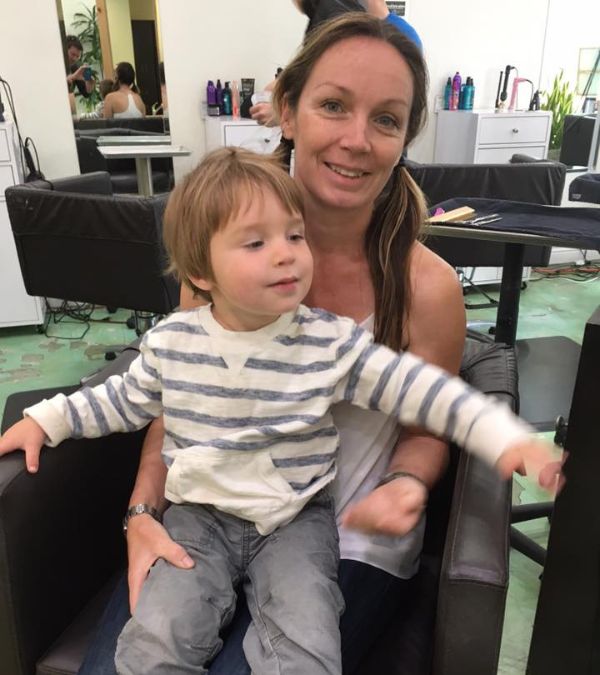
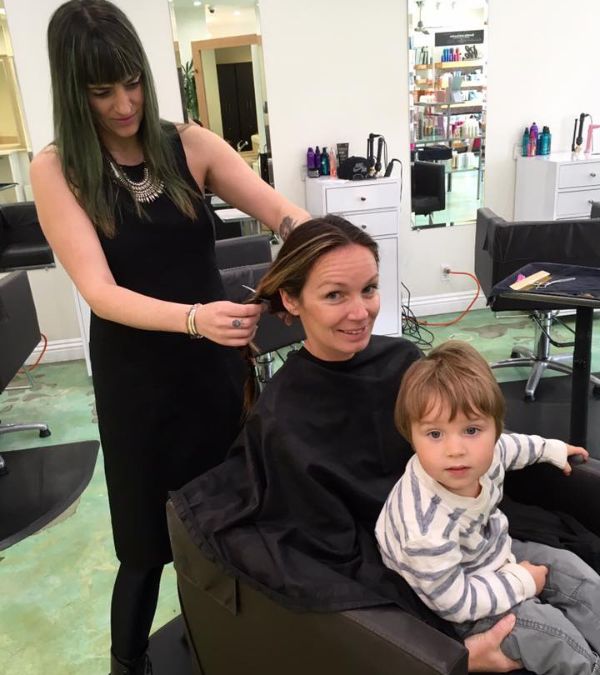
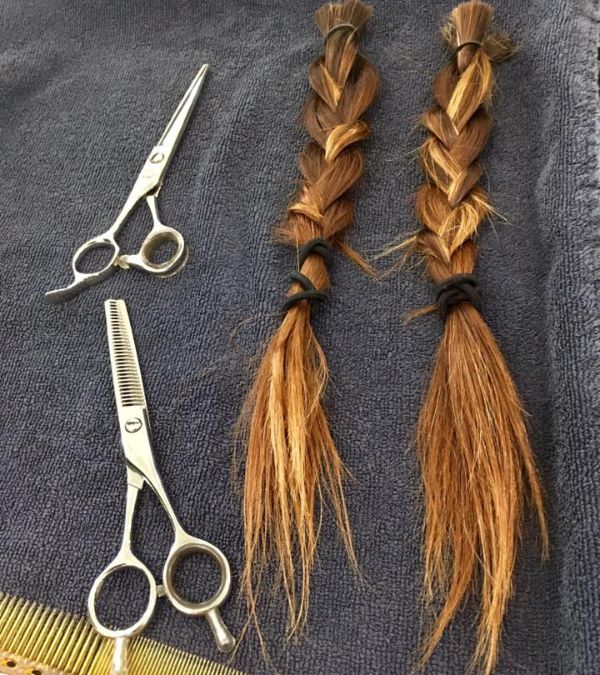
I lost my hair. I had drainage tubes snaking out of my body for weeks. And the life I had built — the only life I had ever wanted — went completely dark.
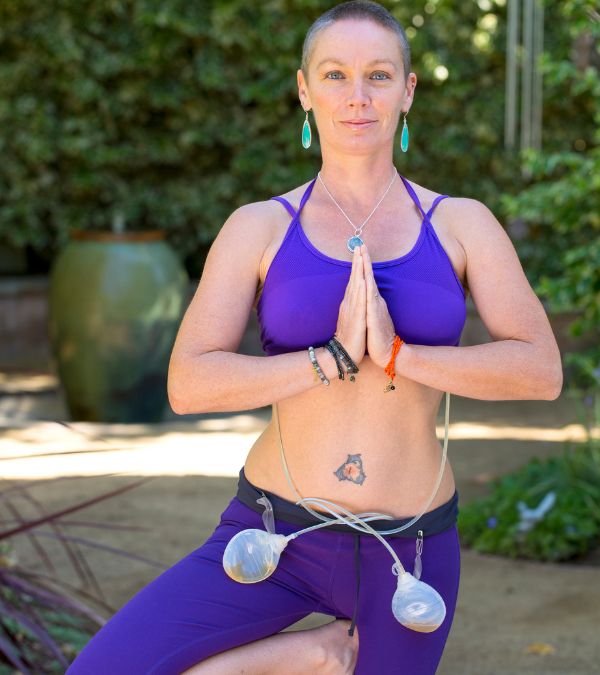
My body is my instrument, the water is my workplace, and movement is how I’ve made sense of the world since I was 14 years old. But you cannot dive with open wounds. You cannot get wet with drainage tubes sewn into your chest. You cannot be a stuntperson with a sliced-up body held together by surgical staples and medical tape.
For the first time in decades, I could not get in the water. Not a pool. Not the ocean. Nothing. The career I had built across 27 Hollywood productions, the identity I had worn as naturally as a wetsuit — all of it on hold.
I ended up homebound. Completely, frustratingly, heartbreakingly stuck at home.
And broke. My entire professional life — stunt work, dive instruction, underwater safety, all of it — depends on being in the water. No water meant no work. No work meant no income. The only money coming in during those months was from my small jewelry business, handcrafted crystal and gemstone pieces I’d been building on the side. Suddenly, it wasn’t a side project anymore. I sat in a chemo chair making beaded bracelets by hand, listening to audiobooks, trying not to think about the productions moving forward without me or the dive trips I was missing. There’s a particular kind of humility in that — a woman who had worked on some of Hollywood’s most demanding underwater productions, now grateful for every jewelry order that came through.
Pulled under
After surgery, recovery became its own full-time job — and I was terrible at it. Every time I started to feel a hint of relief, impatience clawed at me. I’d find myself outside pulling weeds, attempting gentle yoga, pushing harder than I should, and paying for it immediately. Skipping painkillers even once meant ending up curled over the edge of the bed, gripping the sheets, counting the minutes. The drainage tubes snagged on cabinet handles and door frames constantly, and when one finally pulled loose in the kitchen while I was making coffee, leaking fluid down my shirt, I stood there thinking: This is my life now. A body that used to flip through the air on film sets, that had logged thousands of dives across five continents, was now being outsmarted by a kitchen cabinet.
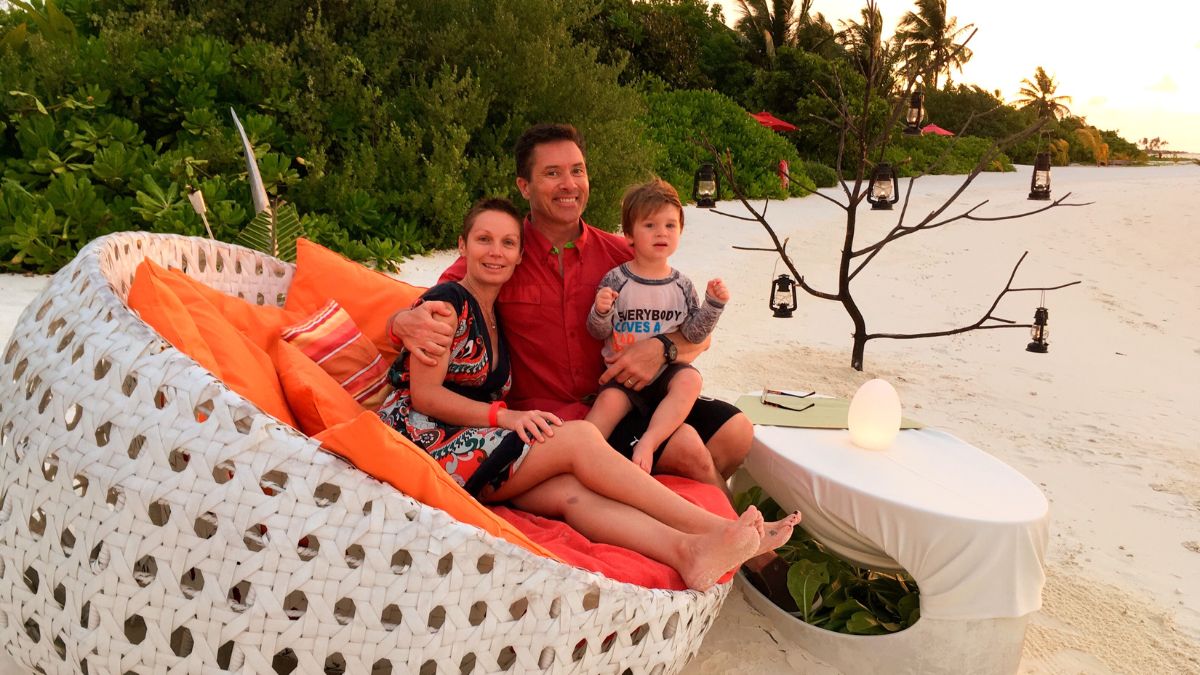
My husband Hilaire held everything together — managing our child Enzo, managing me, gently but firmly reminding me to slow down when I wouldn’t listen to myself. I was enormously grateful and also quietly going out of my mind.
The emotional weight was harder to name than the physical pain. I had just buried my mother. I was grieving her, grieving my cousin, grieving the body I used to live in so easily and the career I didn’t know when I’d get back to. The woman who had never stopped moving — who had built her entire identity on being capable, physical, fearless in the water — was stuck on a lounge chair on the terrace, taking it one slow walk down the beach at a time. Some days, that walk was the whole victory.
What got me through, oddly, was making things like the bracelets. I posted unfiltered photos on social media — the not-pretty ones, bald and raw — because hiding felt worse than being seen. The response from people, friends and strangers alike, became its own kind of lifeline. I stayed as present as I could in a body that felt completely foreign — numb across my chest where the nerves had been severed, unrecognizable in the mirror. But I kept making things. I kept showing up.
That stillness was its own kind of grief. And the water — the one thing that had always saved me — was exactly what I couldn’t have.
I write this not to shock you; I write it because I think we do each other a disservice when we make the cancer story too tidy. The truth is ugly, and then it gets better. Both things are real.
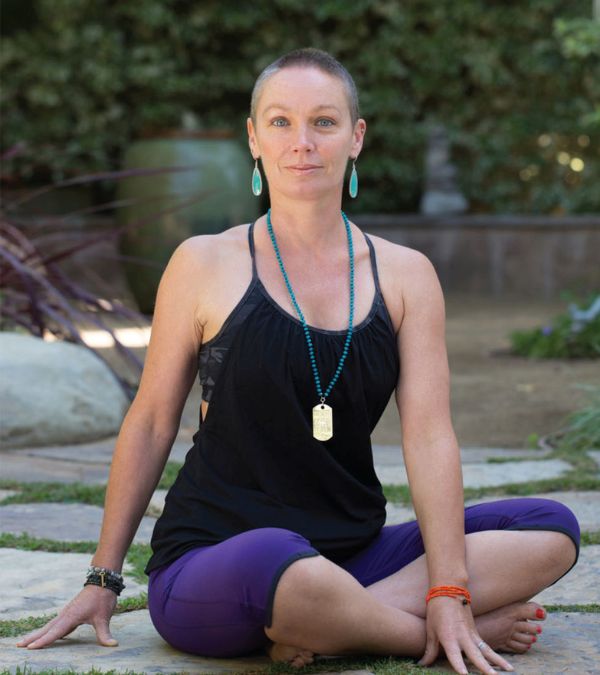
Waves of healing
The thing that saved me — really, consistently, physiologically saved me — was water.
Not in a poetic, metaphorical way. Actual water. Oceans. Pools. Anywhere I could finally get back in.
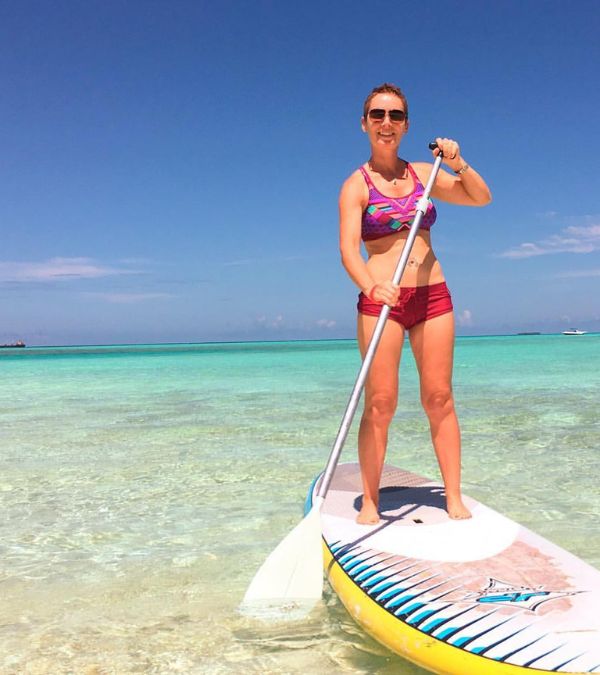
My first dive came about 6 months after surgery. I wasn’t sure my body would feel like mine anymore. I’d been so altered. I waded in slowly, not the way I usually do — not with the confidence of someone who has logged thousands of dives and knows exactly what she’s doing. Carefully. Almost asking permission.
And then I submerged.
The ocean pressed around me, and for the first time in months, the weight lifted. Not disappeared — just redistributed. The water held me in that particular way it does, impartial and complete. Fish moved through the blue around me. Light fractured on the surface above. I breathed, in and out, slow and deliberate, the way you have to underwater.
I cried into my mask. That kind of crying where you don’t even decide to — your body just releases something it’s been holding.
That dive told me I was still myself. Still capable of wonder. Still belonging to the ocean.
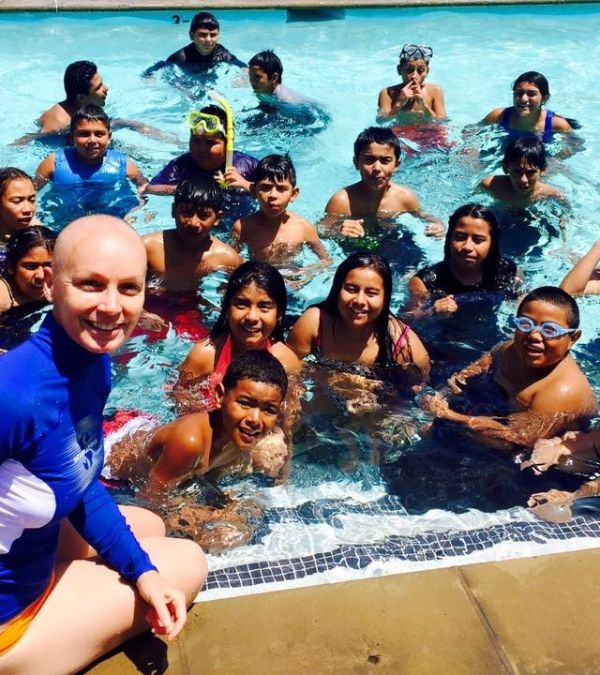
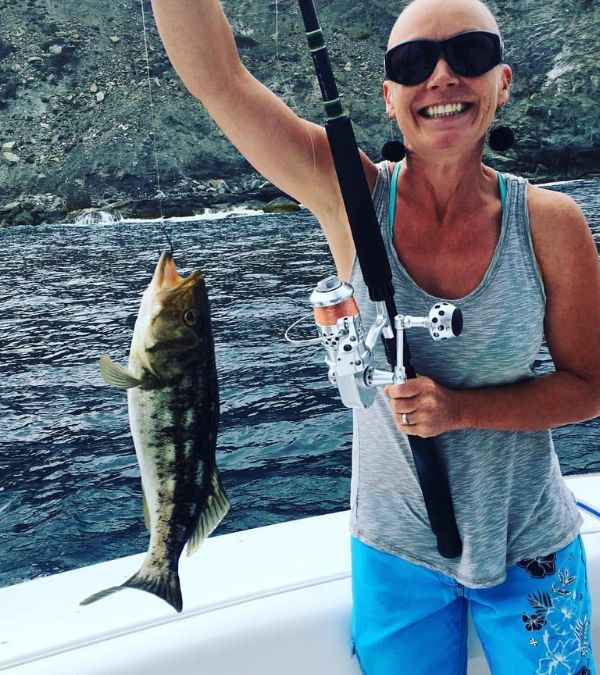
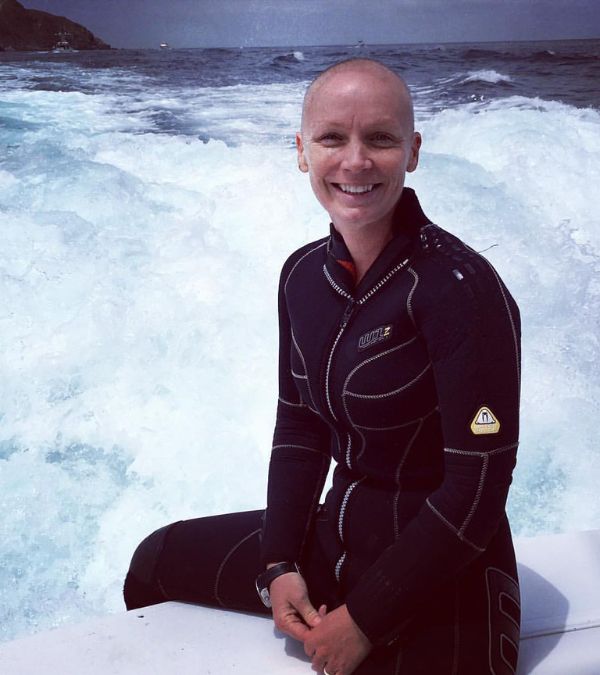
Uncharted waters
I’ve always made calculated bets — with stunts, with dives, with my career. Now I make them with my body, my health, my time. The calculus is different, but the skill is the same: Gather information, trust your gut, commit to the decision, and don’t second-guess yourself into paralysis.
I don’t sweat the small stuff anymore. I don’t waste my time on shallow friendships, empty obligations, or things that don’t feel aligned with my values. I say yes more carefully now — to projects, to people, to the life I actually want.
After my diagnosis, learning I carried BRCA2 changed how I understood my future risk, as well as my family’s history. I wrote all about my experience in Diving into Dreams — not because I had it figured out, but because I didn’t. Because I think women going through this deserve honesty more than they need inspiration. They need to hear: It is brutal, and you can survive it, and you can find your way back to the things that make you feel alive. Maybe it’s the ocean. Maybe it’s something else entirely. But it exists. You can find it.
The world did not get smaller after my diagnosis. If anything, it got more vivid. More precise. I notice things now — the way light looks on water at 6 a.m., the weight of a good conversation, the particular pleasure of being physically capable again.
My father never got to find out what was in his DNA. My cousin Noémi ran out of time. My mother fought her own version of this disease in a hospital far from me, in a language I grew up speaking, surrounded by people I love. None of us chose this. But I got to choose what I did with it.
Cancer taught me what I thought I already knew from every dive I’ve ever taken: You have exactly this moment. Not the dive last week, not the one tomorrow. This descent. This breath.
Ride it fully. That’s all any of us can do.
DISCLAIMER:
The views and opinions of our bloggers represent the views and opinions of the bloggers alone and not those of Living Beyond Breast Cancer. Also understand that Living Beyond Breast Cancer does not medically review any information or content contained on, or distributed through, its blog and therefore does not endorse the accuracy or reliability of any such information or content. Through our blog, we merely seek to give individuals creative freedom to tell their stories. It is not a substitute for professional counseling or medical advice.
Stay connected
Sign up to receive emotional support, medical insight, personal stories, and more, delivered to your inbox weekly.
- Contributor since 2026
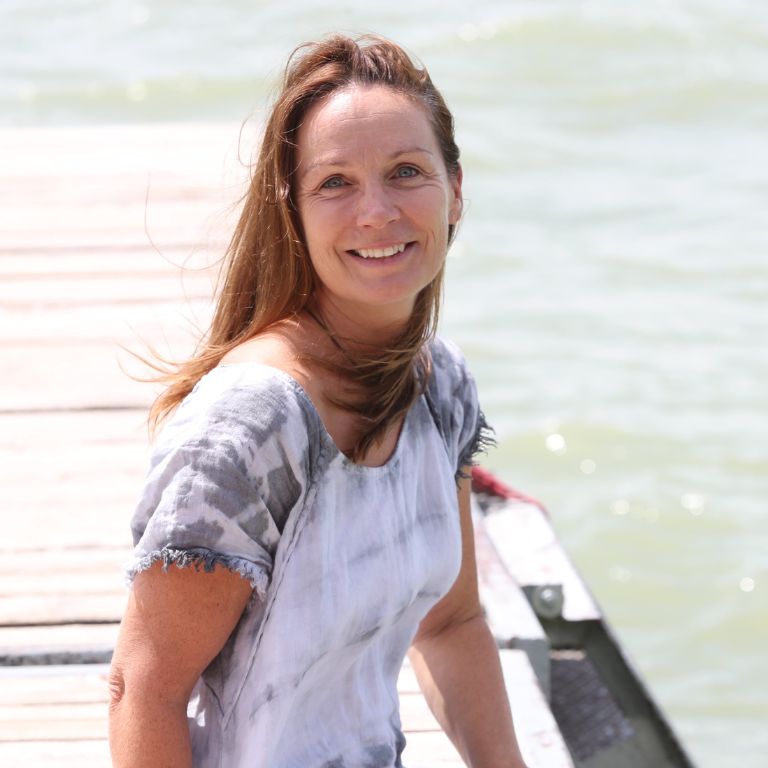
- A professional scuba diver and stuntperson, Szilvia was in the film Avatar: The Way of Water
Tagged:

Living Beyond Breast Cancer is a national nonprofit organization that seeks to create a world that understands there is more than one way to have breast cancer. To fulfill its mission of providing trusted information and a community of support to those impacted by the disease, Living Beyond Breast Cancer offers on-demand emotional, practical, and evidence-based content. For over 30 years, the organization has remained committed to creating a culture of acceptance — where sharing the diversity of the lived experience of breast cancer fosters self-advocacy and hope. For more information, learn more about our programs and services.