
Patient-centered dosing in metastatic breast cancer
Improving quality of life and shared decision-making

Presented by Living Beyond Breast Cancer in partnership with Sidney Kimmel Cancer Center at Jefferson Health, Gilead, and the Patient Centered Dosing Initiative
Join an interactive discussion designed for oncology nurses, navigators, social workers, and other breast cancer providers exploring how patient-centered dosing can improve quality of life and strengthen communication with people living with metastatic breast cancer (MBC).
For people living with metastatic breast cancer, treatment is lifelong. How dosing decisions are made — and how those choices are discussed — can have a profound impact on your patients’ daily lives, emotional well-being, and treatment adherence.
Our panel shared practical strategies and real-world examples of how adjusting treatment cadence and dosing can preserve quality of life while maintaining clinical effectiveness.
You’ll also learn about new bilingual tools from LBBC in partnership with Sidney Kimmel Cancer Center that support shared decision-making and enhance patient education.
What you’ll learn
- How patient-centered dosing can help improve quality of life for people living with metastatic breast cancer
- Ways to adjust treatment schedules and dosing plans while maintaining effective, compassionate care
- How to use new bilingual (English and Spanish) tools to support patient education and shared decision-making
- Practical strategies for having open, meaningful conversations with patients about side effects, dosing effectiveness, and treatment choices
Please note that certificates of participation are only available to participants who joined the live program.
About our speakers
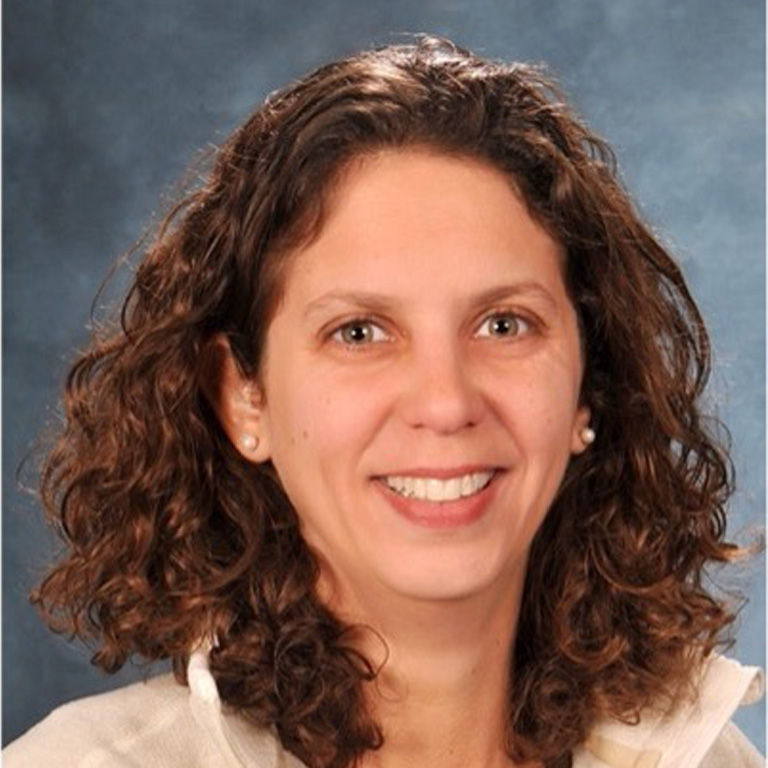
Amy Leader, DrPH, MPH
Professor, Thomas Jefferson University; Associate Director for Community Outreach and Engagement, Sidney Kimmel Comprehensive Cancer Center
Dr. Leader is a professor in the division of population science, department of medical oncology at Thomas Jefferson University. She also teaches courses in the Master of Public Health program through the Jefferson College of Population Health. As an associate director for community outreach and engagement at the Sidney Kimmel Comprehensive Cancer Center at Jefferson, an NCI-designated cancer center, Dr. Leader leads research focused on health disparities, community engagement, and health communication across the cancer continuum.
Read more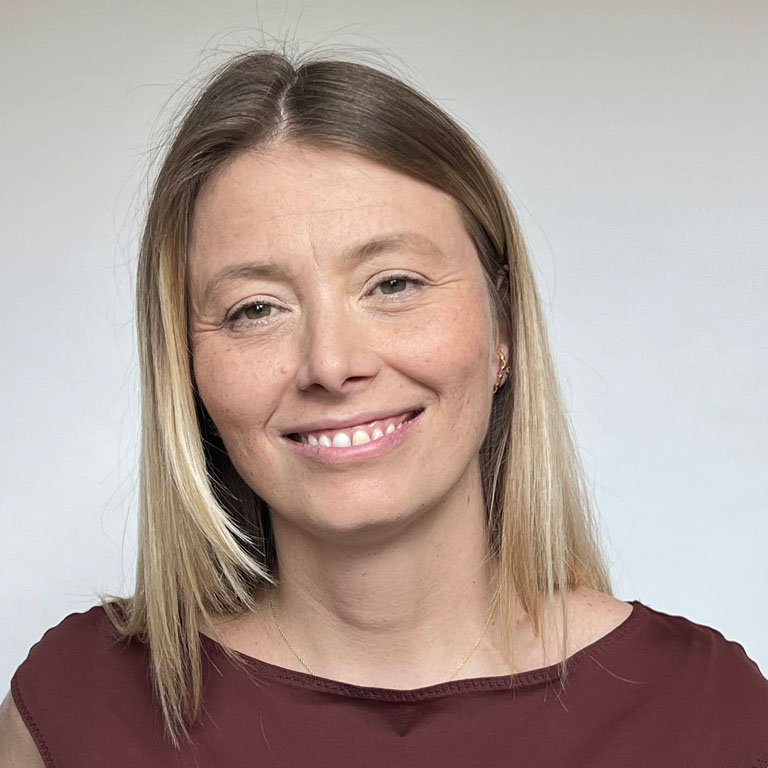
Julia Maués
Patient Advocate, Co-founder of GRASP
Julia’s life took an unexpected turn when she was diagnosed with breast cancer while pregnant in 2013. Now living with metastatic breast cancer for over 12 years, she has personally benefited from treatment advances driven by research and clinical trials — fueling her commitment to bringing patients’ voices into research to ensure it is inclusive, patient-centered, and reflective of real-world experiences. Julia leads the Patient-Centered Dosing Initiative (PCDI), which advocates for treatment strategies that optimize both efficacy and tolerability to improve patient outcomes.
Read more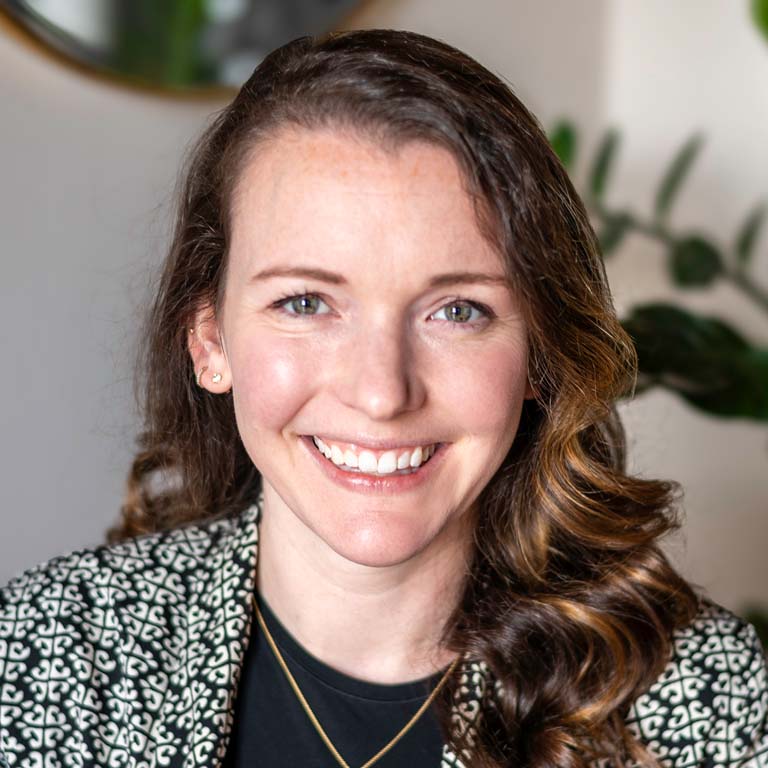
Caroline Koffke, RN, BSN, OCN
Director, Educational and Healthcare Provider Programs, LBBC
Caroline is an experienced oncology nurse with a focus on breast cancer care. Over the years, she has honed a compassionate, patient-centered approach, providing expert guidance and support to individuals navigating the complexities of breast cancer treatment. As the director of educational and healthcare provider programs, Caroline leads initiatives to develop and deliver high-quality, evidence-based educational resources for patients, caregivers, and healthcare professionals.
Read moreResources
Living Beyond Breast Cancer resources
Webpages
- Patient-centered dosing
- Testing and precision medicine
- ctDNA testing
- Next-generation sequencing (NGS) tests
Video
External resources
This program is presented in partnership with

Transcript
Caroline Koffke, RN, BSN, OCN (00:09):
I am honored to introduce you to our two speakers today.
(00:12):
Julia Maués is a patient advocate and co-founder of GRASP. She also leads the Patient-Centered Dosing Initiative.
(00:21):
And Dr. Amy Leader, a professor at Thomas Jefferson University in the division of population science, department of medical oncology, and associate director for community outreach and engagement at the Sidney Kimmel Comprehensive Cancer Center.
(00:36):
We’re so thankful to have both speakers join us today, and you can learn more about them in their full bios on lbbc.org.
(00:43):
Julia will start our slide presentation followed by both Amy and myself, and then we will take questions afterwards.
(00:50):
Welcome, Julia, and thank you for joining us!
Julia Maués (00:54):
Thank you, Caroline. Thank you for inviting me. It’s really wonderful when these programs also include the voice of a patient.
(01:03):
I am here representing the Patient-Centered Dosing Initiative. I will talk a little bit about PCDI. You can move to the next slide. I don’t have any conflicts.
(01:15):
I am here as a person living with metastatic breast cancer and a patient advocate. My own story is that I was diagnosed with breast cancer while I was pregnant at 29. After my son was born, I could do tests that showed that I already had metastatic disease. I’ve been living with metastatic breast cancer for over 12 years now, and my advocacy is centered around bringing the lived experience to cancer care and cancer research.
(01:44):
I have founded two organizations focused on this mission. One of them is GRASP, and we really facilitate connections between scientists and patients. And the other one is the Patient-Centered Dosing Initiative.
(02:00):
Regarding cancer drug dosing, there’s this idea that more is better. Right? And historically, the dose of these drugs have been determined using dose escalation studies that is often determined by the maximum tolerated dose. These are small trials for short periods of time, and they really go for finding the largest dose that a small number of patients can tolerate. Then that’s moved to phase II and then later phase III to maybe thousands of patients, and then even more patients when it enters the real world.
(02:44):
It’s really based on this premise that more toxicity means greater efficacy. That premise is based on old-school chemotherapy drugs, and it is not always applicable. In fact, it’s often not applicable for new treatments like targeted therapies and immunotherapies. It does not consider long-term side effects because these trials are short and they look at a small number of patients. And those of us with metastatic disease, as you all know, are most likely going to be on treatment for the rest of our lives.
(03:21):
So when they are considered “tolerated,” who says that? And for how long is that really tolerated?
(03:30):
What happens in real life? In reality, what patients end up doing is they push through side effects even when their life is terrible. They underreport their symptoms because they’re afraid that they’re going to be taken off the treatment that is working, whether they’re on a trial or if they’re taking the drug after approval.
(03:53):
They also have this fear that if they were to tell their provider that they’re having a hard time with the side effects and there’s a change in their treatment, maybe a dose reduction, that it’s going to be less effective against the cancer. And this leads to delayed treatment adjustments, delayed supportive care, and people suffer more than necessary. These three quotes that I included from real patients, one of them says, “My kids say that every 3 weeks I become ‘zombie mommy.’” And that family has just adjusted to that mom being unavailable, completely a zombie, on the couch for 4 days after each treatment. Another one says, “I have to wear adult diapers if I will not have access to the bathroom for more than an hour.” And actually that was a specific case where she had to wear diapers every day for carpool because she knew that she would sit in carpool for a long time waiting for their children to come out of school. And she couldn’t do it without a bathroom.
(05:05):
“I get asked how I feel on day 1 of the treatment cycle, and then by the time the next treatment cycle comes, I’m feeling good again. So I get asked again, how am I feeling? And I’m feeling good again. But no one talked to me in the middle of this cycle where I felt very miserable.”
(05:24):
The Patient-Centered Dosing Initiative, we are a group of patients that really started questioning this practice of routinely treating metastatic breast cancer patients with the highest tolerable dose. This was an idea that was generated by a person living with metastatic breast cancer for many years, Anne Loeser. She was a well-known advocate and a very, very driven person. She started with this idea and brought a group of us together.
(05:54):
MBC is incurable, but we can be treated for many years, maybe even decades. But we don’t only want to live longer; we want those longer years to also be a life worth living. There’s more and more evidence now that suggests that lower doses for some of these MBC drugs can be as effective as the maximum tolerated dose.
(06:20):
And then anecdotally, our group of friends and then more and more as we talk to more patients, we have seen several of the long-term survivors. They are on reduced doses for one reason or another, but that is what has allowed them to be on some of these treatments for such a period of time. And unfortunately, there’s not enough evidence of that, but we are seeing more and more.
(06:47):
Here’s a group of patients that are currently involved with the Patient-Centered Dosing Initiative. There are several people that have been involved in the past and are no longer because advocates just go in and work on different projects. And we also are recognizing the members of PCDI that have passed away. And at the top of the loving memory pictures is Anne Loeser, who’s the founder of this.
(07:14):
Importantly we have a group of doctors and researchers that are advisors. They’re very well known, they’re very respected, and they’re very involved in this work. And it’s very important for the credibility of this patient-driven work to have the foundation of these experts in the field.
Caroline Koffke, RN, BSN, OCN (07:35):
Thank you so much, Julia. That is the end of your slides for now. And I’m going to quick switch how I’m sharing.
(07:42):
As I mentioned, I am the director of educational and healthcare provider programming here at LBBC. I am also an oncology nurse, OCN certified with a specialty in breast cancer. So I wanted to talk a little bit more about the research behind dose reductions and some of the trials. A lot of the things that Julia mentioned. I’m just going to go into a little bit more detail, and then I know that she will talk a little bit more about those things at the end of our presentation today as well.
(08:09):
So the research behind dose reductions is becoming more and more advanced, as Julia alluded to. But something that I want to highlight for us as we’re framing our dosing conversation today is that dose really is the amount of medication, the schedule of medication, and the duration of medication.
(08:26):
So if you have someone who is taking 2 weeks off between two doses of sacituzumab as opposed to 1 week off, that would actually be changing the dose of that medication even though you’re really changing the schedule or cadence. So there’s a lot of different ways that you can play around with this idea of dosing besides just the amount of medication that you’re giving on any given day.
(08:49):
And then, as Julia mentioned, we have this amazing Project Optimus, which is some progress that PCDI and GRASP has made with the FDA to switch from highest tolerable dose to optimal dosing, as Julia mentioned. And I’m going to show you some examples of that in practice.
(09:08):
You can see this new dose optimization schedule on the right here. We’re starting with more dosing options in those phase I trials in order to come up with two possible doses in phase II trials. Typically it’s a higher and a lower dose that both are showing similar efficacy in that phase I trial. And then we take the optimal dose into the phase IIB, phase III studies in order to see how that is working in a larger population. But this is a big shift, as Julia mentioned, from going just the highest tolerated dose to what dose still works but is more tolerable for our patients. So I wanted to highlight two trials where this is shown in practice.
(09:53):
SERENA-2 was an amazing trial that AstraZeneca ran with their drug camizestrant. This is the data from their phase II. And they used two different doses of camizestrant based on their phase I data. They used a 75 milligram and a 150 milligram dosing based on exactly as what I just showed you, those two optimal doses.
(10:15):
And the data was very stark in that cami at 75 and cami at 150, were essentially equivalent. Obviously you can see the fulvestrant line in red was inferior, which is why camizestrant is working on getting approved. But both the 150 and the 75 milligrams were essentially equivalent. So then they actually brought the 75 milligram into their phase III trial, and that’s what’s up for approval now.
(10:43):
And this is huge. While it may not seem like a big deal, this is a huge deal for PCDI, for GRASP, and for the entire breast cancer community to see that we actually are able to have lower doses that are just as efficacious.
(11:00):
Another great trial here is the monarch E trial with abemaciclib. So what they did is they took a look at 4 years of data. And this was a retroactive study. They looked at 4 years of data in all three relative dose intensities of abemaciclib. So 150 milligrams, 100 milligrams, and 50 milligrams. And basically what they saw is there’s no real difference between those three doses and a patient’s overall progression-free survival there, or distant survival data. So that was really amazing to see as well that abema is equally effective at those three different levels. But then they actually took it a step further. And that’s what leads us to the TRADE study, which just reported out in ASCO of this year. And this is where we investigated in the early-stage population dose escalating with abemaciclib, or Verzenio, starting low, and then building abemaciclib in those high-risk, early-stage patients where we’re using those CDK 4/6 inhibitors, either abemaciclib or ribociclib.
(12:08):
In this design, they had patients start on just 50 milligrams for 2 weeks, then increased them to 100 milligrams for two weeks, and then they went to the full dose of 150 milligrams for the rest of their two years, as long as they didn’t have adverse events that required a dose reduction.
(12:25):
And the preliminary results are that dose reductions did not compromise effectiveness. We saw that in the monarchE trial. So that’s not surprising. But more importantly, many less patients discontinued their medications, patients reported less side effects, and this promotes personalized dosing strategies for better patient management.
(12:46):
It’s important now that we’re thinking about all of these things with our trial designs. Can we start low and titrate up? Can we start at a lower dose that’s just as efficacious? And a lot of questions that we get as healthcare professionals is: Is it going to work as well? If I start a patient or if we dose reduce a patient to 7.5 milligrams of sacituzumab instead of 10 milligrams of sacituzumab, will it be just as effective?
(13:12):
More often than not, we don’t have a trial that shows that, which is why these trials are so impactful, the trade study monarchE and SERENA because we do have the data that says, yes, this will be just as effective. We have a lot of anecdotal data that shows that a lower dose can be just as efficacious. It’s just unfortunate that we don’t have those clinical trial data to officially back it up with science, but our drugs moving forward should all have this incorporated so that we have a better path moving forward for patients.
(13:46):
All of this to say though, it’s incredibly important, and I know Julia will talk about this as well, to have the conversation with your patient. Obviously we want them on the drug. They have to be taking the drug in order for it to work. So if we can do that with dose reductions and keep them on their treatment longer so that we can extend their treatment options, that’s always the goal.
(14:10):
I want to talk a little bit now and then I’m going to bring Dr. Leader on, Amy on, to talk more about this, about what LBBC and Sidney Kimmel Cancer Center have really worked on together based on the fact that we realized that patients and providers need to have these conversations and need to know about patient-centered dosing or involving the patient and their quality of life as a top priority when picking dosing. We collaborated, with a grant from Gilead, with Sidney Kimmel and with Amy and her team, in order to create some materials to distribute into the clinic that help patients and providers have these conversations and also allow people to realize that you don’t necessarily need to be on the highest dose in order to have some great results.
(14:59):
We did that in a number of ways, and Amy’s going to go into way more detail about this, but we did some focus groups, English and Spanish speaking, we created some materials. Amy’s team tested these in the clinic, and then Amy was kind enough to do some data analysis of how these materials are actually presenting for patients and their providers.
(15:21):
Here’s just a quick example, and again, Amy will go into more detail of the discussion sheet about patient-centered dosing, but it allows patients to really think about what they want to do, what side effects are getting in the way, how frequently those side effects are. Because we know, especially as nurses, social workers, we hear these things tangentially, if at all, because patients are oftentimes feeling as though they need to just kind of suffer in silence. And that’s a real shame because we know that there’s a lot we can do as far as supportive care and dosing adjustments in order to make our patients more comfortable.
(15:56):
So this guide is supposed to help, and we will send these resources out to you as well. But I do want to hand it over to Amy, to Dr. Leader, to talk a little bit more about the creation of these materials and then the results that we saw. Thank you, Amy.
Amy Leader, DrPH, MPH (16:11):
Thank you, Caroline. Thank you to LBBC for this webinar and for the work we’ve been doing together, and to Julia for sharing her story and her work. And I am pleased to come along and continue our story.
(16:21):
As Caroline was saying, as LBBC was tasked with creating some new patient-centered dosing materials we all recognize that the best way to do this work is to do it with patients and for patients. And so you’ll see going to our next slide, Caroline, the process that we undertook to create and evaluate our materials.
(16:43):
We have two phases here. I’m just going to briefly go through this so we can get back to hearing a little bit from Julia and then open this up to discussion. But our first phase was we wanted to involve patients in the design of those patient-centered dosing materials. And then the second phase is we again wanted to involve patients in the evaluation of those materials.
(17:00):
So our first phase, as Carolyn alluded to, is we did some focus groups. We wanted to hear from patients. We wanted to hear from people living with metastatic breast cancer about what they wanted to see in materials, the content, the delivery, the mode. Just help us out, tell us what we should do. So we reached out to LBBC’s vast network of patients, and we conducted our focus groups with 14 participants. We had three of them in total. Two of them were English speaking groups, and one of them was a Spanish speaking group. And that one was done entirely and moderated in Spanish. We did follow a preset moderator guide, where we asked them initially about their experiences with living with metastatic breast cancer, where they look for information, how they find information, what information would be most helpful to them, and then everything they could tell us about designing these new materials in a way that would work for them.
(17:49):
We did audio record those discussions because we wanted to pay perfect attention to everything we were saying and not be burdened with note taking. And then we worked with a company that transcribed them for us, and then we did our analyses and pulled out all the key pieces for the materials. And the lovely people who worked with us, the 14 participants, all received $75 in compensation. Thank you to Caroline for organizing a lot of that work in the spring.
(18:13):
I’ll share with you some of our results here, just very briefly. So when we asked them about their experiences with patient-centered dosing, as you can see here, there were mixed experiences. Many of them were doing it, whether they had heard of that term before or not. And you can see here in the bubble, “I hadn’t really heard of the term, but it’s been happening for me all along.” Or “I didn’t know that I had that explained, or I used that phrase, but I have had conversations with my doctor because of side effects where we reduce the dosage.”
(18:38):
So I do think it is a natural thing that comes up in conversations, Julia was alluding to it, maybe just not the terminology that they had heard about. So that was something for us to keep in mind as we were developing materials.
(18:50):
We asked them, have they talked with their care team about patient-centered dosing. And yes, for most of those that we, in our focus groups, yes, it was something they were talking about with their treatment team. Some of them had some hesitancy initially bringing it up for all sorts of reasons that you can see in the comment bubble here. They did mention advocacy. And the reason that they were doing this was about quality of life.
(19:12):
And you can see the first little bubble there, “There was this little hesitancy like I don’t want to be a bother, I don’t want to complain.” I think also women tend to have that intention about them. And so that came up in our conversations. As Julia mentioned on the second one, “The concern is if we back down then, like with chemo, is it going to progress? Will it not be strong enough?” Concerns that they need to share with their care team.
(19:33):
Advocacy came up a bunch in the third bubble here that we highlighted. “It’s important for patients to know they’re much in control of this situation as the doctor.”
(19:41):
And there was a lot of discussion, everything around patient-centered dosing led back to quality of life, that people want to continue to live, not just continue to exist. That was pretty much clear across the board.
(19:53):
And then we asked them, tell us everything we should do in these new materials. And so we got some really great things on feedback on material, things they’d like to see in data, terms. You can see the little comment bubbles here. One of them is about a glossary in English and Spanish, for some of us this is new language, came up over and over again. “Keep this short and sweet.” And you can see that material that Caroline highlighted was one page. So short and sweet, direction to find out more. Everybody does want to find out more, but a lot of them said that this is very overwhelming in the beginning, and please don’t give them a lot of information upfront.
(20:25):
And then different formats, YouTube videos, someone mentioned blogging, all sorts of things there. And patient experience was going to be really key. They wanted to hear some positive stories that people were just thriving years down the road. So these are some of the nuggets that we got out of this.
(20:38):
Then LBBC worked their magic, and they created their materials that Caroline was showing you. And I’ll show you another example in the next slide. Once the materials were created, we wanted to evaluate, again, with a small group of patients to see what their reaction was to them. And so again, any participant or any patient who was living with metastatic breast cancer was eligible to participate. I’m based here in Philadelphia, and so we tapped into our clinic and we did some of them in person, but we also sent some of them online, particularly for our Spanish-speaking community. It was designed to be completed this little study, as we called it, 15 minutes, no more, no less. And they received $25 for helping us.
(21:13):
So the way that we did this is we had a little pre-survey about their knowledge, their attitudes, intentions to talk to their doctor about patient-centered dosing. Then they got to look at the materials that LBBC created for as long as they wanted to. They could sit with them, they could go quickly, they could go forward, backwards just as long as they desired. And then they did a little post-survey, again about knowledge, attitudes, and intentions to talk to their care team to see if things had shifted even in just that short amount of time that they looked at those materials.
(21:38):
We had 20 of our English-speaking participants look at these materials. We had eight Spanish-speaking participants look at them. Very briefly, they’re all in active treatment. Half of them were receiving care at an NCI-designated cancer center. There was a range in how long they’d been living with metastatic breast cancer. There was a high level of health literacy, because they are patients living with metastatic breast cancer, but there was varying levels of educational attainment. And 75% had heard of patient-centered dosing.
(22:07):
And so here’s a little summary slide of our evaluations. You can see when we asked about knowledge. That said the pre-test before even looking at materials, 71% people got our knowledge questions correct, but it went to 80% on the post-test. And then the next couple questions here are about attitudes and understanding the best dose that’s right for them and the benefits and what’s clear on the benefits and things like that. And in the pre-test, on a scale of one to five, our mean scores were always in the threes, even down in a two at the bottom. But by post-test, everybody was in the four or the threes. So everybody kind of moved up almost a full point on these things. So just in a short amount of time of looking at some materials, we got some nice data here that showed people were more understanding of patient-centered dosing. They were clear about how it might matter to them and that they had support in having those discussions.
(22:54):
And so just to wrap up my little part before I pass it back over to Caroline, who then I think passes it back over to Julia, involving patients living with metastatic breast cancer in the design of these materials was crucial and key for us from the beginning, from both my side and LBBC side. We knew that was the way to do it. They had incredibly important feedback that was so great on the content of that material when we did our focus groups, and we took all of it into heart. Even the tone, how we disseminate things like that. The evaluation that we did really did show that just looking at the materials for a brief amount of time, or for however long that they wanted, did show changes in knowledge and attitude, and they felt more confident about patient-centered dosing.
(23:32):
Materials and patient education is really important, and I’m pleased to say that we’re going to be doing some future iterations of these patient-centered materials, taking even more of those comments to heart. There were some things that we just couldn’t get to in this round of iteration in terms of making them interactive, links, clickable links that work, and more kinds of dissemination and videos and patient stories. And so all these things are going to come to fruition in in version two of it.
Caroline Koffke, RN, BSN, OCN (23:59):
Yeah, thank you, Amy. I think it’s super impactful to just realize that having these conversations, starting these conversations, expanding a patient’s mind just very briefly, can really change the trajectory in their confidence and potentially in the care and quality of life that they’re receiving. And it really doesn’t take much of an input to get that output. So thank you for highlighting that.
(24:21):
And Julia, I would love to bring you back.
Julia Maués (24:23):
We’ll just go over, we did a survey back in 2020, and we asked patients about side effects and toxicity, and then we also asked them about if they would consider dose reduction and and if they’ve had that conversation with their healthcare team. I think very importantly, we asked: Is toxicity a bad issue for you? And we left that very broad because for different people it means different things. And 86% of patients said yes. Out of those 86%, one in five, 20%, had to visit the emergency room or hospital because of a side effect issue. And 43% missed or had to skip or postpone one of their treatments. And I always go back to: How good is a treatment that you can’t take because it’s so toxic? I guarantee that one will not work. We don’t need a clinical trial for that. And then we asked patients about, those that had a dose reduction, if they felt better, and 83% of those patients said that they did.
(25:38):
So we wanted to influence the research world, and we know that in order to do that, we need to speak their language. So we published our survey, and we presented it at conferences. In fact, in 2021, we submitted an abstract to ASCO, hoping to get a poster. And Anne was actually selected to give an oral presentation, and that’s the picture in the top right. And it was a virtual year, so she was from home, which might’ve been good for her because she didn’t have to travel, but I think for me, it was the first time I saw a patient in one of those big stages between maybe Dr. [Hope] Rugo and Dr. [Aditya] Bardia giving a talk to thousands of people.
(26:27):
Anne’s talk was in June of 2021. Just a few months later, the FDA came out with a position paper in the New England Journal of Medicine that talked about drug dosing and when less is more. And then Dr. Atiqur Rahman, who’s a pharmacologist, at a Friends of Cancer Research meeting, said, “It’s loud and clear from our patients that the drugs are too toxic. Patients deserve a more tolerable dose.” And in this New England Journal article is when they first started the direction of Project Optimus that Caroline referred to, which is the FDA’s initiative, pushing industry to do better at determining the dose, looking at more than one dose in those early trials, and then studying more than one dose for a little longer so that we can be more certain that that higher dose is actually necessary when you do go with the higher dose.
(27:29):
So we see that real change is happening. So Project Optimus is this project focused on clinical trials. And then there’s also Project Renewal, which is one that looks at drugs that are already approved and goes back and says we’re seeing that this drug may not need that high of a dose. So go back and look at lower doses, maybe that’s enough and patients can live a better life with that.
(27:58):
And then in the clinic we want to encourage more and more doctors and patients to have this conversation. Is that the right dose for this patient? And what are all the things that you should take into account? What matters to this patient? What are some of the side effects that are very difficult for them because of their job, because of their lifestyle? And all of that needs to be discussed.
(28:21):
So we we developed a couple of flyers, one for patients and one for healthcare providers. And it’s really to guide this conversation.
(28:31):
The one for patients is helping start this conversation. Like, we want the same thing. I want to live the longest possible life for with the best quality of life. I know you want that for me too. Let’s work together. And we are intimidated sometimes to question something that our healthcare team is determining for us. So this is a way to help guide these conversations.
(29:01):
And on the healthcare flyer, there’s a focus on the data and on the survey, and the language is more appropriate and really encouraging them to go in this direction and to talk about side effects and talk about if this is the optimal dose for that patient.
(29:25):
So this year has been an exciting year for the patient-centered dosing initiative. We actually had two surveys this year. So our original survey was in 2020, and then this year we decided to do an expansion of this survey. But then, first, at the beginning of the year, we did a smaller version of a patient survey focused only on antibody-drug conjugates. As all of you know, that’s a really hot treatment type these days. And some people consider it to be targeted therapy that is tolerable, because it’s a smart bomb. And what we’ve seen from the patient community is sometimes it’s not that smart, it’s really a bomb. And dosing is a big issue and needs to be discussed. And are these drugs given at this dose in the real world? We did a survey and we presented those results at MASCC.
(30:27):
After that we also started a new large patient survey. And we’re going to present those results, a first look at the data, at San Antonio, but the survey actually is still open and closes at the end of the year.
(30:47):
So we just wanted to encourage you to talk to patients that might want to take this survey. We have a $10 gift card for patients that take the survey. And for that reason we have individual links. So a patient just has to email surveys@therightdose.org, and they would get a unique link in order to get the survey and, and take it and tell us about their experience with toxicity and those reductions or scheduled changes, et cetera.
(31:21):
And there are infinite benefits for patients. When you are on a more tolerable treatment you have less of a need to go get emergency care, you miss fewer treatments, you can stay on a working treatment longer. We are seeing many cases where treatment is working, but the toxicity is so bad that the patient loses that working treatment. And that’s really sad. It lets us take a broader advantage of all of the different treatments there are, and there’s so many options these days. We have a better quality of life, and hopefully live longer if we take the most mileage out of each of the treatments.
(32:03):
So we believe this is a win all around. Industry, their drugs are available for patients for longer periods of time. Payers have to pay less emergency care. Clinicians and patients are aligned in that they want to live longer and better. And we really believe that the right dose for patients is important for all. I think that’s it.
(32:30):
Thank you. We received funding this year from Arnold Ventures to conduct the survey. We’re very grateful for all the patients that have taken surveys and participated in research, including the LBBC-Jefferson focus groups. Patients are the ones dealing with this every day, and then they’re also the ones providing the information so that we can improve healthcare.
Caroline Koffke, RN, BSN, OCN (32:56):
Thank you so much, Julia. It’s obviously so impactful to hear from you, someone who has been through the process and has also served as an advocate for so long in this space.
(33:06):
It really is so important, and I think it’s extra important to share this with our healthcare provider audience just because sometimes you just look at the prescribing guidelines and you’re like, this is the dose, this is what we give, without really thinking about that whole-person care. And so I love that PCDI also has that amazing healthcare provider guide that says, Hey, newsflash, this is what real patients are saying about their treatments. It just makes it that much more impactful.
(33:34):
Amy, if you want to join us as well, I would love to see if we have any questions from the audience. I know we had one earlier about dosing in redheads, which is super interesting because there is dosing issues with anesthesia and pain medications in redheads. We don’t have any data unfortunately on that with chemotherapy, but it’s it’s a super interesting question. So thank you for that.
(34:00):
Julia, it looks like this one is for you. Is there a general flyer I can share with patients to encourage them to email and receive a unique link to complete the survey? Would love to hand that out to an upcoming breast cancer group.
Julia Maués (34:12):
Yeah, I can send that to you, and you can share it all. But they can also just email surveys@therightdose.org and they will get a unique link.
Caroline Koffke, RN, BSN, OCN (34:22):
Amazing. Okay, great. Thank you so much. Any other questions from the audience for either of our two lovely speakers today? Please remember to put those in the Q&A.
(34:34):
Julia, I would love to hear a little bit more from you. How do you usually engage in conversations with your own doctor? What are some of your key phrases or what’s a really great question that a doctor or a nurse has asked you to help start this conversation?
Julia Maués (34:52):
Yeah. I have, I think through this work realized how privileged I am with the care that I receive. I am so grateful for the interactions that I have with my healthcare providers.
(35:05):
I remember when I had my doctor take this survey, I really pushed her and told her, “Please take this, please take this.” We had an oncologist survey a few years ago, and she did. And then she talked to me about, “I don’t understand those questions. Like if my patient is really struggling with the side effect, would I talk to them about how to manage those or how to maybe manage the dose of the drug that they’re taking? Of course!” And that’s when I realized that’s not always the case. We can’t take that for granted. That is not the experience of all patients.
(35:38):
I think by being an advocate, I have been able to see all of the different interactions that patients have with their doctors and how lucky I am that they do ask me. I get amazing questions and things that I never even thought of brought up by my nurse, by my doctor. And I think the relationship is a partnership rather than just me taking orders.
Caroline Koffke, RN, BSN, OCN (36:06):
That is wonderful. And I think it is important to realize that sometimes this is common sense. This is the first thing that comes out of a doctor’s mouth, a patient’s mouth, a nurse’s mouth, and sometimes it’s never brought up at all. And I’m sure we’ve all kind of experienced one of those stickler or more old school providers who maybe is just very by the books. And so it’s very hard to move that needle in order to get the best outcomes.
(36:31):
I know for me, as a nurse in a scenario like that, one of my best suggestions to my patients is just always to get that second opinion. If they’re not getting where they need to be with their current provider for whatever reason, see if they can get a second opinion elsewhere. Because there are amazing docs out there, many of which I’m sure we all work with, who are willing to make adjustments with quality of life in mind. And that’s so, so essential. So if that’s not your patient experience, I think that’s always a really great question to ask.
(37:04):
Amy, for you, I was wondering if there were any key insights, anything that you heard from your research coordinators or anything interesting that came out of the trial phase at Jefferson that you think, besides what you’ve already shared, might be helpful for the group?
Amy Leader, DrPH, MPH (37:19):
Yeah, thanks. I think the thing that came up, and this is Carla who was our coordinator in doing this work, was saying, and it was mentioned on the focus group slides, that they have naturally been doing this, but had never heard of that term. And so when Carla was initially talking to patients about this, she would say, patient-centered dosing, and they would sort of, “Oh yeah, not for me, whatever.” And then she would explain it a little bit and they’d be like, “Oh yeah, I’ve been doing that all along! Yeah, I’m happy to help. I would love to see those materials.” And so sometimes terminology is key. I think, Julia, you’re right, it is maybe a natural thing that you want to have a high quality of life, and so you’re going to try and discuss these things and figure out the right dosage. And so she had to adjust her approach to patients about this and used different words and then got a lot more buy-in.
Caroline Koffke, RN, BSN, OCN (38:07):
That’s really interesting. Julia, have you seen that as well with PCDI or GRASP that different words sometimes work better?
Julia Maués (38:16):
Yeah, absolutely. And I’ve also seen that people’s priorities change over their lifetime. So I was just thinking and talking with someone recently about dosing in newly diagnosed, and whoever I was when I was first diagnosed is a very different. My knowledge and what I thought were my priorities were very different. So I think these are conversations. It’s not a box that you tick once, it’s a conversation that has to be had all along.
Caroline Koffke, RN, BSN, OCN (38:49):
That is super important. And I’m glad that you said that. We know that our words matter and there’s a lot of push in the advocacy community to standardize some language. A perfect example of that is biomarker testing versus genomic testing. And so I think something like patient-centered dosing could also become more mainstream for patients if more people are talking about it. That’s definitely a consideration as well.
(39:14):
Let me just check our Q&A. I don’t see any other immediate questions.
Amy Leader, DrPH, MPH (39:20):
Something that Julia was just saying about how priorities shifted or where you are at one point is very different from another point. We saw that in the focus groups too, for some of the women in the focus groups who had been living with metastatic breast cancer for a very long time, that they definitely talk about shifting priorities and how these decisions come up over and over and over again. And it’s just sort of a natural flow through the process that it wasn’t a one-time decision.
Caroline Koffke, RN, BSN, OCN (39:46):
Absolutely. I think that’s really important. And every treatment is going to be different, the phase of life that you’re in or your mindset during that treatment is going to be so different. So it really is a conversation that needs to come up multiple times, really at every appointment, because three weeks from now when you meet with your oncologist again, it could be a whole other ball game for whatever reason. I think that’s great.
(40:12):
I know we have some people who want to get involved, both patients and providers who really want to get involved. At LBBC, we have a Hear My Voice advocacy group for individuals living with metastatic breast cancer. Julia, were you in our inaugural class?
Julia Maués (40:30):
It was not an inaugural class, but it was my inaugural into advocacy that I did.
Caroline Koffke, RN, BSN, OCN (40:37):
That is so wonderful. And so obviously you can see Julia has now started amazing initiatives that have gone all the way up to the FDA and have had huge impact. She’s been published so many times, and she was part of one of our Hear My Voice cohorts. So those applications go live in the new year, and so I’m happy to send those out to individuals here to share with their patients or themselves.
(41:00):
Julia, how, if people want to get involved with your initiatives, how would you advise that they get involved?
Julia Maués (41:06):
Yeah, definitely take the PCDI survey to start. On our website, therightdose.org, we have a contact us form. If you would like to join our team, send us a message, if there’s something specific that you’re interested in, let us know. If you’re generally more interested about research and want to talk to researchers about your experience as a patient or learn more about research, make sure you go to graspcancer.org.
(41:39):
The San Antonio symposium is next week, and then the following week we have virtual discussions of posters that were presented at SABCS. So if you want to join like small Zoom discussions with scientists and learn about the research that they presented at the conference, that’s a great opportunity.
Caroline Koffke, RN, BSN, OCN (42:01):
Thank you so much. And we will also do a share out of some of the, the top things on the 17th, the evening of the 17th, we have a webinar as well.
(42:09):
It’s really challenging, and I think part of why this initiative is so important is it’s really challenging, especially if you’re working in a community setting where the doctors may be practicing in a number of different cancer areas. It’s really challenging to keep up with what’s happening as far as dosing, what are all of these new treatments. I think in the breast cancer community, it’s amazing because there is so much innovation and sometimes it’s happening so quickly with different cadences and different administration patterns and all of these new targeted therapies, that it’s important to keep up to date, but it can be very challenging. So I think that’s a great suggestion.
(42:48):
One of my final comments is just to ask this entire group to have this conversation with your patients. Try to keep it in your repertoire. Anytime you’re going in to check on a patient, “How are you feeling?”
(43:00):
Julia, I know you’ve told me about this, and Amy, we heard about this frequently in our focus groups, writing those things down and bringing a supporter with you is so key. So that’s something I always advocated for, bring someone with you, a friend, a partner, a child, and write all of your symptoms down. Because I think we’ve all been in a room before where someone’s like, “Oh yeah, I’m feeling pretty good.” And then their partner’s like, “What are talking about? No, you were on the couch for a week.” And so it’s important to have those advocates with you, those people in your life, and those discussion guides. Whether it’s through some of our creations, through PCDI’s amazing surveys, bring those, help your patients to advocate for themselves, and make sure that we continue to have a voice in clinical research. It’s of the utmost importance right now, especially with so many changes. And so I think we’re going to see that that’s paramount as we continue to push for more efficacious dosing that’s tolerable.
(44:02):
Any closing notes from you, Julia or Amy, before I send this off?
Julia Maués (44:10):
I heard Dr. Stephanie Graff say it once, and I just think it is the best advice for patients. So for healthcare providers, encourage your patients to take this role of being the CEO of your care. And you have all of these consultants on your team. All of the different people that work with you to live a better life. And all of them are important. But definitely take the reins, and you are the best person to say what matters to you. So encourage patients, and when you have that power, it also makes you feel better because you have control over something. There’s so much that we can’t control.
Caroline Koffke, RN, BSN, OCN (44:50):
Absolutely. Great. Well, thank you so much. Oh, sorry, Amy. Any final thoughts from you?
Amy Leader, DrPH, MPH (44:55):
No, no. I was just going to thank you for this opportunity, and, Julia, for sharing all of your wisdom. It’s wonderful to hear. And in terms of opportunities too, I know Caroline, with our next project, there’ll be even more opportunities to be involved in phase II of this work. So everybody keep an eye out for that too. And hopefully we can get more people involved in 2026.
Caroline Koffke, RN, BSN, OCN (45:15):
Absolutely. We’re really excited to continue this work.
(45:18):
Well, thank you so much, Julia and Amy, for sharing your expertise and your insights. This was such a great session today with lots of helpful information.
Stay connected
Sign up to receive emotional support, medical insight, personal stories, and more, delivered to your inbox weekly.