
Palliative care & symptom management: Improving quality of life in MBC
- 04/18/26
This keynote from Living Beyond Breast Cancer’s 20th Annual Conference on Metastatic Breast Cancer will help you understand how palliative care can help manage symptoms such as pain and fatigue, as well as support emotional well-being. Hear Pallavi Kumar, MD, MPH, explain what palliative care is, what it isn’t, and how to access it. Watch the video, listen to the audio recording, read the transcript, or download the presentation below.
Transcript
Pallavi Kumar, MD, MPH (00:00:08):
So today I’m going to talk a little bit about the role of palliative and supportive care, and we’re going to talk a little bit about why I use those terms somewhat interchangeably.
(00:00:17):
Just a little bit of a review of what we’re going to talk about today. I want to start by talking about what are the supportive care needs of people living with metastatic breast cancer. I want to talk about how our teams, the palliative and supportive care teams can help people living with metastatic breast cancer. I want to give some practical tips and advice on how to access supportive care, even if you are receiving care where there is not a dedicated or specialist palliative care team. And I want to talk about the importance of managing side effects. What does that look like in real life? And some tips for communication and even for discussing goals and values.
(00:01:03):
Starting a little bit with the symptom burden that we know exists in cancer, we know that the majority of people living with cancer experience at least a moderate burden of symptoms. A significant fraction of patients with cancer have symptoms that interfere with their daily living, their quality of life. High symptom burden is essentially a hallmark of the cancer experience and this is true for patients living with both curable and incurable disease.
(00:01:30):
On this graph here, you can see that fatigue, poor well-being, pain, lack of appetite, those are all symptoms that I think are probably pretty common and that exists for people whether they’re living with metastatic breast cancer or curable breast cancer.
(00:01:46):
We know that symptom burden as we go through the trajectory of illness actually worsens at the end of life. And so for people with a worse prognosis, we know that as the disease gets worse, people actually experience a higher symptom burden. So they’re dealing with both the psychosocial aspects of cancer getting worse along with the physical burden of symptoms.
(00:02:13):
We also know that cancer and its treatments affect multiple domains of well-being. We know that cancer-directed therapies can affect things like social, functional, emotional, and physical domains. We know that emotional impact, mood and coping are pretty significant side effects of cancer treatment and just having cancer. We know that social networks and family are affected. Social and emotional support from loved ones impact of cancer on your families and relationship and even sexual health. We also know that the treatment has functional implications, things like work, time off from work, leisure, quality of life, hobbies. So in summary, we know that cancer treatment affects essentially every domain of well-being.
(00:03:01):
We also know that treatment side effects are common and impactful. The majority of patients receiving cancer directed therapy experience at least one side effect, and over a quarter of patients actually report what we call a grade 4 side effect. So a severe side effect that usually limits functioning and activities of daily life and necessitates a dose reduction or even a change in therapy.
(00:03:23):
Some of these side effects are acute. For example, acute nausea and vomiting in the first week of chemotherapy versus chronic side effects like brain fog, neuropathy, fatigue. All of these can become cumulative and become part of the daily experience for someone living with cancer.
(00:03:38):
How do treatment side effects impact continuation of therapy? Very much. We know that for aromatase inhibitors, which are probably the most commonly used medication in estrogen-positive breast cancer, we know that severe arthralgias, or joint, bone, and muscle pains, affect over one-third of patients. I actually think that’s sort of on the lower end of what I see in my practice. And we know that these severe side effects actually lead to 10% to 20% of patients actually discontinuing their drug.
(00:04:09):
And we know that higher symptom burden across a variety of cancer types, so not just breast cancer but our oral chemotherapies, can have significant side effects even if you’re not going and getting infusion in an infusion suite the daily grind of taking an oral chemotherapy. The side effects actually lead to lower adherence. People have to skip medications or just don’t feel well enough to take them on a particular day, which can certainly affect efficacy of these treatments.
(00:04:37):
We know that as we’re doing a better job of coming up with better and better treatments for cancer, we know that more Americans are actually living with cancer and treatment side effects. Two-thirds of survivors are currently aged 65 or older and by the year 2040, 74% of cancer survivors in the United States will be 65 or older. Those people will also be living with other conditions. So they’ll be living with cancer treatment side effects, but also the other diseases of aging like cardiovascular disease, like COPD, so other comorbidities.
(00:05:14):
We know that when we’re talking about our patients, we’re almost never just talking about the person sitting in front of us, but we’re thinking about their loved ones, their inner circle, their caregivers. We know that caregivers have a very high burden of distress as they’re watching their loved ones go through cancer treatment, even when it’s going well. Anxiety and depression are quite prevalent among family caregivers. In some of these studies, almost 40% of caregivers report anxiety.
(00:05:46):
So we’ve talked a lot about sort of the need, what the burden of physical and emotional symptoms or side effects from cancer and its treatments are. I want to switch to talking about what can help. And so, spoiler alert, supportive care can help.
(00:06:03):
The goal of supportive care, and that’s a really broad term and we’ll talk a little bit about why we use both terms, really relates to management of adverse effects of the disease and of the treatments. It should encompass the entire trajectory of illness from the first time you meet with an oncology clinician to going through the various treatments that are appropriate. It should emphasize the patient, but also the family and the caregiver. And it by necessity integrates many specialties, and I’m going to keep saying this during this talk because I cannot emphasize enough that supportive care should be a team effort. It should be multidisciplinary and even interdisciplinary. When we’re doing our best, we’re functioning as a team to help take care of patients and families.
(00:06:50):
And a synonym that you will see sort of interchangeably supportive care and palliative care. Our clinic at Penn is called the palliative and supportive oncology clinic because the word palliative can either be a little bit scary for some people or just be a little confusing. A lot of patients, when I’m seeing them in the office, they’re like, “Can you just tell me what palliative care is? I’ve never heard of this specialty and I didn’t even realize you could do a fellowship in it.” So we often start by defining what palliative care is and for some people, supportive care feels like something that they can wrap their minds around. So we in the field actually use supportive and palliative care pretty interchangeably.
(00:07:29):
What is palliative care? And this is sort of what we call the CAPC definition, the Center to Advance Palliative Care is probably the premier organization in the United States that has worked to educate and promote palliative care in this country. And the definition of it is that it is specialized medical care for people with serious illness. So even though we’re focused on palliative care for patients with breast cancer today, there are clinics that actually focus on patients living with advanced lung disease, heart failure, end stage renal disease, HIV/AIDS, many different serious illnesses. But certainly I think oncology and palliative care is a natural partnership.
(00:08:07):
Palliative care focuses on providing patients with relief from the symptoms, pain, and stress of a serious illness. And in fact, palliative or the word palliate really means to ease suffering. The goal is to improve quality of life for both patients and families and really importantly, it is appropriate at any age and at any point in the disease and it is provided alongside regular disease treatment.
(00:08:29):
I think that’s really important because I have patients coming into my office sometimes nervous that if they see me, that means they’re stopping other treatments and that is expressly not the case.
(00:08:41):
One of the myths I always like to talk about early on when we’re talking about the term palliative care, a myth that palliative care equals hospice. I always say to my patients all hospice care falls under the umbrella of palliative care, but palliative care is so much more than hospice. It is the umbrella term under which hospice care lives. So let’s talk about a couple of truths.
(00:09:05):
Like I said, hospice is one type of palliative care. Another truth is that most palliative care, and I would say over 95% of the patients that I see in my clinic every day, I provide palliative care to patients who are actively receiving disease-directed therapies, whether it’s radiation for their breast cancer or even to a painful bony metastasis, whether it’s an upcoming surgery or whether it’s our traditional IV chemotherapies, immunotherapies, and oral chemotherapies. The vast majority of my patients that I see every day are actively seeking cancer care.
(00:09:41):
And you absolutely do not have to be at the end of life to receive palliative care. I get this question at least once a week so I think it’s really important for me to stress it. I think a lot of people say, sometimes I hear people say, “My oncologist told me it’s not time for palliative care.” And I say there’s never a bad time for palliative care if you’re dealing with a serious illness. In fact, I would much prefer to meet someone when they’re not in a crisis scenario so we can get to know each other and make the best plan.
(00:10:10):
When we think about what does palliative care look like in oncology, I will often talk to patients about sort of the three pillars of palliative care and oncology. The complex symptom management piece I think is the reason why most people get referred to me. So that’s sort of the doorway into our palliative care clinic is because someone is dealing with pretty complex symptoms, whether it’s pain again from a painful bony metastasis, whether it’s shortness of breath because they have a pleural effusion, or fluid around their lungs, whether it’s nausea or vomiting from treatments, sometimes even more sort of vague or diffuse symptoms like sleep disturbances, reversal of your day night sort of cycle, fatigue. I mean, fatigue should be probably number one on that list because it’s probably the number one condition or symptom that my patients talked to me about. Sexual side effects, things like appetite and weight loss. Any one of these symptoms and more, even neuropathy can get someone in to see us.
(00:11:11):
When we’re seeing people for symptoms, we are almost certainly also asking about how they’re doing emotionally, how they’re doing spiritually, checking in about coping, not just for them, but also for their loved ones. And we are helping support families and helping sometimes young parents who are dealing with metastatic breast cancer parent at a very challenging time. So that’s our second pillar. And to help us, we also have other members of the team who I’m going to talk about a little bit later on.
(00:11:39):
The third pillar I think is a little bit harder to explain or give a 10-second intro to, but I always say to folks, the third pillar is really helping you when it’s time to plan for the future, if that’s helpful. I don’t want people to think that when they come see me, they have to talk about the future at our first visit. It’s simply, there’s just not enough room in that visit. But for the folks who come to me and say, “Listen, treatments are going well, but I want to think about what happens if things don’t.” We are here for that.
(00:12:11):
We want to leave space for folks to talk about what’s important to them. How can we make sure that we always give you the care that you want? So questions like: What is important to me? What are my goals? If I get sicker who can help with medical decisions? These are all things that we cover. Oftentimes at those first couple of visits, we’re focusing on complex symptom management and coping.
(00:12:36):
So who does this work? Who provides supportive care? And I cannot overstate that it’s really our medical oncology teams that provide so much supportive care, especially because when they’re first meeting patients, they’re often doing symptom management. They’re often helping people adjust and cope with a new cancer diagnosis. I certainly don’t want to make it seem like medical oncology treats cancer and we do the supportive care. It’s really one big team that is all providing supportive care. They actually do a lot of symptom management. They help patients cope. They often help people with difficult medical decisions.
(00:13:12):
But when we think about who’s on our team, we have doctors in our clinic, we have nurse practitioners in our clinic, we have a couple of nurses in our clinic, we have a social worker, we have a chaplain. The other folks that I think we should absolutely recognize as part of our team are our allied health professionals, so people who do physical therapy, occupational therapy, speech therapy, we couldn’t do what we do without them.
(00:13:36):
Mental health. Our LCSWs who function as counselors for our patients, our psychologists, nutrition, our home care team, even folks like our interventional pulmonologists and interventional radiologists who do so many procedures to help support patients. Things like removing fluid from the abdominal cavity, a paracentesis can be life changing for a patient who’s been suffering for weeks with abdominal distension. So I absolutely count all of those proceduralists and specialists as part of the supportive care team.
(00:14:08):
And when we think about who provides palliative care, it is a team effort, specialty palliative care. If you’re just seeing a doctor, to me, that’s not real palliative care. We need all of the disciplines. We need folks who are experts in spiritual care. We need experts who are trained in counseling. Grief and bereavement counselors are part of our team and on the home team we even have art and music therapists, we have volunteers. So we have a variety of people on our team. Pharmacy. We actually have a pharmacist who’s currently with us right now and it’s really changed my work quality of life and I think our patients are requesting to see our pharmacist every time they come because it’s made such a big difference, just highlighting the interdisciplinary nature of what we do.
(00:14:55):
I think a common misconception is that if you’re at a health center that doesn’t have a specialty palliative care trained physician or nurse practitioner that you can’t get palliative care and that’s just not true. For most patients, their oncology teams are actually doing a lot of this work.
(00:15:12):
Terms that you might see in the literature are primary palliative care, which is also called generalist palliative care, which is also called supportive care. And my contention is every single person who touches a patient with cancer should be hoping and trying to provide supportive care.
(00:15:32):
And so when we think about who needs to see us. Because not everybody is going to have the bandwidth to see us. We probably don’t have the bandwidth to see every single person. What we say is the oncology team is going to start by doing basic symptom management. If someone’s having pain from a painful bony metastasis, the oncology teams will often start a pain med, they will often prescribe a steroid, they’ll refer someone to radiation oncology. All of that is supportive care. Say they’ve taken a few of the tools in their toolkit and they’ve tried them and we’re still not making any progress with pain. That’s when I say, “OK, you should send that person to palliative care because you’ve tried the things you know how to do. You probably need some extra help and that’s exactly what we’re here for.” So we’re often seeing patients where they’ve tried a couple of different things for pain or neuropathy or even fatigue and the oncologist said, “Hey, I need some help.” That’s when you refer someone to palliative care, and this is really education for our oncologists more than anything.
(00:16:30):
One other question I get asked is, Where do I get palliative care? When you talk about it, it sounds so vague. Where do I get it?
(00:16:38):
You can get palliative care in a variety of settings. The vast majority of hospitals in the U.S. have inpatient palliative care teams, meaning if you’re admitted, an unplanned hospitalization for either progression of disease, a symptom from the cancer or the treatment and if those symptoms are poorly controlled, oftentimes the primary medicine or oncology team will say, “Hey, I need to call a palliative care consult. I need help with pain.” So you might meet one of us when you’re hospitalized with an unexpected side effect or a symptom.
(00:17:10):
The vast majority of time that I spend seeing patients is actually in clinic, which is where I love to meet people, when they feel most like themselves. People can come to sort of ambulatory, outpatient, those are all synonyms for going to a clinic and getting palliative care. Some clinics are located in cancer centers, some are standalone, but this would be just like any other office visit where you go and sort of check in and get seen by someone in the office and just go home.
(00:17:36):
And then there’s home palliative care. Home palliative care, we sort of joke around amongst ourselves that if you’ve seen one home palliative care program, you’ve seen one home palliative care program. They’re all really different and very variable. Some of our home palliative care teams are equipped with palliative care-trained nurses who are really good with advanced symptom management. Some even have a home M.D. or advanced practice provider, so a nurse practitioner coming and paying you a visit in your home and bringing that clinic care to you rather than you having to go to clinic for yet another visit. And sometimes we have PT, OT, speech. Sometimes we have social workers who function in a counseling capacity at home. So home programs are very variable, but I think it is always worth it to ask your oncologist, “Hey, do we have a home palliative care program in our health system?” Just for your own knowledge.
(00:18:30):
When we think about why there’s such a variety, there’s simply not enough palliative care clinicians to go around. So even though the vast majority of hospitals have some form of palliative care, the bandwidth of outpatient palliative care clinics is actually very limited, and it is my personal mission to make sure that every cancer center has a palliative care outpatient program. I think it’s really important.
(00:19:04):
I can’t stress that enough.
(00:19:06):
And you can see in the dark blue on that right hand graph we are really, really understaffed. We need more fellowship training spots. We need health systems and health system leaders to recognize and invest in this care, because it is an investment for the future. And I think when we bring the quality of care up, I think patients and families just do better.
(00:19:32):
Talking a little bit about it’s not just a sort of a workforce shortage. There are other cost and coverage considerations that I would be remiss not to mention. Medical care is really, really expensive and I think you’ve all probably heard of the term financial toxicity, just like we think about the toxicity of chemotherapies or immunotherapies. I think cancer comes with a very significant financial toxicity. When we think about things like co-pays, co-insurance, parking, all of that adds up.
(00:20:06):
I sat with a patient who really enlightened me a number of years ago to say, “Do you know if I come and see you, my radiation oncologist, and my medical oncologist, I will have spent $90 in co-pays today alone.” And she said, “Do you know how much it costs to park here?“ And I honestly said, “No, because I walk into work every day.“ And she said, “Well, you should try it sometime. Between the co-pays, the parking, and how expensive your cafeteria is, I could easily spend $120 just getting to and from routine visits.” So I don’t want to pretend that this care is cheap. It can be very costly. I think if there’s a question, calling your insurance company to say, “What do you cover in terms of outpatient palliative care services?” is helpful if you can have someone do that for you or if you have the bandwidth to do it yourself, just to know before you get a co-pay bill in the mail. Most insurance plans will cover outpatient palliative care services.
(00:21:11):
I think expect a co-pay is what I usually tell patients, but it should be the same as it would be if you were say to go see a cardiologist or an endocrinologist as part of your cancer care, it should be a normal specialty co-pay.
(00:21:26):
With the pandemic, we have finally gotten where we need to be in terms of reimbursement and standardizing telehealth or telemedicine. When the pandemic happened, it was like a light switch. All of a sudden everybody was paying for telemedicine visits and our no-show rates in palliative care clinic went from 30% to 40% down to about 5% to 10%.
(00:21:49):
Even after the pandemic has eased, we have continued to offer telehealth in our clinic because we think it’s actually patient centered. When patients come for three specialty visits, that is exhausting for them. It increases the amount of time that they’re away from their own home. And if they’re coming for a special visit for me, for example, that’s another parking bill that they don’t need. And so we actually say we’ll have the same number of touchpoints with you, we’ll just space it out so that you’re seeing oncology on treatment day and maybe you’re seeing me in your off week from the comfort of your own home. For the patients that can do it, telehealth has really revolutionized how they receive care. Most of our visits can be done by a telemed, not all but most. And it really eases the time toxicity and the travel toxicity and the financial toxicity. So I think that’s something that is worth asking about.
(00:22:44):
We’ve talked a little bit about how we can help, what our teams might look like, where you can get palliative care. I still think it’s helpful to go through what happens if you come to see me in a visit. Does it feel just like an oncology visit? What’s different about coming to see us?
(00:22:58):
Even though it sounds a little bit vague, getting to know patients and families is my number one job. So getting to know what life is like outside of the harsh fluorescent lighting of my clinic room is so important so I can help design care or help design a treatment plan that makes sense for a patient. So getting to know what life is like when they’re not stuck at the cancer center.
(00:23:23):
We’re often doing a very detailed symptom and medication review. I am almost always reviewing in detail for myself the oncology history. I make it my business to know what treatments have you had, what’s up next, what did your last scan look like so I know where we are with your cancer so you don’t have to repeat your entire cancer history to me. That is exhausting. So my job is to know the events that led up to our meeting today so that we can sort of move forward from here.
(00:23:53):
We often will take the symptoms that we’re talking about and prioritizing what 3 or 4 things should we really attack today and then we’re talking about what medication options do we have to help control some of those symptoms and what are some non-medication strategies that we can use to help with some of the symptoms you’re dealing with. We are almost always talking about how someone is coping, and sometimes that question throws my patients off because they are so used to every visit being packed with data: scans, labs, talks checks, questionnaires. And so sometimes we actually will take a deep breath and say, “How are you holding up with all of this?” And they’re like, “Hmm, I haven’t been asked that in a while.”
(00:24:33):
And so we talk a little bit about how we’re dealing with a quote new normal that sometimes doesn’t feel normal at all and how are their families coping, just checking in. And sometimes that leads to us referring patients to our social worker. Sometimes it leads to us referring patients to our chaplain for added spiritual support for folks who are having spiritual or existential distress, and counseling, just coping with a new diagnosis, coping with a change in treatment, coping with tough medical decisions.
(00:25:07):
Other referrals that might come out of our first visit are, “Hey, I think we should send you to interventional pulmonology because I think you have fluid around your lung and we should think about getting that tapped.” Of course, in conjunction with oncology. If I’m making those referrals, I’m always coordinating that care with oncology. And that’s the last line on that slide.
(00:25:25):
Coordination of care, I consider myself to be in addition to all the other stuff we’re doing in clinic, a liaison and interpreter. So if we’re not getting answers to some questions, part of my job is to get you those answers. That’s actually part of our job, and I’m happy to do it. And if it means getting the three specialists who are involved with your care to the table, whatever that looks like, whether we all attend the same conference, whether I call them on the phone and say, “Hey, we need an answer to this question.” That is actually a part of my job.
(00:25:55):
We know that palliative care, the experience is positive for the vast majority of patients. So getting to know patients and families over time, paying really close attention to their symptoms, helping to coordinate their care, making their quality of life as good as we can. We know that we reduce symptom distress by a significant percentage. We also know that the vast majority of patients that see us are happy they attended the visit, even if they were nervous about it before they walked in the door.
(00:26:26):
I may sound like a broken record, but I think it’s really important to know that you can ask to meet with palliative care at any point. And if you feel like you need some extra help with symptoms or coping, please ask for supportive care or palliative care. You may need more or less palliative care over time, and that’s really what that graph is showing that in times of the disease being stable and scans are looking great and you’re doing wonderfully, you may actually not need to see us as much. If things change, we can dial back in, but it’s so much easier for us to dial back in if we’ve met you when there’s not a crisis and you know that it’s OK to see us and we are people who can help.
(00:27:09):
A question I get asked, I work at Penn and so we’ve got like a specialist for everything. So it’s easy for me to say, “You should ask for specialist in palliative care.” I think a really practical question is, what do you do if your system, your health system, your hospital or your clinic doesn’t have it. Supportive care can absolutely be delivered alongside oncology care. My very practical recommendations: Many folks are seeing their advanced practice providers, their nurse practitioners or PAs for treatment visits and sometimes they’re seeing the oncologist for scan review visits, for example. That’s kind of the cadence of how visits usually work. I’m seeing some nods. So our nurse practitioners are really, really good at symptom management. They’re also the folks who are often seeing our patients very regularly. So what I would say is, “Hey, can I ask for like a dedicated symptom management visit? I have a few things that are on my mind, fatigue, neuropathy, my appetite’s really struggling. Can we just have a visit to focus on that? So the entire time is not reviewing labs, getting me to treatment, all the other sort of work that needs to be done in an oncology visit.”
(00:28:18):
I always say come with lists, whether it’s on your phone or on a piece of paper or a notepad. Make a list of symptoms and issues that are affecting your quality of life. And I would even just write “quality of life issues” because when you write that, we pay attention. Because that’s what we’re doing all of this for, is to improve quality of life and help people to live really well. I say write down 1 or 2 quality of life goals, and share them with your oncology team.
(00:28:46):
In addition to writing down symptoms that are bothersome to you, I think it’s important for people to write down things that bring them joy. That might sound corny, but I really, really believe it. So I always ask people at the end of my palliative care visits, “What are we doing all this for? I want to picture what you’re doing on a good day. Tell me what that is so we can put that as our list of goals.”
(00:29:06):
My goal is not to get someone to a pain score of zero. That may be neither realistic or may just not actually have the impact that we need. But if they say to me, “I want to be able to take my dog for a walk, and I want to be able to attend my grandson’s baseball game.” I say, “OK, I can work with that.” Those are two goals that we should be helping to achieve, and that gives all of us a shared goal to work towards that would bring meaning and happiness to your life. So that’s really important.
(00:29:35):
I also advise folks to share upcoming events and milestones with your team. For example, if I know a patient has a wedding coming up in September and they’re really deconditioned, dealing with a lot of joint and muscle pain, and they don’t feel like they’re going to be able to dance at their daughter’s wedding, well, that’s our goal. You have an event coming up, how are we going to get your pain regimen to be enough to get you to that goal. So I think it’s really important to share that with your oncology teams, and I know your oncology teams want to know these things.
(00:30:07):
We also want to wrap our treatments around your life, you shouldn’t be wrapping your life around our treatments. So we should be fitting our medical interventions into your life rather than you having to squeeze in your life in between treatments.
(00:30:24):
Another thing that’s really helpful if you can do it, and I think this is a big ask but really helpful when folks can, keeping some sort of symptom diary is really helpful. So then we know, “OK, 3 weeks ago I saw this person, these are the two changes that we made and this is a little bit better, but this still needs some work.” That’s really helpful for us. However that looks to you. It could just be two words on a piece of paper, “Good day.” And the next day, “Not so good a day.”
(00:30:52):
I often ask folks that, I say, “How many good days versus bad days did we have in between the last cycle and this cycle?” I don’t just ask my palliative care patients that I actually ask my oncology patients that same thing because we’re going for more good days than bad days.
(00:31:12):
Just a little bit more practical advice on what to do if you don’t have an outpatient palliative care clinic at your health system. The folks that I mentioned earlier on all provide supportive care. I would ask your oncology team, these are the things I’m struggling with. Pain is number one on my list. I’m really stiff. I can’t move in the mornings and I feel like I’m just out of shape. So then if I were the oncology team, I would make a pain plan and I would say, we probably need to get you to cancer rehab, which at Penn are our physiatrists, our physical medicine and rehab folks. And you know what? I’m going to give you a script for PT. In doing that, you are actually getting supportive care by just prioritizing which symptoms are bothering you the most.
(00:31:54):
Other folks may go to their oncology team and say, “Listen, the scans look good, but I don’t match my scans. I don’t feel great. My mood is really low and I don’t feel like getting up and doing anything. I know you told me I shouldn’t worry, but I just don’t feel like myself.” That’s something we hear all the time and it’s the sort of marathon that is dealing with cancer on a daily basis. As the oncologist, I would say, “We have a great counselor at our cancer center. I want to plug you in with that person.” And that’s another way to sort of get the supportive care that you need. But I think some of this requires writing down the things that are really important to you and saying, “I need these symptoms to be addressed. I know that the labs look good. I know we’re doing treatment today, but these are things that are really affecting my day-to-day life.”
(00:32:40):
So what questions can you ask? And I honestly think writing some of these things down and taking it to your team is really helpful. If you’re struggling with severe diarrhea as a side effect of one of the medications, that’s not something that I think we should just say, “Well, this is just how it is.” I would say, “What are my options for managing this symptom?” I think that’s really important when it comes to the more global symptoms like fatigue and deconditioning. What do we do? I think an important question, an oncologist will absolutely understand what you mean when you say this, “What trade-offs should I know about?” Meaning with this particular treatment A versus treatment B, what trade-offs am I making in the first scenario versus the second scenario so that you can help make the best decision for yourself? We might say treatment A, we are definitely dealing with diarrhea and hair loss. Treatment B, we’re not dealing with those things, but we’re dealing with pretty bad muscle and joint pains and I’m worried that the fatigue is going to be pretty profound. That way you can help picture what life looks like.
(00:33:43):
How will this affect my daily life? I think that’s a really important question. For some treatments, it might affect your daily life the exact same way almost every day. That’s very true for a lot of our oral chemotherapies. Some of our infusions though, you might have a bad 3 or 4 days, have a few more days where you’re recovering, and then have a good 2 weeks. And so that’s really important for you to be able to know if you’re trying to plan a trip or trying to plan, some of my patients are working. How do I plan my life around what the cadence of this treatment looks like? “How will this affect my daily life?” is a really good question.
(00:34:17):
And then the other question I think we sort of alluded to is what support is available outside of treatment. We often say cancer is the best pain medicine. So if the cancer treatment works, then the pain is going to get better. What if it doesn’t? So what support is there available to me outside of just what we’re doing here in clinic? What teams do you lean on for support? And this is really applicable when you don’t have specialist palliative care. So I’m specifically addressing the folks who may be getting care at cancer centers where there’s not outpatient palliative care. If you’re seeing palliative care, we should be answering all these questions for you.
(00:34:54):
I think it’s helpful to hear about a real life example. I’ve obviously changed this person’s name, but this is a person that I saw in clinic a couple of years ago. It’s a pretty typical, I would say, scenario for what goes on in our clinic. You guys can read there, but I will also.
(00:35:12):
Kim is a 58-year-old with hormone receptor-positive, HER2-negative breast cancer with bone and liver metastases who had initially had localized breast cancer about 8 years before she presented back. She had gotten surgery, she had gotten radiation, endocrine therapy or hormone therapy. A few months ago, she developed back pain and scans showed that she had disease in her spine and sacrum, several liver lesions. And again, it looked like recurrent but now metastatic breast cancer, ER positive, HER2 negative. She was started on letrozole and abemaciclib about 4 months ago, and she actually got some radiation to the lower spine.
(00:35:52):
The scans actually looked pretty good. The liver showed a good response. The bone lesions looked like they had stabilized. At her oncology visit, she shared with her oncology NP that she is really struggling with fatigue, diarrhea, joint pain, and low mood. But great scans. Right? This is something we hear all the time. The scans look great and the person doesn’t feel that great. So sometimes our oncology teams will say, “I think you should see palliative care so we can get you feeling as good as possible.” This is a really typical patient that I would see in clinic.
(00:36:23):
What did we do? So Kim came in with her daughter Anne who’s a nurse and that was so helpful because she had done excellent symptom tracking. And so what did we review at that visit?
(00:36:34):
We talked about the fact that she’s really struggling with fatigue. She used to be sort of like a social walker. She was walking with her friends three times a week. She was actually doing Pilates once a week. She hasn’t been able to go for a long walk. She says, “It’s all I can do to get to the mailbox and back.” She’s having pretty bad joint pain. She said she “feels a hundred years old.” I hear this all the time, lots of wrist, knee, ankle and hip pain. And she was told, “Please don’t take Advil every day because we worry about the counts. We don’t want any risk of bleeding if you’re just taking Advil around the clock.” I’m seeing some nods, so this seems like a common theme. And since starting the abemaciclib, she’s had diarrhea, 3 to 4 loose bowel movements a day. She hasn’t really wanted to talk about it because she’s just sick of talking about her bowels. She’s sick of us asking, sick of talking about.
(00:37:27):
And she says, “My mood is really not good.” She said, “I know I’m supposed to be happy. I had good scans. Everybody tells me I should be celebrating. My oncologist is like, ‘What are you going to do to celebrate?’” And she’s like, “I don’t feel like celebrating. Is this just the way it’s going to be? Is this the new normal?” She said, “I don’t even feel like myself anymore. I used to work full time. I was hosting book club. I was like the mayor of my friend group, and I don’t even want to see anyone anymore.”
(00:37:51):
This is something we hear all the time, this sort of loss of personhood and just like, “I don’t know how to find normal in this new space.”
(00:38:00):
And so what did we do at that visit? We talked about, fatigue was her number one issue, so we talked about fatigue. We talked a little bit about energy conservation, sort of smaller bursts of activity. So maybe Kim, you’re not doing three loads of laundry all in 1 day, maybe you’re spreading things out and you’re giving yourself smaller chunks of activity. You’re going to do 5 minutes of walking. Even if it’s not the 30 to 40 that you used to do, we’re going to do something that makes you feel like I can achieve something, and we’re going to check that box and we’re going to add 5 minutes on every week. And she was like, “That’s it. That’s what I’m going to do.” And I said, “That’s what we’re going to do.”
(00:38:38):
And we actually are going to refer you to PT for deconditioning, maybe some aquatherapy. And so for the joint pain, for a lot of my folks with joint pain, we’ll often prescribe things like celecoxib, which is great for joint pain. Some diclofenac gel topically, she really is not like a pill person. She didn’t want to take a lot of medicines and we said, “Let’s try aquatherapy because people feel relatively weightless in the pool. It’s a really nice excuse to get out of the house.”
(00:39:05):
For the diarrhea, we actually did something so simple. We wrote out exactly how to manage her diarrhea and that hadn’t been done before. Somebody had prescribed her like 180 tablets of loperamide, but no one told her exactly when to take it or any guidelines. And she said, “I’ve heard nightmare stories about, I don’t want to get stopped up so I’m just not taking anything.” So I said, “Oh, no, no. We’re going to write down exactly how to do this and give you some guidelines.”
(00:39:27):
And then we talked about her mood, specifically sort of the sort of loss of personhood, what would make her feel more like herself. She said, “If I could consider getting back to work part time, maybe hosting book club. I kind of want to be more present when I’m with my grandkids. I usually have to absent myself and go upstairs and everybody else is having a good time downstairs.” So we said, “Doing some of the symptom management might help with that, but I also want you to meet with my palliative care social worker so you can have a space to process what’s going on.”
(00:40:00):
About 4 weeks later, she came back on her own this time. She was actually able to walk about 20 minutes, three times a week, with her neighbor. She wasn’t ready to get back to walking with the whole group because she said, “I just don’t want to talk about my health and in these bigger groups.” Everyone’s like, “Oh, Kim, how is it going?” She said, “I just don’t want to talk about my health every time I see people.”
(00:40:21):
She actually was able to attend three weekly aqua therapy sessions. Her energy level was better. She wasn’t quite at I think where she was going to host book club, but she said, “I’m going to go to lunch. I can do that. I’m going to get out and do something social.” I actually gave her that as homework.
(00:40:39):
Her joint pain was a little better. She was using the gel and taking the meds and that was actually a little bit better. She thought the aquatherapy actually helped her more than the medications interestingly. And then for her diarrhea, she said, “I did what you said. It’s better. I’m having to take it about 3 days a week and I’m no longer terrified of this medicine.” And her mood was actually better. Our palliative care social worker said, “I want you to keep a journal by your bedside and every day or every night when you’re going to bed, even if it’s two words or three words or it’s a paragraph, I want you to write down a little bit about what the day was like.”
(00:41:14):
She said she still has low mood days. She still finds herself sort of thinking about the future. She’s thinking about the what ifs, but overall she felt like things are a little better. “I’m feeling a little bit more like myself.” And so our plan that we said was, “At our next visit, since you’re thinking about the future, thinking about the what ifs, let’s carve out some time for that. If symptoms are well controlled, let’s have you bring someone that’s in your inner circle, your daughter, maybe back with you and maybe just talk about the stuff that’s rattling around in your head so you don’t feel like you’re thinking about it on your own. We don’t have to make any decisions. I just want to hear what’s on your mind.”
(00:41:54):
That’s sort of a typical, I would say, 1 or 2 visits of what you might experience in a palliative care visit.
(00:42:03):
I want to in our last few slides here, I want to say that side effect management really matters. Quality of life, when we read the results from our trials, we’re often looking, and I’m sure you guys have all probably looked these up, progression-free survival, disease-free survival, overall survival, toxicity, those are all important cancer outcomes, and I would say quality of life is an equally important cancer outcome. Side effects are not just “part of treatment.” High symptom burden leads to poor quality of life, and poor quality of life absolutely complicates further treatment. Not just standard therapies, but if someone’s quality of life is poor and their functional status is also suffering, they may not be eligible for clinical trials. So it is really important for us to do good symptom management to give people really good quality of life.
(00:42:54):
And I will close by saying supportive care is good cancer care.
(00:42:59):
I think we have some time for questions.
Caroline Koffke, RN, BSN, OCN (00:43:01):
Thank you so much. I think I can probably speak for everyone when I say everyone, the world would be a better place if everyone had a Dr. Kumar in their life. Goodness.
(00:43:16):
But unfortunately we know that that is not always the case, and I so appreciate the fact that you gave so many suggestions for practical tips if this is not something that’s readily integrated into your hospital system. But we still had some questions come in, and I’m wondering if you have strategies for this idea of kind of having to cobble together your own team. Again, if you are not the person that’s able to make all of those referrals, or even if you are making referrals but they’re outside of your healthcare system. What strategies do you have for organizing records, organizing communications for all of these different care team members if they are in different systems? Because that can feel like a full-time job.
Pallavi Kumar, MD, MPH (00:43:59):
That is a really great question, and it sounds like we’re talking about getting cancer care in one place and then maybe having physical therapy in another place, maybe seeing a pain physician at an outside place. That’s a fantastic question. I don’t know that I have a one-size-fits-all answer to that question, but I would say sharing, maybe even making a one pager of bothersome symptoms and quality of life goals, milestones, those three topics. I think sharing that list with every person that you come into contact with I think would be really helpful so everybody knows what your goals are and can align the care that way.
(00:44:42):
I think it’s really important that we are talking to each other as clinicians so when I’m hearing from the home care nurse that something is going on in the home, I really need that sort of eyes and ears in the home to understand how can we be doing better because when people come to clinic, they’re often getting dressed for a clinic visit and looking better oftentimes than what the reality is at home. So I rely on these home care team members. And I would specifically ask, “Can you call my oncologist?” Or I would just advocate that you need that communication to happen. I know that sounds like a really fuzzy, fuzzy sort of ask, but it is really important. And I can almost guarantee that most oncologists, if they’re getting a call about their patient, will want to know what’s going on.
Caroline Koffke, RN, BSN, OCN (00:45:30):
Thank You. Thanks so much.
(00:45:32):
Babs or Lynn, passing it to you.
Babs Wallace (00:45:40):
We had a question come in asking about what are some exciting new trends coming up in palliative care. And then maybe one that might be an exciting new trend that maybe I’m assigning this to is psychedelic use in palliative care like psilocybin for emotional support with MBC.
Pallavi Kumar, MD, MPH (00:46:04):
Great question. I’m going to answer the first question from a research perspective, sort of new trends in palliative care.
(00:46:13):
Metastatic breast cancer has actually been an underserved cancer population for palliative care. Typically, our patients with lung cancer or GI cancers like bile duct cancer, pancreas cancer, they see us very early on. We actually don’t see our patients with metastatic breast cancer enough, I would argue it. So there’s actually literature to support this, that many patients with metastatic breast cancer never meet palliative care. We’re really trying to change that.
(00:46:42):
An example: We actually have a clinical trial that is a multi-site trial at Penn, Massachusetts General Hospital, and Duke, and we’re looking to enroll patients into a palliative care intervention where the intervention is that they meet with palliative care outside of a crisis scenario for a five-visit intervention where we talk about symptoms, we talk about coping, we even talk about planning for the future, and we’re trying to study quality of life for both patients and caregivers.
(00:47:14):
And so we’re really trying to understand how better to initiate and “dose” palliative care for our patients with metastatic breast cancer. We know that it’s not a one size fits all. Patients with metastatic breast cancer are not like patients with lung cancer, are not like patients with bile dead cancer, so we need to tailor palliative care better. And that is sort of I think an emerging field of research within palliative care and oncology.
(00:47:40):
Your other question, and I will say I’m probably less of an expert at this, but I think that there is an emerging role for the use of psychedelics, and I would say it’s not so much for garden variety depression or anxiety but refractory depression specifically where that depression is driven by the existential distress, existential, in some cases, torment of dealing with metastatic breast cancer.
(00:48:10):
What I would say is if at all possible to try and enroll on a clinical trial using psychedelics for existential distress. I think there is or was one that I saw on the National Cancer Institute website. But I think because it is so new, I would encourage everyone to try and be part of a study, A, because there’s more oversight when you’re on a study just in general, but also because we really need to learn, again, how better to dose these interventions and when is the right time to initiate them. So we need to study this like we would any other drug that is FDA approved.
(00:48:50):
That being said, there are private clinics that do use psychedelic therapy for this, and I’ve had a couple of patients that have sought that care outside of Penn and benefited from it greatly. So I think there absolutely is a role. I just want to always make sure that this is a clinic that has a lot of experience, that they’ve taken care of patients with cancer before, and that there’s integration of that into their cancer care. There’s good communication. I hope that answers the question.
Caroline Koffke, RN, BSN, OCN (00:49:19):
Great. I know I hear this from folks that I talk to, especially maybe someone who is more newly diagnosed. We talk a lot and folks will say, “Well, I don’t want to complain,” or “I just expect to feel poorly. If I’m feeling poorly, the treatment is working.” And so there’s this barrier to even opening up to a med-onc about it, let alone seeking a specialist. So what are some suggestions you have for opening that door of communication?
Pallavi Kumar, MD, MPH (00:49:51):
I think that is a great question. I think a lot of people are terrified that if they “complain too much,” that they’ll either stop the treatment, dose reduce, or change the treatment. So people really always put their best foot forward when they go to see the oncologist. I think what we’re really trying to do is make sure these treatments are sustainable. I always tell my patients, as an oncologist, “If I’m not helping you to live longer while living better, then I’m not really helping you.” And I think the sort of ethos in oncology is changing quite a bit. I think quality of life is really important. I think toxicity management is really important.
(00:50:31):
What I would say is, “These are things I could use help with because these would help me to have the best quality of life possible.” And I think if we sort of frame it in terms of quality of life, any oncologist would try to do, whether it’s a dose reduction or adding a supportive care team, even adding medicines to help. For example, neuropathy. I think a lot of people just accept, “I’m just going to have it and there’s nothing I can do about it.” But I would argue it’s really important if you have really bad neuropathy, can’t use your phone, write a letter, or are falling, to me, that’s an adverse event.
(00:51:07):
I would mention symptoms up front and early, not because you’re saying, “I don’t want to take this treatment,” but “What can we do to help?” I would talk about how it’s affecting your daily life functioning. I think that is really important for oncologists to know because we can hurt people with some of our treatments.
(00:51:24):
I think the ethos is changing, but I would frame it as, “These are my quality of life concerns,” to say, “This is what I need help with.”
Caroline Koffke, RN, BSN, OCN (00:51:34):
I love that and I think that can be really helpful. I know also we had someone mention, “What if your medical oncologist is slightly resistant to sharing you?”
(00:51:44):
That happens sometimes and we love our medical oncologists, but they can be a little bit protective. So what are your strategies for that?
Pallavi Kumar, MD, MPH (00:51:52):
That’s a great question. I think when patients come to their medical oncologist and say, “I read about palliative care in the New York Times or the New Yorker.” Sometimes oncologists get a litle bit caught off guard and they’re like, “Well, I’m doing all that. I am doing all of that.” And I think it’s fair for you to say our visits are so packed, because they are. We are just down to the minute with doing all of the medical stuff, you have a lot to focus on. I know I’m making it sound like you’re managing your oncologist. I don’t mean it to sound that way. “But we have a lot to focus on in this visit. I need a space to talk through how this is affecting me emotionally and I think it would be really helpful for me to see palliative care.” I think it’s also OK for you to say, “A friend of mine going through this saw palliative care and it made a big difference and I really want to see them. I’m requesting to see palliative care.” You really can’t say no to that.
Caroline Koffke, RN, BSN, OCN (00:52:50):
Thank you.
(00:52:51):
Lynn, you have a question for us?
Lynn Folkman (00:52:53):
Yes. I have a question here. You talked a lot about the difference between palliative care and hospice care and how that all fits in. But there was a question that came in: How do you get over the psychological hurdle of thinking that palliative care will turn into hospice at some point?
Pallavi Kumar, MD, MPH (00:53:13):
That’s a great question. I think that’s actually why we use the word palliative care and supportive care interchangeably. I have folks that are like, “Yeah, palliative. Great. I’ll see you.” And then I have folks that say, “Just the word I just have a mental block.” Because they’ve either known someone who has gotten palliative care and did end up needing hospice care or they just have this association in their minds for whatever reason. And so I would sort of think about it as supportive care because that’s truly what it is. We want people to continue getting their cancer treatment while feeling as well as possible. And so you can even ask your palliative care clinician, “Can we just use the word supportive care? Can we just do that?” And I’ve had a couple of people say that to me and I say, “Absolutely.”
(00:54:01):
I hope that helps.
Caroline Koffke, RN, BSN, OCN (00:54:03):
Great.
(00:54:04):
Does palliative care also help with end of life planning? Like a living will or some of those other important aspects?
Pallavi Kumar, MD, MPH (00:54:09):
That’s a great question. That’s that third pillar that I was talking about. For some folks when I meet them, we are laser focused on symptoms because we’re trying to get someone to function as well as possible. We’re talking about coping and sometimes we’re not talking about planning for the future the first couple of visits. It may come up organically. It may come up because I’m worried about someone. Whatever the reason it comes up, we are absolutely here to help you plan for the future.
(00:54:40):
I always think about it as sort of like an insurance plan, we really hope that the treatments we’re on now and maybe in the future are going to continue to work. We want you to live as well and as long as possible. If things don’t go the way we want them to go, we want to make sure that we are giving everyone the care that they want. And the best care is really the care that they want that aligns with their goals, their priorities, their values.
(00:55:04):
And so planning for the future is absolutely something we should be doing. All of us should be doing, not just palliative care, but oncology should be doing it as well. But again, these visits are packed. Sometimes there’s not space for thinking about the what ifs, thinking about what gives me joy, what am I worried about. But these are things that I think are important medical questions. When I’m doing, we’ll call it end-of-life care planning, but really advanced care planning. When I’m doing advanced care planning with someone, the questions I think are so important are: What are your most important goals if your health were to worsen? What gives you joy in your day-to-day life? What are you most worried about? Are there things that you’re scared of? What gives you strength as you deal with your cancer? Who in your family supports you?
(00:55:52):
And then I will even ask hard questions like, “Have you thought about what things you might be willing to go through for the possibility of gaining more time?” And if I ask 10 people that question, I will get 10 different answers. So it’s really important for us to ask each person.
Caroline Koffke, RN, BSN, OCN (00:56:08):
Thank you.
(00:56:09):
Babs, question from you.
Babs Wallace (00:56:13):
I like this question because I just went through this with my palliative care team because I didn’t know that we were allowed to do this. Can you talk about palliative care roles in initiating patient-centered dosing?
Pallavi Kumar, MD, MPH (00:56:27):
I think that’s where we talk a lot about toxicity. I think we should flip that to talking about function. So on this treatment, what things are you not able to do that you need to be able to do to function? What sorts of things do we need to get you to be able to do to just enjoy time and have a good quality of life? And I think if we talk about function rather than just talking about symptoms or toxicity, we can get more to that idea of patient-centered dosing.
(00:57:04):
I think it’s always a little bit nuanced because there’s like, “What trade off am I making for efficacy versus side effect burden.” But I think if we’re talking about, “What’s my functional status now?” that’s I think a better way to sort of talk about how to do patient-centered dosing.
Caroline Koffke, RN, BSN, OCN (00:57:23):
That’s great. And I want to add to that too because you highlighted this earlier and I think it’s so important: symptom tracking. Writing those symptoms down. I can’t even tell you how many times I’ve been talking to someone and they’re like, “Oh yeah, I’ve been fine.” And their best friend is next to them like, “Are you kidding me? No, you haven’t.” So write it down or have someone write it down with you or bring someone to appointments with you to help advocate. Because again, the stoicism in this room cannot be discounted, but it’s really, really important for others to know so that they can provide help.
(00:57:59):
Along that same vein, a lot of folks in this room are getting a lot of medications. The last thing that they might want is more medications to help with the first medications. How do you talk to your palliative care doctor about more integrative options?
Pallavi Kumar, MD, MPH (00:58:17):
And some of that is dependent on the availability of integrative services, but I usually like to get a sense of the flavor of the person when I’m sitting with them. If I see a med list that’s 4 or 5 lines, I say, “I’m getting the sense that you’re not excited about adding new medicines every time I see you.” And if I know that about someone, then we’re going to try everything else we can rather than just adding a medicine for every problem. I always promise my patients, I promise not to make more than one or two changes at a visit. And if you say, “I need a pause for medication changes,“ we absolutely will do that.
(00:58:54):
I think integrative therapies can be very, very helpful. I think there are some really low-risk integrative therapies that my patients have found very helpful. Specifically, I’m thinking about Reiki and acupuncture are very, very helpful. I think other integrative therapies can be helpful if there’s availability. At Penn we actually have an integrative medicine physician now. Actually, I think we have two physicians, and it has been a godsend. So for folks who are really interested in supplements, and I know the question started with not adding more medicines, but just thinking about how might these fit into sort of my other cancer care, I think an integrative physician can be very helpful if they’re available.
Caroline Koffke, RN, BSN, OCN (00:59:37):
Thank you.
(00:59:39):
This is a little bit more niche, but let’s say you’re at a cancer center, they don’t have a palliative care doctor. You want to seek palliative care at maybe an academic institution nearby that has their own team of medical oncologists. Do you have to fire your first oncologist in order to see said other palliative care doctor? No one’s looking to fire anyone today, but …
Pallavi Kumar, MD, MPH (01:00:01):
That is a great question. And so we always say that where you get your medical oncology care should be where you get your palliative care for more seamless sort of coordination. I think things can fall through the cracks when there’s fragmentation of care, especially with the electronic medical records, not all of them talk to each other. Most of them do in some form. So for example, at Penn, I know this is the case at Fox Chase here in Philadelphia and at Jefferson, I think all three. If you see medical oncology there, you can sort of see the palliative care teams there. We typically don’t see folks who are getting care at a non sort of institutional place, but we are seeing patients who are getting care at the suburban sites as well. So for example, if you’re getting care at Chester County Hospital, they don’t have palliative care there. We do see those patients even if it’s via telehealth for the most part.
(01:00:52):
So I don’t want to say that you should absolutely not fire your oncologist, but if you feel like you need sort of a much more interdisciplinary or comprehensive approach, it might be worth sort of establishing care at a large academic center, and that way you can take advantage of some of the services that they have there.
Caroline Koffke, RN, BSN, OCN (01:01:12):
Thank you.
(01:01:13):
Babs, maybe you could share a little bit. You mentioned that you’ve had your own palliative care meetings. What gave you the courage to start those appointments and have you found them helpful?
Babs Wallace (01:01:27):
Thank you for the question. My oncologist actually had told me that there’s a palliative care team. I come into my appointments with a list of things that I had been experiencing since maybe the last time I had messaged the team or the last time that I had talked to her. And she was like, “You know what? You should really talk to palliative care because they can help with dosing. They can help see if there’s…” I think there was water aerobics that was mentioned earlier, things that can be helpful outside of medicine and dose reductions of things that have been helping with side effects. I was just talking to somebody earlier about olanzapine and around the use of it around my chemo cycle to manage nausea and tracking my symptoms. I was like, “Every time I have my chemo cycle, my nausea is extending further into the cycle.” And they were like, “Let’s just extend your olanzapine then.” And I was like, “We can do that?!” I didn’t know that we could adjust things after my oncologist had prescribed it in a specific way. So it’s been really helpful.
Caroline Koffke, RN, BSN, OCN (01:02:55):
That is wonderful, and I’m so glad to hear that. And again, Dr. Kumar, you have shared so many incredible nuggets of how to get this care no matter if you have a Dr. Kumar or not. And I think one of the most important things that you mentioned is to really rely, if you don’t have that palliative care team, rely on your medical oncology team, just ask for what you need. Ask for those visits that are just to talk about side effects. Maybe make that with a nurse practitioner or physician’s assistant. Write things down, come prepared to talk about your values, what’s important to you, what you have coming down the line. I love the examples that you gave for that as well in order to make the most and know that palliative care is supportive care. And if it’s not with that specialist, you can find it in someone at your current institution.
(01:03:45):
So thank you so, so much. We’re so thankful to have you right around the corner and I know I learned a ton from your presentation today.
Pallavi Kumar, MD, MPH (01:03:54):
Thank you so much.
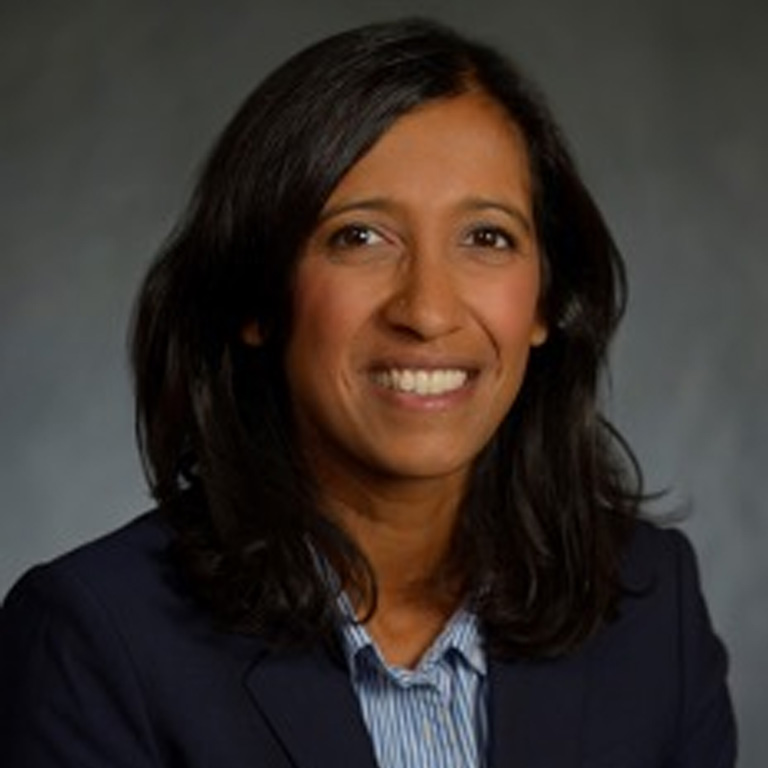
- Speaker, 2026 Conference on Metastatic Breast Cancer
- Medical oncologist and palliative care physician specializing in advanced cancer care and communication
- Section chief of oncology palliative care and associate program director for the hematology-oncology fellowship at Penn Medicine
Tagged:

Living Beyond Breast Cancer is a national nonprofit organization that seeks to create a world that understands there is more than one way to have breast cancer. To fulfill its mission of providing trusted information and a community of support to those impacted by the disease, Living Beyond Breast Cancer offers on-demand emotional, practical, and evidence-based content. For over 30 years, the organization has remained committed to creating a culture of acceptance — where sharing the diversity of the lived experience of breast cancer fosters self-advocacy and hope. For more information, learn more about our programs and services.