Blogs > Am I the only one feeling this way after cancer treatment?

Am I the only one feeling this way after cancer treatment?

After years of fearing breast cancer and months of treatment, Ericka Toth found comfort in learning she wasn’t alone in what came next.

image_row
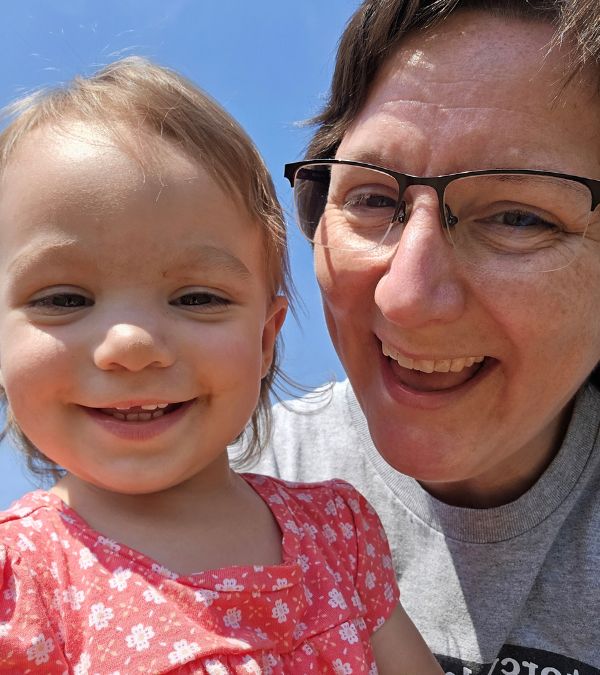
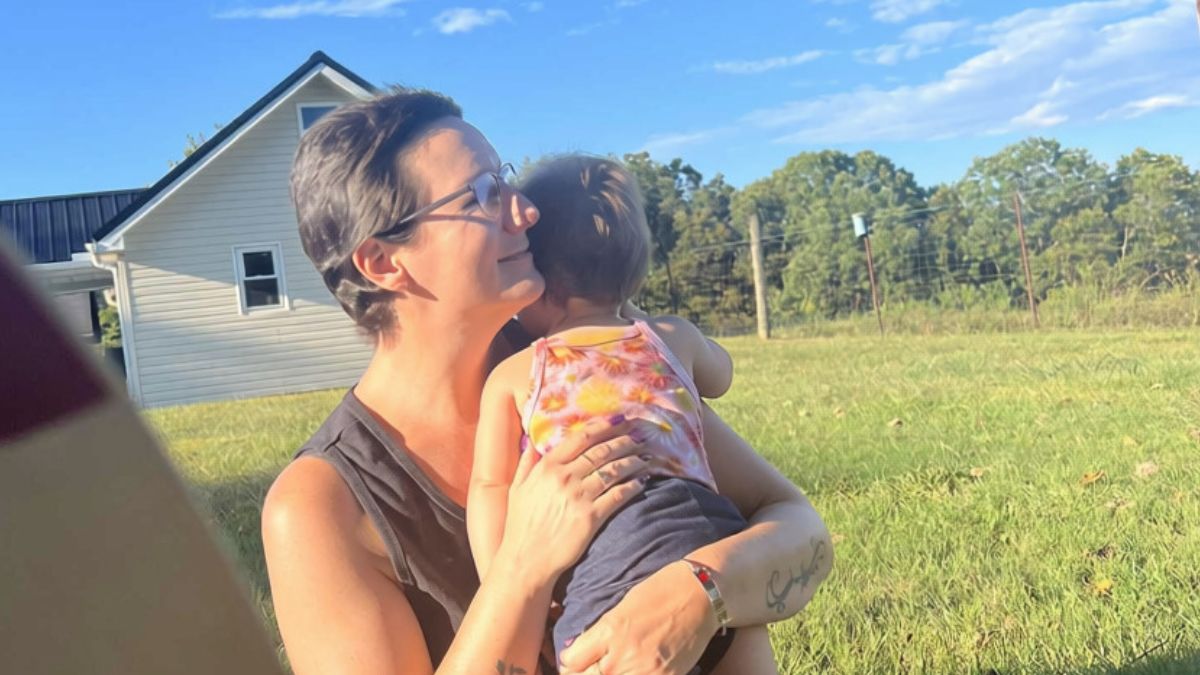
Ericka Toth pats her granddaughter's back as she carries her in their large backyard area.
general_content

The response was immediate: they began to talk. A lot.

For Ericka, the moment was both comforting and surprising. Her treatment was over. She had completed chemotherapy, radiation, and HER2-directed treatment for stage III, HER2-positive breast cancer. Wasn’t she supposed to feel relieved?

Instead, fear continued to affect her sleep, sometimes leaving her awake at night or waking with her mind racing. What if the cancer comes back? What happens next? Will I ever stop being afraid?

Many of the women who opened up in that support group room had been asking themselves the same questions.

Growing up with the fear of breast cancer

Breast cancer was part of Ericka’s family story. Her grandmother was diagnosed with breast cancer later in life and died after her diagnosis. Her mother was later diagnosed, too.

Even though genetic testing never identified a hereditary cause, Ericka believes there is a connection. “It’s too coincidental for all three of us,” she says. “Three generations to have the exact same breast cancer in the same breast.”

By the time she was a teenager, Ericka felt that breast cancer would someday become part of her own future. It was, as she says, “one of my biggest fears in life.” Doctors recommended earlier screening because of her family history.

She got married, worked, and raised her two now grown children in New England. When she was 44, mammogram results indicated two lumps in her left breast. Her care team told her not to be concerned and to return the next year for follow-up. She trusted her team. She was also in the middle of a major life change.

She and her husband moved to rural Kentucky, where they found the quiet life they had been looking for. “My neighbors are cows,” she says. “It’s great.”

When they were settled in their new home, Ericka noticed that one of her breasts was growing larger than the other and became concerned. She went to her doctor, who got her in for a mammogram within the week. Before Ericka even had the results back, she received a call asking her to return for a biopsy.

image_row
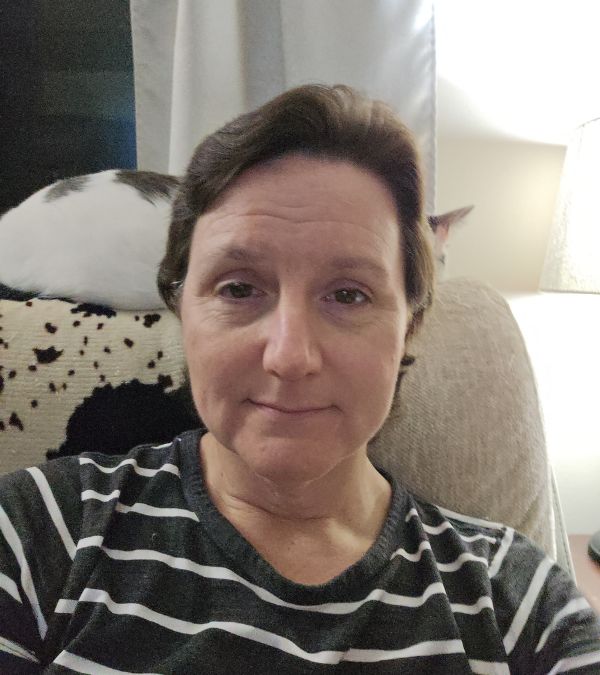
Ericka Toth sits on her sofa wearing a striped top.
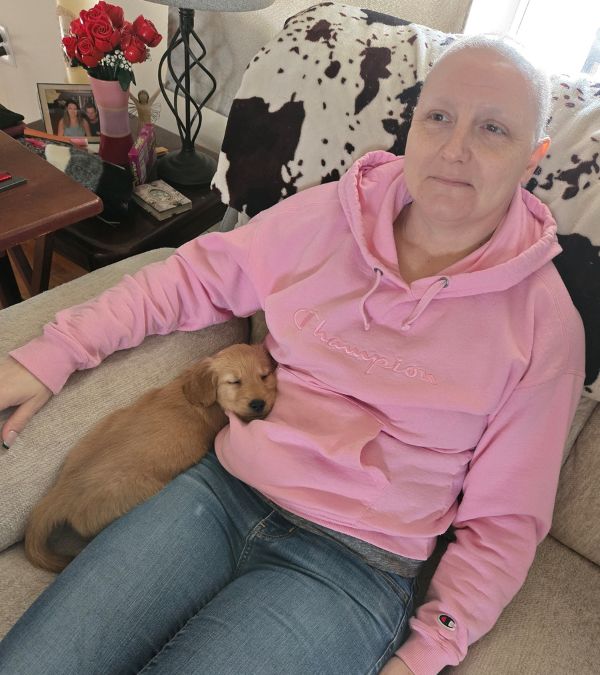
A golden puppy cuddles with Ericka Toth as she sits on the sofa, wearing a pink sweatshirt.
general_content

“I knew it was coming. I just wasn’t expecting it at 45.”

In August 2024, Ericka was at work when her doctor called with biopsy results. She was not expecting bad news. She and her husband had already looked at the results in her patient portal and believed everything was fine. Neither of them had medical training, and they had misunderstood some of the medical terms.

So when the doctor began talking, Ericka still assumed the news would be reassuring. Then she heard the word carcinoma — more than once. Ericka finally asked what it meant.

“Honey,” the doctor told her, “It’s cancer.”

She walked outside and fell to her knees, struggling to breathe. She called her husband, trying to explain what had happened. She was crying so hard she could barely speak.

Then her coworker Bruce stepped outside. He walked over. Without saying a word, he wrapped his arms around her and held her while she cried on his shoulder.

“I needed it,” Ericka says. “I truly needed his support at that moment.”

Moving through treatment

What initially appeared to be ductal carcinoma in situ, or DCIS – indicating that the cancer had not spread beyond the milk ducts – became stage III, HER2-positive breast cancer. During surgery, doctors found cancer in Ericka’s lymph nodes.

Chemotherapy came first. Then a lumpectomy, another biopsy, radiation, and HER2-directed treatment. Ericka, however, doesn’t remember treatment as a clear series of events. Instead, she felt disconnected from it all.

“I felt like I was looking down and watching everything happen,” she says. “It didn’t really feel like I was there. I was just doing what I was told to do, what I had to do, because I didn’t know what else to do.”

At the same time, her family was facing another crisis. On the morning Ericka was diagnosed, her daughter, who was pregnant and living in Lexington, was diagnosed with preeclampsia, a serious pregnancy complication.

“She couldn’t come see me. I couldn’t go see her,” Ericka says. “It was a tough blow because it kind of got all thrown on top of us at the same time.”

Ericka and her husband leaned on each other more than they ever had. “I felt like we got a lot closer because we only had each other,” she says. He took her to every appointment. When Ericka decided to shave her long hair, he offered to shave his head, too. She wouldn’t let him. Instead, he cried as he shaved hers, trying to reassure her.

Her mother, who still lived in Rhode Island, spoke with her regularly. Her care team guided her. Still, Ericka felt alone with the diagnosis.

“There’s no way to really describe to somebody what you’re going through, how you’re feeling, and the pains that you get going through it,” Ericka says. “Even though my mother went through it, it still felt lonely because she couldn’t be here with me.”

image_row
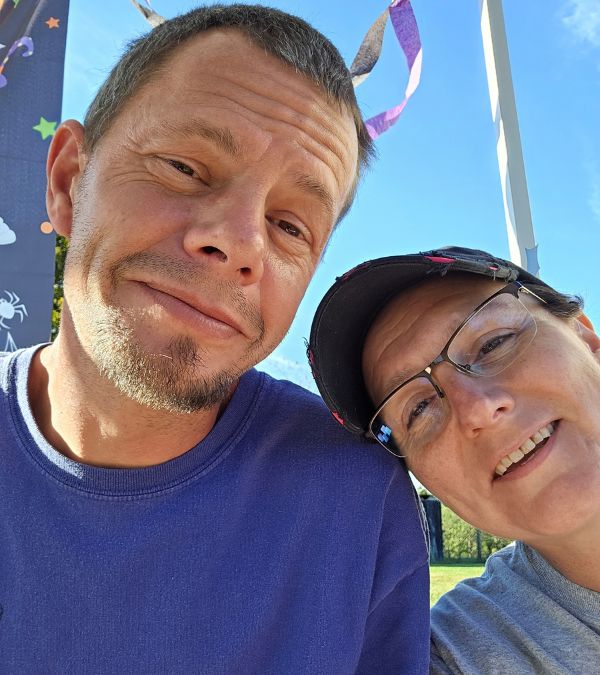
A smiling Ericka Toth rests her head on her husband's shoulder.
Ericka Toth, holds her granddaughter, who is a toddler, close. They both have huge smiles.
general_content

The fear that remains

For months, Ericka focused on one goal: getting through treatment. The side effects — hair loss, diarrhea, dehydration, and pain — took their toll. Then, eventually, treatment ended.

Ericka knew that people expected life after treatment to feel like. That she would be relieved. That she would feel ready to move forward. “You should be happy,” she says. “You should be ecstatic. You should be on top of the world.”

“But it’s not like that at all,” she says.

During chemotherapy, fear often kept Ericka from sleeping. Even after treatment, she sometimes struggled to fall asleep or woke in the night with her mind racing.

“That fear is still there,” she says. “It doesn’t go away, because you’ve already gone through it once. And now the fear is, is it going to happen again, or what’s next?”

quote_style_1
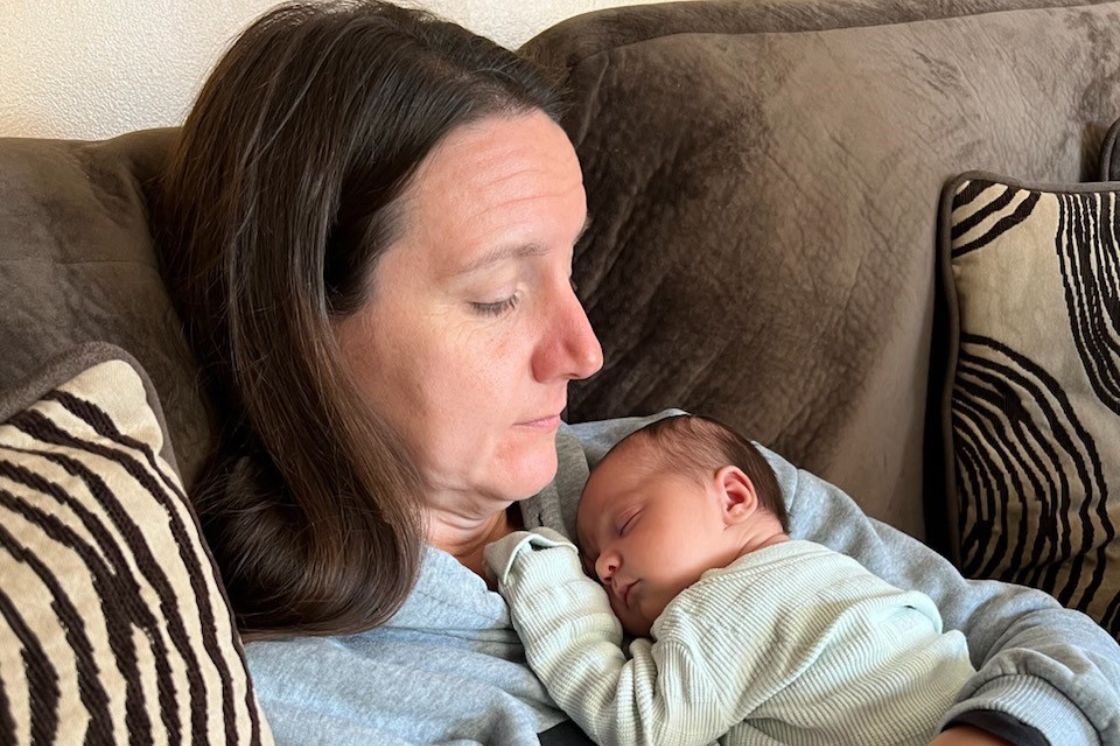
Ericka Toth holds her tiny baby granddaughter close to her chest as she reclines on her sofa.

There’s no way to really describe to somebody what you’re going through, how you’re feeling, and the pains that you get going through it.

Ericka Toth

general_content

Finding people who understand

Almost 2 years later, Ericka still lives with side effects from treatment. The neuropathy, or nerve damage, in her feet has improved, but she still cannot walk barefoot because it hurts. She also lost much of her hair and many of her nails. The changes to her body have been difficult.

“I look in the mirror, and I don’t recognize who that is,” she says. “I just don’t.”

At the same time, Ericka is in a better place than she was during treatment. Her body is healing. Her daughter and granddaughter, now 2 years old, live much closer – in a cottage behind Ericka’s house. Having them close by is something she treasures. Watching her granddaughter grow brings joy and gives her something to look forward to.

Even with the love of family, Ericka found herself feeling alone. Still, when nurses first encouraged Ericka to attend a support group, she was not convinced it was for her. During chemotherapy, anxiety and sleepless nights became difficult to manage. Nurses at her treatment center connected her with a therapist and also encouraged her to consider a weekly support group for people who had been diagnosed with breast cancer. Talking with a therapist by phone felt manageable. Walking into a room full of strangers and talking about breast cancer did not.

“It was challenging,” she says.

She did not want to go by herself. She did not want to be the center of attention. But as the anxiety continued, Ericka realized she needed more support.

For someone unsure about joining a support group, Ericka understands why it might feel intimidating. She had felt that way, too. But she would still encourage them to try. Getting over the fear enough to go to one or two meetings, she says, can be worth it. At that first meeting where she spoke up, Ericka learned that other women shared they had the same fears as she did. Other women were still struggling after treatment.

“This is the most conversation we’ve had in these groups,” the nurses had told Ericka, pulling her aside as she was leaving the group that day. They thanked her for asking the question.

“I want to make sure that I go to these meetings,” she says, “because it’s nice to have somebody that understands what you’re going through.”

The difficult days still come. Fear still shows up. But the support group has helped Ericka understand that she is not alone. Now, she attends regularly.

“It’s okay to have those hard feelings,” she says. “Whatever you have to do, get it off your chest. Don’t hold it in.”

callout
Diverse hands meet in a caring hold.

Looking for a support group?

Support groups can help you connect with people who understand what life with breast cancer can feel like, both during treatment and after it ends. Here are some tips to help you find people who’ve been there:

— Trying a group can feel intimidating. It’s OK to start by listening, attend once or twice, and see what feels right.

— Start by asking your care team, nurse navigator, hospital social worker, or therapist for recommendations you can trust. You can also check with local hospitals, community health organizations, spiritual communities, or friends and family with their own cancer experiences.

— LBBC offers online spaces to connect, including Flourish, LBBC’s closed online community where people impacted by breast cancer can ask questions, share experiences, celebrate milestones, and find real support, real conversations, and real connection with others who truly understand. You can also visit LBBC’s breast cancer support resources page for more ways to find support.

— Other organizations, including CancerCare, and Cancer Support Community, also offer support group resources.

disclaimer_box

DISCLAIMER:

The views and opinions of our bloggers represent the views and opinions of the bloggers alone and not those of Living Beyond Breast Cancer. Also understand that Living Beyond Breast Cancer does not medically review any information or content contained on, or distributed through, its blog and therefore does not endorse the accuracy or reliability of any such information or content. Through our blog, we merely seek to give individuals creative freedom to tell their stories. It is not a substitute for professional counseling or medical advice.

callout
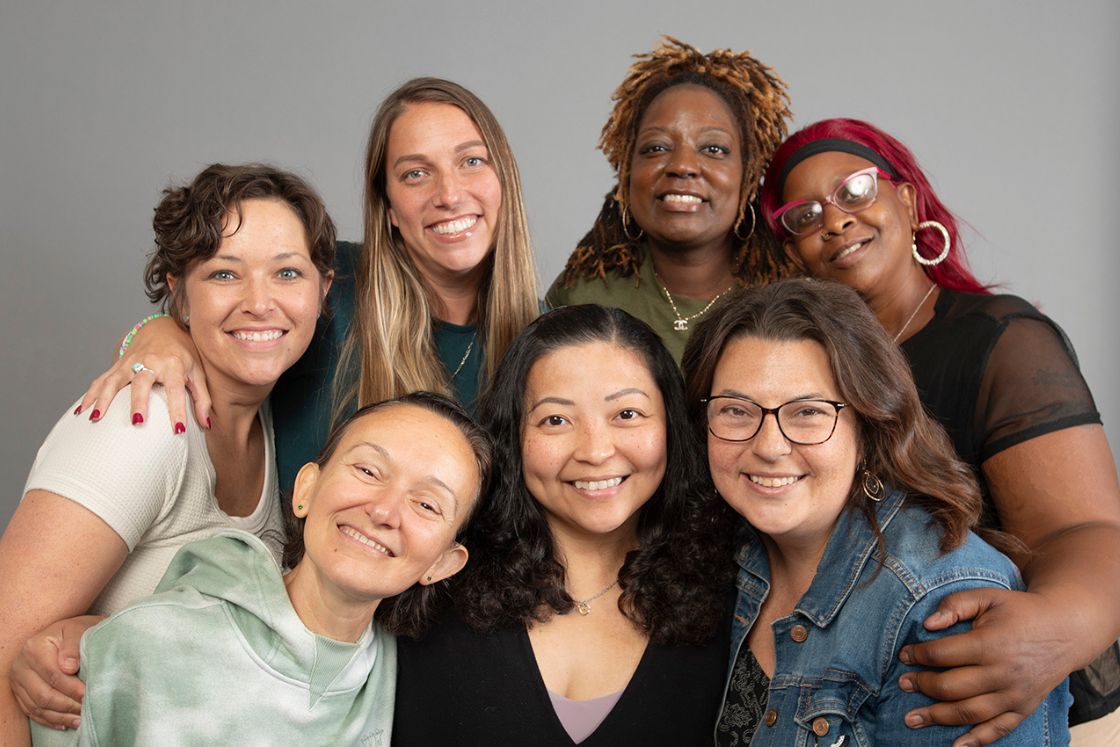
A group of diverse women, all who have metastatic breast cancer, hug and ham it up.

Lift up more voices

Personal stories can help people with breast cancer feel supported in ways that medical facts sometimes can’t. Support LBBC’s work to share lived experiences like Ericka’s alongside trusted breast cancer information and free support resources.

Make a monthly gift here
related_resources_article_carousel

Related resources

stay_connected

Stay connected

Sign up to receive emotional support, medical insight, personal stories, and more, delivered to your inbox weekly.