News > Menopause and breast cancer: What you need to know

Menopause and breast cancer: What you need to know

How breast cancer treatment can affect menopause — and what can help

image_row
A mature white woman reflects as she looks out the window.
general_content

Some breast cancer treatments can cause menopause or menopause symptoms. Treatments may cause your periods to pause or to stop, lower or block estrogen, or bring on menopause much more suddenly than it happens naturally. Some of these changes are temporary. Others may be permanent.

Even if you went through natural menopause before your breast cancer diagnosis, treatment can bring on new symptoms or change symptoms that had already improved. Medical menopause also tends to happen more suddenly and may cause more intense symptoms than the gradual transition of natural menopause. When that happens, it can feel as though your body changed overnight.

For many people, menopause is one of the changes that continues to shape everyday life throughout and after breast cancer treatment.

Here’s what you need to know about menopause and breast cancer:

on_this_page
callout
Concerned, a Black woman ponders an internal question as she looks out a window.

Estrogen and menopause

Estrogen plays a lot of roles in the body.

It helps keep bones strong. It helps maintain healthy vaginal and vulvar tissues. It affects cholesterol levels, sleep, memory, mood, sexual function, and the health of muscles and joints. It even helps regulate body temperature.

general_content

Breast cancer treatment can cause estrogen levels to fall or change suddenly. Medications or surgery to prevent the ovaries from making estrogen block hormone receptor-positive breast cancer cells from growing, but they also deprive the whole body of estrogen.

These sudden changes cause side effects that mimic menopause symptoms: Hot flashes, sleep problems, vaginal dryness, loss of sex drive, fatigue, mood changes, and muscle or joint pain. These can be caused by estrogen changes, treatment itself or several factors all at once.

Many menopause symptoms can be managed. You do not have to figure them out by yourself, and you do not have to simply accept feeling uncomfortable.

What is happening?

If you have been asking yourself, “Am I actually in menopause?”

The answer is not always straightforward during or after breast cancer treatment. A treatment may stop your periods temporarily, permanently affect your ovaries, or cause menopause-like symptoms without necessarily meaning that natural menopause is complete.


Natural menopause

Chemo-induced menopause

Hormonal therapy-induced menopause

Cause

Gradual decline of estrogen due to aging Temporary or permanent damage to ovaries from certain chemotherapy drugs Sudden drop in estrogen due to any combination of: anti-estrogen medication (aromatase inhibitors, tamoxifen), ovarian suppression drugs (e.g., Lupron), or surgical removal of ovaries

Age of onset

Can range from early 40s-60s, average age 51 Start of treatment Start of treatment or surgery

Symptoms appear

Gradual over a period of years Sudden or unpredictable onset of symptoms Sudden onset at start of hormonal therapy or post-surgery

Duration

Usually permanent after 12 months with no menstrual period Varies; more likely to be temporary in pre-menopausal women and permanent in women nearer to natural menopause age Can be temporary for the duration of therapy; surgical menopause is permanent


Questions to ask your healthcare team

  • Could my symptoms be related to menopause, my treatment or another health concern?
  • Is this change likely to be temporary or permanent?
  • Do I need testing to better understand whether my ovaries are still working?
  • Could I still become pregnant, and what birth control options are appropriate for me?
  • Could these changes affect my fertility plans or treatment decisions?

Learn more

Videos

The sections below cover common symptoms after breast cancer treatment. Menopause affects many parts of the body, and your experience may look different. A symptom that is not listed here can still be important.

quote_style_1

It can be really tricky to distinguish symptoms of menopause from side effects of an aromatase inhibitor. Without stopping the medicine and allowing it to fully wash out, there’s no way to know with certainty. But lifestyle interventions matter either way: The same lifestyle changes that help with one can also help with the other.

Laila Agrawal, MD

general_content

Hormonal therapy and hormone replacement therapy: What’s the difference?

The words can sound confusing because they may both include the word hormone, but these treatments have different purposes and effects for people with breast cancer and experiencing menopausal symptoms.


Hormonal therapy

Hormone replacement therapy

Low-dose topical estrogen

What it does

Blocks or reduces estrogen in the body to reduce chance of cancer coming back Increases estrogen and/or progesterone in the body to relieve symptoms of menopause Adds estrogen and/or progesterone ONLY to vaginal tissue

Examples

Tamoxifen, aromatase inhibitors Dermal patches [other formulations?] Estradiol cream

Who it’s for

People with hormone receptor-positive breast cancer People with menopausal or perimenopausal symptoms who do not have a history of or risk for breast cancer People who have vaginal dryness, burning, and painful intercourse from low estrogen in the body and vaginal tissue

When it’s prescribed

Up to 5 or 10 years following diagnosis Often in mid-life or later when menopausal symptoms affect quality of life When estrogen loss affects the vaginal tissue and interferes with quality of life


If you’re thinking about any hormonal treatment for menopause symptoms, including vaginal estrogen, talk with your oncology team so they can help you understand what may be appropriate for your individual situation.

callout
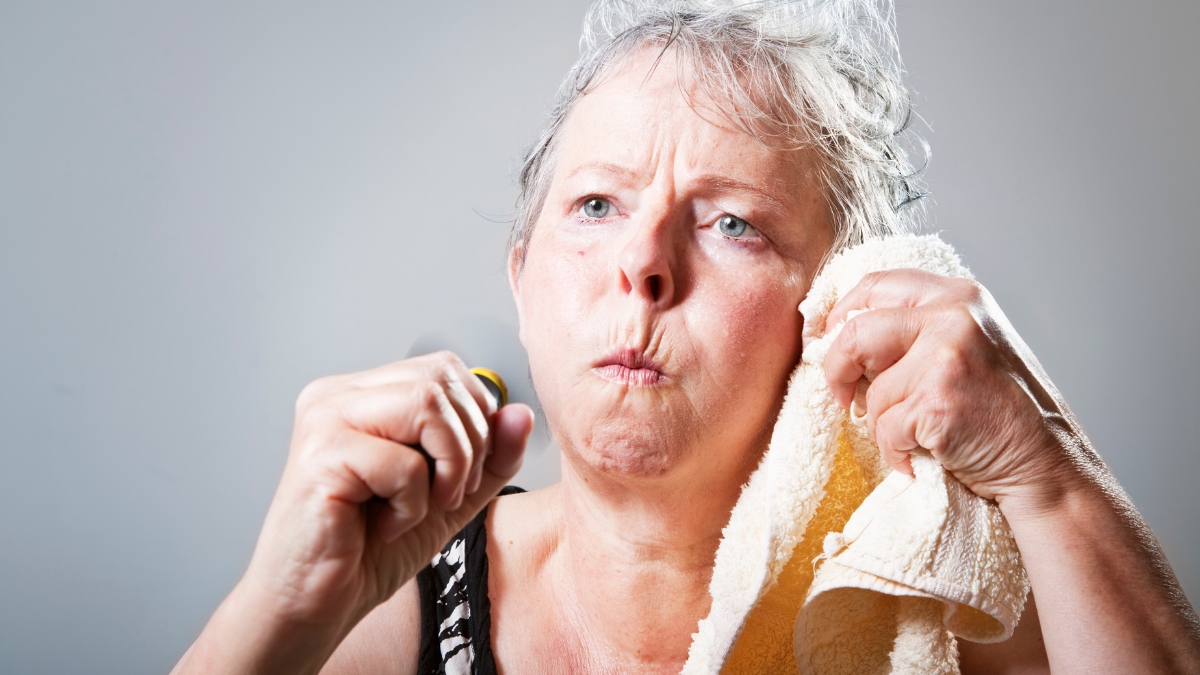
A mature white woman wipes the sweat from her face.

Hot flashes

Why am I suddenly so hot all the time?

A hot flash is a sudden feeling of heat, often in the face, neck or chest. Your skin may become flushed, and you may sweat or feel your heart beating faster.

general_content

A hot flash can happen at any time, regardless of the temperature around you. When hot flashes happen during sleep, they are called night sweats. They may wake you repeatedly, soak your clothes or bedding, and leave you exhausted the next day.

What’s happening?

Your brain has a temperature-control center called the hypothalamus. You can think of it as your body’s thermostat. When estrogen levels fall, this thermostat may become much more sensitive to small changes in body temperature. Your brain may think you are too hot, even when your temperature has barely changed. It quickly starts trying to cool you down: Blood vessels near the skin widen, your face or chest may become flushed, and you begin to sweat. This creates the sudden wave of heat known as a hot flash.

Some people have occasional hot flashes. Others have them more often. Others have several each day or wake with night sweats many times during the night. They may last for a short time or continue for several years.

quote_style_1

I was waking up eight and nine times a night, covered in sweat.

Claudia De Pasquale

general_content

What may help

  • Dress in layers that are easy to remove
  • Keep your bedroom cool
  • Use cotton or other breathable sleepwear and bedding
  • Sleep with a fan or air conditioning, if possible
  • Keep cold water nearby
  • Notice whether caffeine, alcohol, spicy foods, or greasy foods seem to trigger your hot flashes
  • Stay physically active in ways that feel safe and comfortable for your body
  • Practice mindfulness or other ways of managing stress
  • Stop smoking, if you smoke and would like support quitting

If these steps are not enough, talk with your healthcare team about what may help. Keep a simple record of your symptoms. Note how many you have and how severe they feel.

Elinzanetant (Lynkuet) is a newer nonhormonal medication approved for people affected by breast cancer that offers relief for moderate to severe hot flashes and night sweats. Ask your healthcare team if it may be appropriate for you.

Questions to ask your healthcare team

  • Could a medicine or another health concern be making my hot flashes worse?
  • Which nonhormonal treatments might be appropriate for me?
  • Could changing the timing or type of a treatment help?
  • What should I track so we can tell whether an approach is working?

Learn more about managing hot flashes and other menopause symptoms

Video

callout
A woman lies wide awake in bed, hugging her pillow.

Sleep

Why can't I sleep?

You may have trouble falling asleep, wake repeatedly during the night, or wake too early and be unable to fall asleep again. Hot flashes can interrupt sleep, but they are not the only possible cause. Pain, anxiety, medicines, changes in your routine and the effects of cancer treatment may also play a role.

general_content

What’s happening?

Menopause can affect the body systems that help regulate sleep. At the same time, treatment-related symptoms may keep your body uncomfortable or your mind alert. Because sleep problems can have several causes, it helps to tell your healthcare team what your nights actually look like: when you go to bed, how long it takes to fall asleep, how often you wake and how you feel the next day.

disclaimer_box

Alicia Lagendijk can fall asleep easily, but she usually wakes up around 2 a.m. and can’t get back to rest, despite trying a wide range of things suggested in her reading or by others in the breast cancer community. Read her story in How to manage sleep difficulties related to breast cancer.

general_content

What may help

  • Set aside 7 to 9 hours for sleep each night.
  • Go to bed at the same time every night.
  • Use your bed for sleep and sex only. Avoid working, eating or watching television in bed.
  • Have a bedtime routine. Give yourself at least 30 minutes to wind down before going to bed. Go to bed only when you feel sleepy.
  • Do not spend time tossing and turning. After 20 minutes of not sleeping, get out of bed and go to a restful place to relax or read with a dim light. Return to bed when you feel tired.
  • Get up at the same time every day.
  • If you think your emotions may be keeping you up, your healthcare team can help. Your doctor may recommend medicine or suggest counseling or a support group to help you manage the emotional aspects of cancer.
  • For fatigue, it may surprise you to know that regular, low-intensity exercise can help.
  • Ask your provider about CBT-I, an evidence-based treatment for insomnia

Questions to ask your healthcare team

  • What may be contributing to my sleep problems?
  • Could any of my medicines be affecting my sleep?
  • Would CBT-I or a referral to a sleep specialist be appropriate for me?
  • How can we better manage hot flashes, pain, or anxiety that may be waking me?

For more tips on better sleep

callout
A woman rests her head against her palm as she tries to work, coffee cup in her other hand.

Fatigue

Why am I so tired?

Fatigue is more than feeling sleepy after a difficult night. You may wake after enough sleep and still feel as though you have little physical or mental energy. Rest may help only a little, and everyday activities may feel much harder than they used to.

general_content

What’s happening?

Lower estrogen may affect sleep, mood and energy, but cancer-related fatigue can have many causes. Treatment, anemia, pain, poor nutrition, infection, thyroid problems, depression, anxiety and other health concerns can all contribute. Often, more than one factor is involved.

What may help

  • Plan demanding activities for the time of day when you usually have the most energy.
  • Break larger tasks into smaller steps and rest before you become completely exhausted.
  • Accept practical help with meals, errands, transportation or household tasks.
  • Try gentle movement. Start slow, even a few minutes of walking is a real start. If you are feeling very tired on a given day, try yoga or tai chi to relax your mind. See other tips on fitness and exercise.
  • Eat regularly and ask for nutrition support if treatment side effects make that difficult.
  • Address sleep, pain, hot flashes and emotional distress that may be draining your energy.

Questions to ask your healthcare team

  • Could something other than menopause be contributing to my fatigue?
  • Do I need bloodwork or another evaluation?
  • What kinds of movement are safe for me right now?
  • What kind of support could improve my energy?

Learn more about managing fatigue

callout
A white woman holds her head in her hands in confusion.

Brain fog

Why can't I think as clearly as I used to?

Maybe you’ve lost your train of thought in the middle of a sentence. Maybe you’ve read the same email three times before it finally made sense. Or maybe a familiar word suddenly feels hard to find. Sound familiar?

general_content

Many people call these changes brain fog or chemobrain. Healthcare providers may call them cancer-related cognitive changes. This term is broader because these problems can happen even if you did not have chemotherapy.

Up to 75% of people with breast cancer who receive chemotherapy report problems with memory or thinking during treatment. But chemotherapy is not the only possible cause. Hormonal therapy, menopause, poor sleep, stress and fatigue may also affect how clearly you think.

What’s happening?

Brain fog usually does not have one clear cause. Several things may be happening at the same time.

Estrogen helps the brain with memory, focus, mood and handling stress. When menopause or breast cancer treatment lowers estrogen, the brain may not process information as quickly or smoothly as it did before. You may have trouble focusing, remembering a word, learning new information or moving from one task to another.

Breast cancer treatments may also play a role. Chemotherapy and other treatments can cause inflammation in the body, which may affect how the brain works. Hormonal therapies, such as tamoxifen and aromatase inhibitors, lower estrogen or block its effects. This may contribute to thinking and memory problems for some people.

Other symptoms can make brain fog worse. Poor sleep, fatigue, pain, anxiety, depression and stress can all drain mental energy. For many people, brain fog may come from several of these causes working together. It may help to address any other symptoms you are experiencing.

What may help

  • Write things down. Keep appointments and to-do lists in one planner, calendar or phone app.
  • Set reminders. Use alarms or phone notifications for appointments, medicines and important tasks.
  • Give commonly used items a home. Keep your keys, phone and other essentials in the same place.
  • Do one thing at a time. Set your phone aside or turn off notifications when you need to concentrate.
  • Follow a routine. A regular pattern can make it easier to stay on track.
  • Reduce distractions. Choose a quiet space for reading, working or having an important conversation.
  • Break tasks into smaller steps. Alternate difficult tasks with easier or more enjoyable ones.
  • Use your clearest time of day. Plan demanding tasks for the hours when you tend to have the most energy and focus.

Consider keeping a simple record of your symptoms. You can note what you were having trouble with, when it happened, and whether you were also tired, stressed, or in pain. This may help your healthcare team look for patterns and possible causes.

Questions to ask your healthcare team

  • Could menopause, treatment, poor sleep, pain, or another concern be contributing to these changes?
  • Could any of my medicines be affecting my memory or concentration?
  • Would a referral to a speech-language pathologist or neuropsychologist help?
  • Which changes should I report right away?

Learn more about brain fog

callout
A white woman sits on a sofa with her hands to her face in emotion.

Emotional health

Why don't I feel like myself?

Menopause can have a significant impact on your emotional health, especially when it happens suddenly because of breast cancer treatment. You may find yourself coping with physical and emotional changes all at once. It can be intense.

general_content

What’s happening?

As one of its many roles, estrogen helps support parts of the brain involved in mood and the body’s response to stress. When estrogen levels fall or change quickly, brain chemicals linked to mood, including serotonin, may also be affected. This can contribute to mood swings, irritability, anxiety, sadness or feeling less able to cope. Poor sleep, hot flashes and fatigue can make these feelings even stronger.

You’re also living through an experience that would challenge anyone. Breast cancer treatments and their side effects can affect emotions both directly and indirectly.

You do not have to wait until things feel unbearable before asking for help. Emotional support can be helpful at any point during or after breast cancer treatment.

quote_style_1

I had no idea what was coming. That so many women have the same experience must change.

Rachael Walker

general_content

What may help

Support can begin with simply telling someone what has been happening. You might start with your oncologist, nurse or primary care provider. They can help you look at whether menopause symptoms, cancer treatments, medicines, sleep problems or other concerns may be affecting your mood.

You may also find support from:

  • An oncology social worker
  • A counselor or therapist
  • A psychologist
  • A psychiatrist
  • Support groups
  • Trusted family or friends

While you are working through your healthcare professionals, small acts of self-care may also help you manage stress and feel more grounded. These might include:

  • Gentle movement, such as walking
  • Breathing exercises, meditation or mindfulness
  • Writing in a journal
  • Music, art or another creative activity
  • Spending time outside
  • Connecting with people who make you feel supported

Questions to ask your healthcare team

  • Could menopause, treatment or another medicine be affecting my mood?
  • What kinds of counseling or emotional-health support are available to me?
  • Could medicine help with anxiety or depression, and is it safe with my cancer treatment?
  • Who should I contact if my symptoms become more intense?

Learn more about emotional health

Video

callout
A figure in bed, all we see are legs crossed in pain.

Vaginal pain

Why does sex suddenly hurt — or why do I just feel uncomfortable?

You may notice dryness, burning or irritation during sexual activity as a symptom of menopause — or discomfort at other times, such as when exercising, sitting for a long time or wearing certain clothing. You might also feel the need to urinate more often or find yourself having repeated urinary tract infections.

These changes can be uncomfortable, frustrating and difficult to talk about, but they are common after breast cancer treatment, and support is available.

quote_style_1

Don’t be ashamed to talk about what you’re feeling or not feeling. Don’t be ashamed to relearn your body. Ask about the side effects and what you can do to deal with them. I definitely would suggest a sex therapist and a couples therapist. Your partner needs to understand that what you’re going through is not because of them.

Roberta "Bobbi" Albany

general_content

What’s happening?

Breast cancer treatment can cause menopause or make menopause symptoms worse. When estrogen levels fall, the tissues of the vulva, vagina, and urinary tract may become thinner, drier and less flexible. This can lead to vaginal dryness, burning or irritation, pain during sexual activity, a frequent need to urinate or repeated urinary tract infections.

Pain may also cause the pelvic floor muscles to tighten, which can make penetration more uncomfortable.

What may help

  • Nonhormonal vaginal moisturizers, used regularly to help with ongoing dryness
  • Lubricants, used during sexual activity to reduce friction and discomfort
  • Aqueous lidocaine, which may help numb pain at the vaginal opening
  • Pelvic floor physical therapy to help relax tight muscles and reduce pain
  • Vaginal dilators to gently stretch the vaginal tissues and muscles
  • Different positions that give you more control over movement and depth
  • Counseling or sex therapy to address fear of pain, communication or changes in intimacy
  • Low-dose vaginal estrogen, when recommended by your healthcare team
quote_style_1

I learned that there were options. One of those was the use of dilators, and it really did help. The other thing that has been extremely helpful for me is using a moisturizer in suppository form. For the first time since breast cancer, I had sex that was not painful. That was a huge turning point for me.

Anna Crollman

general_content

Questions to ask your healthcare team

  • Could dryness, an infection, a pelvic floor problem or another condition be causing my symptoms?
  • Which moisturizers or lubricants would you recommend, and how should I use them?
  • Would pelvic floor physical therapy or a sexual-health specialist help?
  • If nonhormonal options are not enough, could low-dose vaginal hormone treatment be appropriate for me?
  • What should I do if I develop urinary burning, urgency or repeated infections?

Learn more about vaginal pain

Videos

quote_style_1

I discovered that intercourse is not always the only option. You can still give pleasure and receive pleasure without the pain of intercourse. It’s more about having pleasure in whatever way works for you.

Priscila Sánchez Altamirano

callout
A Black couple sits on the edge of the bed, both looking sadly away from one another.

Loss of sex drive

Why has my interest in sex changed?

Low or absent sexual desire is common after cancer. Some people miss sex or intimacy. Some miss the feeling of wanting sex and wonder why that part of themselves seems to be gone. Some still want intimacy but find that the way they experience it has changed. Others simply have no interest right now. There isn’t one “normal” response.

The goal is not to force yourself back to the sex life you had before cancer. It is to discover what comfort, pleasure, and connection may look like for you now.

quote_style_1

We both believed that once I was “done with cancer,” we would go back to being sexually active. But that didn’t happen.

Yahira Torres

general_content

What may help

  • Take intercourse off center stage. Intimacy can include affection, touch, kissing, or simply feeling close. Sex does not need to follow one script or include penetration.
  • Address pain and dryness first. Vaginal moisturizers, lubricants, pelvic floor physical therapy, or other symptom-management options may help improve comfort.
  • Reconnecting with your body gently. Movement, massage, or gentle self-touch may help you notice positive sensations again without feeling that that must lead somewhere.
  • Allowing more time. Desire may emerge gradually after closeness begins rather than appearing beforehand.
  • Talk openly about what has changed. A partner may not always know what feels comfortable, painful, welcome, or unwelcome unless you tell them.
  • Seek psychosexual support. A counselor or therapist with sexual health expertise can help you work through changes in desire, body image, communication, or intimacy.

Questions to ask your healthcare team

  • Could pain, fatigue, menopause or one of my medicines be affecting sexual desire?
  • What can we do to improve comfort before focusing on desire? 
  • Can you refer me to a sexual-health specialist, pelvic floor physical therapist or counselor? 
  • What options are available whether I have a partner or not? 
quote_style_1

Sexual health is part of my health, too. I still want to have sexual pleasure and be intimate with someone I love. I don’t think it hurts for providers to bring it up.

Shonté Drakeford

general_content
callout
A woman clutches her knees as she descends a set of stairs.

Joint pain

Why do my joints suddenly hurt so much?

Some people describe the aches and stiffness after breast cancer treatment as feeling as though they have aged overnight. Their hands may feel stiff, their knees or hips may ache, or getting up after sitting still may suddenly feel harder.

quote_style_1

“One loving step at a time,” I would tell myself in the face of each new challenge.

Laura-Lynn Renner

general_content

What’s happening

Menopause and breast cancer treatments that lower or block estrogen can contribute to joint and muscle pain. Estrogen helps keep joints flexible, supports the natural rebuilding of bone and plays a role in controlling inflammation and pain. When menopause or breast cancer treatment lowers estrogen, these protective effects may be reduced, which can contribute to stiffness and aching.

Aromatase inhibitors, including anastrozole, exemestane and letrozole, are especially likely to cause pain or stiffness in the joints, bones and muscles. Other treatments, including tamoxifen, ovarian suppression, ovary removal and some chemotherapies, may also cause aches and pains.

Pain may make it harder to exercise, sleep well, or enjoy activities that once felt easy. But you do not have to manage it alone. Tell your healthcare team about new or worsening pain so they can help identify its cause.

What may help

Moving may be the last thing you feel like doing when your joints hurt. But gentle, regular exercise may reduce stiffness and pain while also supporting your energy and strength. A physical therapist can help you find exercises that fit your symptoms and abilities.

If starting on your own, go slowly and choose movement that feels manageable. Options may include:

  • walking
  • stretching
  • swimming or exercising in a pool
  • yoga or Pilates
  • strength or resistance exercises

Questions to ask your healthcare team

  • Is this joint pain likely to be a treatment side effect, or should we look for another cause?
  • Would physical therapy or a cancer exercise specialist help me move safely?
  • Could switching medicines or adjusting my treatment plan improve the pain?
  • Which pain-relief options are safe with my treatment?

Learn more about joint pain

callout
A woman undergoes a bone density scan with a nurse supervising.

Bone health

Can treatment-related menopause affect my bones?

Bone loss may not be something you can feel, but it is still important to know about during treatment-related menopause. When estrogen levels fall quickly, your bones may begin to lose strength. That’s why your healthcare team may recommend checking your bone density during treatment even if your bones feel fine.

Tell your healthcare team about new, severe, or lasting bone pain. Bone or joint pain can have several causes and should not be used on its own to judge bone density.

general_content

What’s happening?

Estrogen helps maintain bone strength. When treatment lowers estrogen quickly — especially through ovarian suppression, ovary removal or an aromatase inhibitor — bone loss may begin during treatment.

Bone loss usually does not cause symptoms at first, so joint aches do not tell you whether your bone density has changed. A bone mineral density test, often called a DEXA scan, can help your healthcare team understand your starting point and whether you need monitoring during treatment.

What may help

  • Ask whether you need a baseline DEXA scan or follow-up testing during treatment.
  • Choose weight-bearing and resistance activities that are safe for your body.
  • Include calcium-containing foods in your meals when possible.
  • Ask whether your vitamin D level should be checked before taking a supplement.
  • Discuss whether a bone-protecting medicine is appropriate for you.

Questions to ask your healthcare team

  • Does my treatment increase my risk of bone loss right now?
  • Do I need a DEXA scan before or during treatment?
  • What kinds of weight-bearing or strength exercise are safe for me?
  • Should I have my vitamin D level checked?
  • Would a bone-protecting medicine be appropriate for me?

Tell your healthcare team about new, severe, or lasting bone pain. Bone or joint pain can have several causes and should not be used on its own to judge bone density.

Learn more about bone health

Video

callout
A young couple consults with a fertility specialist.

Fertility

If I take hormone-suppressing medication, or if treatment stops my period, will I be able to get pregnant when treatment ends?

For some people, this question is heartbreaking. For others, it may not feel important right now. You may also find that your feelings change after diagnosis. Perhaps you were unsure before cancer but having the choice threatened suddenly makes it feel different. There’s simply no right or wrong response.

general_content

What’s happening

Breast cancer treatment can affect fertility in different ways. Chemotherapy may damage eggs in the ovaries, lower the number of eggs that remain or cause periods to stop. This treatment-related menopause may be temporary or permanent.

Ovarian suppression medicines also stop the ovaries from making estrogen and usually stop periods, but their effects are often temporary. Surgery to remove the ovaries causes permanent menopause.

Hormonal therapies such as tamoxifen and aromatase inhibitors can also stop or change periods. These medicines should not be taken during pregnancy and are often prescribed for several years. Even when they do not permanently damage the ovaries, the delay in trying to become pregnant can matter because fertility naturally decreases with age.

Your age, diagnosis, treatment plan, and fertility before treatment can all influence which options may be available for you.

Many people are able to become pregnant and have healthy babies after breast cancer treatment. Others may build families with frozen or donated eggs or embryos, a gestational carrier, adoption or other paths. If having children may be important to you — even if you are unsure — it is worth talking with your healthcare team before treatment starts. Ask for a referral to a fertility specialist who has experience working with people affected by cancer.

One of the hardest parts is that fertility conversations often happen soon after diagnosis, when you may already feel overwhelmed and scared. A first appointment with a fertility specialist may include unfamiliar terms, procedures, costs, timelines, and decisions about eggs and embryos. It’s a lot to take in. You can ask the specialist to slow down, repeat information, give you written materials, or schedule another conversation. It’s helpful to bring someone you trust to these appointments, so they can listen and take notes for you.

Fertility care involves emotional, financial, relationship, and logistical issues. At the same time, treatment often needs to begin quickly. Counseling or support from the fertility clinic can give you more space to ask questions and process your options.

quote_style_1

It was just like a now-or-never moment. Are we going to do this Zoladex shot and suppress your ovaries? And it’s like, well, we have to stop it. I remember the day of my first shot. I was getting ready for bed, and it hit me like a ton of bricks. I still wasn’t sure that I wanted kids, but knowing that that option was off the table was very upsetting. I sobbed myself to sleep.

Lisa Walker

general_content

What may help

Our Oncofertility Tool can help you learn about fertility preservation options and prepare for conversations with your healthcare team. It includes information about options such as freezing eggs or embryos, ovarian suppression, donor eggs, gestational carriers and adoption. The tool is a starting point; your age, diagnosis, treatment plan, timing and personal priorities will help determine which choices may be available to you.

If you are newly diagnosed and want to protect your fertility, tell your doctor as soon as you can. Egg or embryo freezing generally works best before chemotherapy begins, and the process may take about two weeks. Your oncologist and fertility specialist can work together to limit delays in cancer treatment

Questions to ask your healthcare team

  • How might my treatment affect my fertility?
  • Do I have time to freeze eggs or embryos before treatment?
  • Could ovarian suppression help protect my ovaries during chemotherapy?
  • How long will I need to avoid pregnancy?
  • Could I safely pause hormonal therapy in the future to try to become pregnant?
  • What options might be available if I cannot become pregnant with my own eggs?
  • What will fertility care cost, and are financial assistance programs available

If you have trouble finding fertility preservation services, the Oncofertility Consortium offers resources for patients and can help connect people with oncofertility support.

Learn more about breast cancer and fertility

LBBC stories explore adoption, pregnancy after treatment, and the different ways people build families:

Video

callout
Feet tentatively step onto a scale.

Weight gain

Why am I gaining weight?

Weight gain is common during breast cancer treatment. You may notice a change on the scale, a difference in how your clothes fit or more weight around your abdomen. These changes can be frustrating and may affect how you feel about your body, particularly when treatment has already changed it in other ways.

general_content

What’s happening?

Weight gain during and after breast cancer treatment often has more than one contributing factor. Menopause can involve both weight gain and a redistribution of weight, including increased weight around the abdomen.

Chemotherapy and hormonal therapies may also decrease muscle mass and affect how the body balances the energy it receives from food with the energy it uses. A loss of muscle may be accompanied by an increase in body fat, as well as reduced strength and physical function.

At the same time, fatigue and recovery from surgery, radiation therapy or medicines can make it difficult to remain as active as you were before treatment. Chemotherapy may change how foods taste, and stress can influence what and how much you eat. Together, these physical and emotional changes can contribute to weight gain.

quote_style_1

There’s no magic fix. … Be kind to yourself; a few pounds are, unfortunately, part of the journey for many patients.

Evelyn Robles-Rodriguez, DNP, APN, AOCN

general_content

What may help

Your first priority is receiving the treatment you need. Try not to be hard on yourself if your weight changes during treatment. Changes that support your overall health, strength and quality of life can be beneficial even if they do not lead to weight loss.

The following approaches may help:

  • Begin with a safe, manageable amount of physical activity and increase it gradually. Talk with your healthcare team before beginning a new exercise program.
  • Include both aerobic activity and strength or resistance exercises when possible. Resistance exercises can help maintain or rebuild muscle.
  • Ask whether a physical therapist or cancer exercise specialist could help you develop an activity plan that accounts for fatigue, pain, surgery or other treatment effects.
  • Choose a variety of vegetables and fruits, whole grains and lean sources of protein. Paying attention to portion sizes and foods high in added sugar or fat may also help.
  • Ask for a referral to a registered dietitian, especially if treatment-related taste changes, fatigue or other symptoms are making it difficult to eat in a way that supports your needs.
  • If you are eating in response to stress, sadness or anxiety, a dietitian or mental health professional can help you explore the emotions involved and develop other ways of coping.

Remember that nutritious foods and regular physical activity can benefit your health even when your weight does not change.

Questions to ask your healthcare team

  • Could menopause, my cancer treatment or one of my medicines be contributing to my weight gain?
  • Could changes in muscle mass, fatigue, pain or activity be affecting my weight?
  • What types and amounts of physical activity are safe for me?
  • Would a referral to a physical therapist or cancer exercise specialist be helpful?
  • Could I meet with a registered dietitian who has experience working with people affected by cancer?
  • Are there other health conditions that should be considered?

Talk with your healthcare team if weight gain is worrying you, affecting your daily activities or body image, or making it more difficult to move comfortably or continue treatment.

Learn more about nutrition and exercise

Video

callout

Closing thoughts

The conversation around menopause is changing – and so is the care available to people experiencing menopause after breast cancer.

general_content

Researchers are continuing to study new medicines, therapies, and lifestyle interventions, while healthcare professionals are gaining a better understanding of how these symptoms affect quality of life. Recommendations will continue to evolve as new evidence emerges, and we’ll update this resource to reflect meaningful changes in research and care.

Finding what helps may still take time and some trial and error. You deserve support throughout that process. Keep talking with your healthcare team about what you’re experiencing, what matters most to you, and which options may be appropriate for your individual situation. If your concerns are not being addressed, consider seeking a second opinion or asking whether another member of your healthcare team can help. Depending on your needs, this might include an oncology clinician, gynecologist, primary care provider, survivorship care provider, or a clinician with training in menopause care.

quote_style_1

It wasn’t until other women who had breast cancer started talking about these problems that I realized, ‘I’m not alone.’ Even if talking about it didn’t make a physical difference, it helped me feel like it wasn’t my fault.

Jenna Shillingburg

general_content

Prepare for your next appointment

It can be difficult to remember everything you want to discuss during an appointment. Explore our full list of questions to ask your healthcare team about menopause after breast cancer, and choose the ones that feel most relevant to your symptoms, concerns and treatment.

callout
An illustration of diverse women gathering in a circle together, surrounding the LBBC logo. There is logo in the corner that read "35 years. Every year counts"

What's next

2026 Living Beyond Breast Cancer Summit

Learning and support

The Living Beyond Breast Cancer Summit will take place Saturday, October 3, in Philadelphia, with select keynote sessions available by livestream for those who cannot attend in person.

Come together with the breast cancer community for a day centered on you. Whether you’re in treatment for early-stage breast cancer, beyond primary treatment, or living with metastatic breast cancer, the Summit gives you space to step away from everyday demands, learn from leading oncology experts, explore wellness experiences, and connect with others who understand. Leave with trusted information, practical resources, new connections, and greater confidence navigating what comes next.

Learn more and register
related_resources_article_carousel

Related resources

stay_connected

Stay connected

Sign up to receive emotional support, medical insight, personal stories, and more, delivered to your inbox weekly.